Nebraska, often dismissed as a featureless expanse, holds a geographical secret. Beneath its seemingly placid surface lies a landscape shaped by ancient seas, colossal ice age beasts, and extreme weather phenomena that defy easy categorization. This is not the uniform prairie of popular imagination, but a dynamic stage where sand dunes refuse to drift, rivers flow backward, and entire ecosystems collide in unexpected harmony. Prepare to have your understanding of the "Cornhusker State" radically redefined, for its geography is a masterclass in nature's most peculiar plot twists.
The Shifting Sands and Hidden Depths
Largest Dune Field in Western Hemisphere.
Nebraska's Sand Hills cover over 20,000 square miles, a dune field larger than New Jersey. While some dunes reach over 330 feet, prairie grasses lock the sand in place, freezing an ancient desert under a blanket of green. From space, it appears as rolling prairie, but underneath lies a world of buried sand from a forgotten era.
Hidden Lakes: Sand Hills' Wet Paradox.
Despite their dry appearance, the Sand Hills conceal over 1,500 lakes and wetlands. These pools form because the Ogalala Aquifer sits just below the dunes, pushing groundwater to the surface. Early explorers were shocked to find wetlands thriving in what they assumed was a wasteland, making it one of America's strangest geographical paradoxes.
Ogalala Aquifer: America's Vast Underground Ocean.
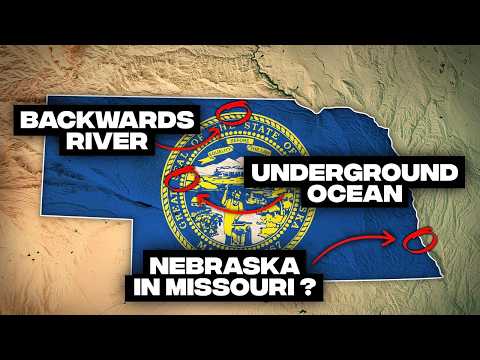
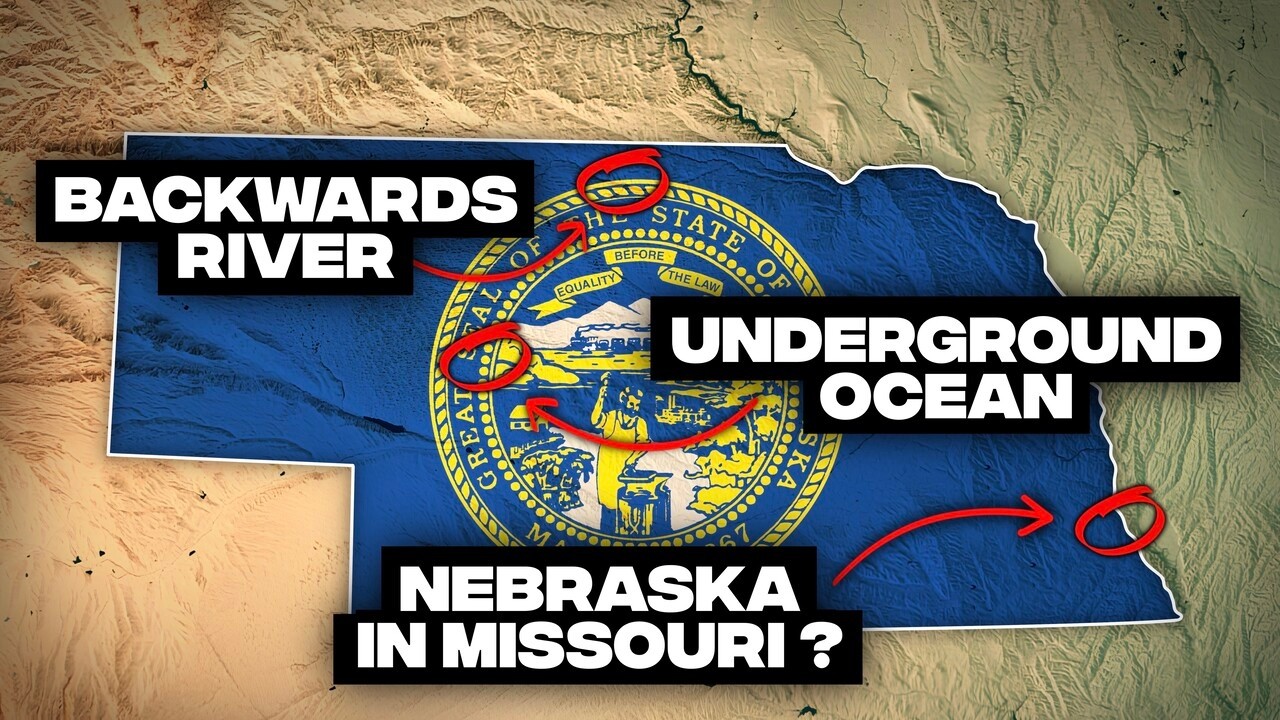
Beneath Nebraska lies a water reservoir so massive, scientists once estimated it could fill a 30-foot deep inland sea across the High Plains. The Ogalala Aquifer contains approximately 3.25 billion acre-feet of water, accumulated over millions of years. This underground ocean powers thousands of irrigation wells, transforming Nebraska into one of America's most productive agricultural states.
Dormant Dunes: Sand Hills' Sleeping Desert.
Nebraska's seemingly peaceful Sand Hills are a sleeping giant, a 20,000 square mile fossil desert that last awoke 800 to 1,000 years ago during the Medieval Warm Period. During that time, huge sections of Nebraska were active, Sahara-style dunes marching across the plains. Scientists warn that sustained drought could awaken this dormant sand sea, as the grass dies and roots let go, allowing the sand to move again.
Starry Sand Hills: America's Darkest Night Skies.
With almost no towns, sparse population, and minimal artificial light, the remote Sand Hills boast some of the darkest night skies on the continent. The region around Merritt Reservoir in Cherry County earned international dark sky park certification with a Bortle Class One rating, the darkest possible. On a moonless night, the Milky Way blazes across the sky, bright enough to cast faint shadows on the grass.
Singing Sand: Dunes That Hum in the Wind.
Under rare, perfect conditions in the Sand Hills, dry, uniform sand grains sliding down a dune vibrate together, producing a low, eerie humming sound known as singing sand. Travelers describe it as a distant airplane, a bass note rolling across the prairie, or even a ghostly hum. This phenomenon occurs most often around sunset when the sand is warm and dry, making Nebraska one of only a handful of North American locations to feature naturally musical dunes.
Mima Mounds: Nebraska's Enduring Geological Mystery.
Scattered across the Sand Hills are thousands of perfectly circular, evenly spaced earth domes known as Mima mounds. Their origin has baffled scientists for over a century, with theories ranging from burrowing gophers to microquakes or freeze-thaw cycles. Despite modern research, there is still no consensus on how these domes formed or why they appear in such geometric patterns, making them a persistent geological enigma.
From space, it looks like rolling prairie, but underneath is a buried world of shifting sands from a forgotten era.
Rivers of Anomaly
Platte River: A Mile Wide, An Inch Deep.
The Platte River is arguably America's strangest major river, sprawling thousands of feet wide across the plains but often only inches deep. This unique characteristic inspired the famous saying, "A mile wide and an inch deep, too thin to plow, too thick to drink." Its braided channels create one of the world's best habitats for migratory birds, particularly Sandhill Cranes, who rely on the shallow water for protection from predators.
Crane Capital: Platte River's Annual Avian Spectacle.
Each spring, central Nebraska transforms into a stage for one of the world's greatest migrations. Over 500,000 Sandhill Cranes, nearly 80% of the global population, gather along the Platte River for a brief stopover. The flock is so massive it is visible from space during peak migration, turning Nebraska into the crane capital of planet Earth for a few short weeks every year.
Dismal River: Underground Origins, Boiling Springs.
The Dismal River in western Nebraska behaves unlike a normal river, often flowing invisibly as groundwater before suddenly erupting to the surface in violent boiling springs. Fed directly by the Ogalala Aquifer, its upper reaches often have no surface stream at all. The springs churn so powerfully they create reverse quicksand, where the upward flow prevents anything from sinking. This river forms underground first, only later deciding to show itself.
River Flows Backwards: Niobrara's Hydraulic Paradox.
Rivers typically obey gravity, but Nebraska occasionally breaks this rule. During catastrophic Missouri River floods, the intense pressure at the confluence can literally force the Niobrara River to reverse direction. Residents have witnessed debris drift upstream and currents push the wrong way, making the river appear to run home toward its source. These reversals happen when the Missouri swells so massively that it overwhelms the Niobrara's natural discharge, shoving water backward for hours or even days.
Waterfall Wonderland: Niobrara's Hidden Cascades.
Nebraska and waterfalls may seem like an unlikely pairing, until you discover the Niobrara River Valley. Here, over 230 waterfalls pour from canyon walls carved into sandstone and limestone. This pocket of the plains hides everything from seasonal trickles to Smith Falls, the state's tallest waterfall at 63 feet. Misty grottoes and spring-fed cascades create an environment that feels transported from the Pacific Northwest, shocking nearly everyone who sees it.
Ecosystem Collision: Niobrara Valley's Biodiversity Hotspot.
The Niobrara Valley is one of North America's most biologically bizarre places, where six major ecosystems collide within a single canyon. Rocky Mountain pine forests, eastern hardwoods, Sand Hills prairie, mixed-grass prairie, cool birch-aspen groves, and even Ice Age relict bogs all exist side by side. This unique convergence creates microclimates where species that normally live hundreds of miles apart, like ponderosa pines from Colorado and paper birch from Canada, grow within sight of each other.
Landmarks and Ancient Echoes
Scotts Bluff: Pioneer's Enduring Western GPS.
For thousands of years, Scotts Bluff, an 800-foot cliff wall, has towered above Nebraska's plains like a natural lighthouse. Native tribes used it for generations, and Oregon Trail pioneers described seeing it as entering a new world. It broke the monotony of the endless prairie and served as a crucial sign of progress on their westward journey. Wagon ruts carved into the stone still remain today, revealing views across three states, a reminder that Scotts Bluff was the GPS of the Great Plains.
Chimney Rock: Erosion's Shrinking Western Beacon.
Chimney Rock served as a vital westward beacon for Oregon Trail pioneers, but the spire they described was taller than what stands today. Since the mid-1800s, the formation has lost 30 to 80 feet from its tip due to relentless erosion from rain, wind, lightning, and freeze-thaw cycles. This iconic landmark is literally shrinking before our eyes, a countdown clock made of stone that continues its slow march toward collapse.
Martian Badlands: Toadstool's Alien Landscapes.
Stepping into Toadstool Geological Park can make you wonder if you've accidentally teleported to Mars. This eerie Badlands region features clay ridges, cracked basins, and bizarre toadstool formations, where slabs of sandstone balance on slender clay pedestals. These shapes formed as soft clay eroded faster than harder rock, creating formations that look sculpted by an alien civilization. Scientists and photographers flock here because there's nothing else like it on the Great Plains.
Hidden Canyons: Nebraska's Unexpected Rugged Terrain.
Drive through northwest Nebraska and the land appears flat, until you stumble upon Deep Creek Canyon, Monument Canyon, or Sow Belly Canyon. Here, the earth suddenly splits open into rugged western rocks and hills, with towering sandstone walls rising 200 to 250 feet. Pine forests cling to cliff edges, and rattlesnakes bask on sunlit rocks. These canyons formed as streams sliced through ancient sandstone layers, sculpting terrain more akin to Wyoming or Utah than the Great Plains.
Ashfall: Prairie's Pompeii Preserves Prehistoric Life.
Twelve million years ago, a Yellowstone supervolcano erupted, blanketing Nebraska in choking ash. At a watering hole near Orchard, animals breathed the deadly dust and collapsed where they stood. Today, that exact moment is preserved at Ashfall Fossil Beds, one of the world's only fossil sites where entire herds of rhinos, camels, three-toed horses, and turtles lie buried intact in their death poses. Visitors can watch paleontologists excavate skeletons frozen in time, earning it the nickname "Rhino Pompeii" for its perfect preservation.
Devil's Corkscrews: Prehistoric Beaver's Spiral Burrows.
When early paleontologists explored Nebraska's badlands, they uncovered baffling seven-foot spirals drilled straight into ancient rock. Locals called them "devil's corkscrews" as no known plant, geological process, or scientific explanation accounted for them. The truth was even stranger: these spirals were fossilized burrows made 20 million years ago by a Paleocastor, a prehistoric beaver-like rodent that literally drilled its home into the earth. Some corkscrews even preserved the skeletons of their original builders, frozen mid-burrow.
Archie: World's Tallest Mounted Mammoth Skeleton.
Meet Archie, not just any mammoth, but the tallest mounted mammoth skeleton on Earth. Unearthed near Wellfleet in 1922, this Colombian mammoth stands an intimidating 15 and a half feet tall, towering over every other mammoth display on the planet. Colombian mammoths were built for the warmer Great Plains, growing even larger than their woolly northern cousins. Archie is a powerful reminder that Nebraska was once ruled by animals the size of moving garages.
Giant Bison Bone Bed: Hudson-Meng's Ice Age Mystery.
In 1954, researchers in Sioux County uncovered one of North America's largest Ice Age mysteries: the Hudson-Meng bone bed. This site contains the remains of roughly 600 extinct giant bison, enormous prehistoric beasts with six-foot horn spreads. Why they died all at once remains unsolved. Was it a mass hunt, a sudden disaster, or disease? The scene looks frozen mid-chaos, exactly as the animals fell 10,000 years ago, an enduring crime scene of the Ice Age.
Ocean Fossils: Prehistoric Seaway Under Cornfields.
Nebraska wasn't always prairie; 75 million years ago, it was oceanfront property on the shores of the Western Interior Seaway. Warm tropical waters covered the state, teeming with ammonites, giant sea turtles, sharks, and 50-foot mosasaurs. Farmers still plow up fossilized shark teeth and marine reptile fragments in their fields. Standing in a cornfield today, it is hard to imagine mosasaurs patrolling the water above your head, but that is precisely what happened here.
Paleontologist Dog: Hank's Record Fossil Discovery.
Nebraska's biggest fossil discovery wasn't made by a scientist, but by a dog. In 2024, rockhound Charles Wooldridge was searching the Sand Hills when his plot hound, Hank, started barking at a massive object in a creek bed. Hank had found Nebraska's largest petrified tree stump ever discovered, weighing 3.73 tons. This fossil is a remnant of ancient forests buried by volcanic ash millions of years ago, a testament to the goodest boy in science.
For a few short weeks every year, Nebraska becomes the crane capital of planet Earth.
Weather's Fury and Extremes
Hallam Tornado: Earth's Widest on Record.
On May 22, 2004, the town of Hallam witnessed one of the most terrifying weather events ever recorded: a 2.5 mile wide F4 tornado. At the time, it was the widest tornado in Earth's documented history, a funnel the width of 44 football fields moving as one continuous wall of destruction. This monstrous wedge storm traveled 52 miles, flattening 95% of Hallam's structures. Remarkably, only one life was lost, a miracle considering its size and intensity.
Volleyball Hail: Aurora's Record-Shattering Ice Bombs.
On June 22, 2003, Aurora, Nebraska, was hit by ice bombs from the heavens. A supercell produced a seven-inch hailstone with an 18.75-inch circumference, the largest ever measured in US history at the time. This mega hailstone formed when updrafts exceeding 100 mph repeatedly hoisted ice back into the storm's freezing core, layering it like a deadly jawbreaker. Aurora residents watched roofs collapse, car windows explode, and siding get shredded.
Extreme Swings: Nebraska's 165-Degree Temperature Range.
Nebraska holds one of the wildest temperature ranges recorded in the United States. In 1936, Minden hit a blistering 118 degrees Fahrenheit, while in 1989, Oshkosh plunged to a bone-shattering -47 degrees Fahrenheit. That is a 165-degree spread, wider than the annual temperature swing on some planets. Nebraska sits in the collision zone of Arctic blasts, Gulf moisture, and desert heat, a meteorological war zone with no ocean to soften the blow.
Prairie Fires: Horizontal Volcanoes of the Plains.
Nebraska's grasslands evolved alongside fire, and when the prairie burns, it becomes one of North America's most powerful natural forces. Tall grass-fueled wildfires can reach 30-foot flame walls, race across the plains faster than people can run, and send embers miles ahead. The heat is so intense it creates its own localized weather, producing swirling fire whirls, literal fire tornadoes twisting across the prairie. When Nebraska's prairie burns, it behaves like a horizontal volcano.
Ghost Lakes: Rainwater Basin's Vanishing Wetlands.
Long before Nebraska became farmland, the prairie hid a secret: over 11,000 seasonal wetlands that appeared and vanished like magic. Early settlers called them "ghost lakes" because one day the ground was dry, and the next it transformed into a shimmering chain of lakes stretching to the horizon. These basins filled each spring with snowmelt and rain, becoming temporary oases bursting with life, only to evaporate back into cracked mud by summer.
Human Footprints and Geographic Quirks
Hand-Planted Forest: Halsey's Improbable Tree Island.
In the middle of the Sand Hills, a land where trees shouldn't exist, lies the largest hand-planted forest in the Western Hemisphere. In the early 1900s, workers planted 20,000 acres of Jack Pine and Ponderosa Pine, manually inserting millions of seedlings into loose sand. The result is a dense forest rising from an ecosystem otherwise dominated by grass and dunes. It stands as one of the greatest "what if we tried this" experiments in US environmental history, and it worked.
Last Prairie Wilderness: Sand Hills' Untouched Ecosystem.
The Sand Hills preserve one of the most intact native prairies left on Earth. Roughly 85% remains unplowed, covering 19,000 square miles, making it the largest continuous tract of mixed-grass prairie in North America. Because the underlying sand collapses when disturbed, early settlers couldn't farm it, so ranchers grazed cattle instead. This unintentionally protected a prehistoric ecosystem that once covered the Great Plains, making the Sand Hills a biological time capsule.
Carhenge: Stonehenge's Automotive Prairie Cousin.
Somewhere on the plains near Alliance stands one of America's most bizarre landmarks: Carhenge. This full-scale Stonehenge replica is built entirely from classic automobiles. Thirty-nine vintage cars were half-buried, welded, and spray-painted gray, forming an astronomically aligned monument that mirrors the real Stonehenge down to the solstice sunrise. It began as a tongue-in-cheek art project in 1987, then became an iconic roadside wonder, an equal blend of absurdity and accuracy.
Island in Missouri: Nebraska's Landlocked Enclave.
Nebraska has a strange loophole in its geography: part of Nebraska sits inside Missouri. McKissick Island, 5,000 acres of farmland, belongs entirely to Nebraska, yet lies across the river on Missouri's side. This oddity began in 1867, when the Missouri River abruptly shifted course and stranded this chunk of land east of its new channel. The river redrew the border overnight, but the law didn't. Residents have Nebraska addresses but often drive through Missouri and Iowa just to reach the rest of their own state.
Robbers Cave: Lincoln's Hidden Underground City.
Beneath the streets of Lincoln is a hidden world: a 5,600-foot labyrinth carved into soft sandstone known as Robbers Cave. Sealed for decades, it reopened to reveal winding tunnels, cool chambers, and walls covered in 150 years of carved names, dates, and outlaw graffiti. Its backstory reads like a novel, used by fugitives as a hideout, later converted into a refrigeration system for a 19th-century brewery, and eventually forgotten under the expanding city.
Two Time Zones: Nebraska's East-West Divide.
Nebraska stretches so far from east to west that the sun simply cannot keep up, requiring two separate time zones to function. The eastern two-thirds operate on Central Time, while the western panhandle runs an hour behind on Mountain Time. In massive Cherry County, the time zone border even cuts through the county itself. Work in one zone but live in the other, and you might start your day at 8:00 a.m. and get home at 7:00 a.m., a unique form of time travel Nebraska style.
Monowi: America's One-Person Nation.
Monowi, Nebraska, has a population of one, and she is the mayor, the bartender, the librarian, the tax collector, and the entire voting base. Elsie Eiler runs Monowi like a one-woman government, approving her own liquor license and collecting taxes from herself. Once a thriving railroad stop, Monowi now survives purely because Elsie refuses to let it disappear. Travelers from across the world visit just to see the smallest incorporated municipality in the United States.
Cattle Country: More Cows Than People.
Nebraska's true majority isn't human. With 6.6 million cattle and only 1.9 million residents, Nebraska has more than three and a half cows for every person. In Cherry County, the ratio skyrockets to 30 to one. Drive any direction through the Sand Hills, and you will pass miles of grazing herds long before you see another human. This livestock dominance stems from geography; the Sand Hills' fragile sandy soil cannot support farming but makes perfect rangeland.
Cherry County: Larger Than an Entire State.
Cherry County is so massive, covering 5,960 square miles, that it is larger than the entire state of Connecticut. Yet, fewer than 6,000 people live there, giving it a population density so low you could walk for miles and never see another person. The land is mostly untouched prairie, where the Milky Way is so bright it casts faint shadows. It even spans two time zones internally, a true testament to its vast, empty expanse.
Triply Landlocked: North America's Ocean-Remote Core.
Nebraska holds a unique geographic title: it is the only US state that is triply landlocked. To reach the ocean, you must cross at least three states in any direction. From Nebraska's center, the nearest saltwater is more than 1,000 miles away, making it one of the most ocean-remote places in North America. This isolation contributes to Nebraska's extreme weather, with no coastal influence to soften violent temperature swings and intense storms.
The world, it turns out, is far stranger and more intricate than any textbook could convey. Nebraska, with its subterranean rivers, singing sands, and time-traveling towns, serves as a powerful reminder that conventional wisdom often misses the most compelling narratives. Its landscape isn't just a backdrop, it's an active participant, constantly rewriting its own story with geological drama and biological marvels. This is geography not as static map data, but as an ongoing, unpredictable saga.