Alaska, the Last Frontier, often conjures images of endless ice and untamed wilderness. But beneath its frosty veneer lies a geographical wonderland so extreme and contradictory, it defies easy categorization. This colossal state is a land of geological plot twists, where mountains breathe fire and rivers flow backward. It’s a place where sand dunes sprout above the Arctic Circle and cities vanish into the sea. Prepare to have your understanding of geography stretched to its absolute limits.
A Land of Unfathomable Scale
America's only state spanning all three cardinal directions.
Alaska is famously the northernmost and westernmost state, but it also claims the easternmost point. The Aleutian Islands stretch so far across the Pacific that they cross the **180th meridian**, placing a handful of Alaskan islands squarely in the eastern hemisphere. This geographical anomaly means the distance between America's absolute easternmost and westernmost points is a mere 71 miles, both within the same state.
Vast coastline surpasses all other states combined.
Forget Florida or California, Alaska boasts over **34,000 miles** of tidal shoreline. This staggering length is more than the other 49 states combined, enough to wrap around the entire equator with 9,000 miles to spare. Its jagged, island-strewn perimeter is a masterpiece of deep cut glacial fjords, making Alaska the only state to border both the Pacific and Arctic Oceans.
Home to the overwhelming majority of America's tallest mountains.
When it comes to high elevation, Alaska truly embarrasses the Lower 48 states. Out of the 20 highest peaks in the United States, an astonishing **17 are found in Alaska**. Beyond the legendary Denali, giants like Mount Foraker, standing at 17,400 feet, and Mount Bona, America's highest volcano, tower over the continent, making other states' tallest mountains appear as mere foothills.
The nation's most isolated point is deep within Alaska.
Deep within the National Petroleum Reserve, there exists a point so isolated it sits an incredible **120 miles** from the nearest human being, making it the most remote spot in the entire country. This extreme isolation is a daily reality for many Alaskans, as 82 percent of communities have zero road access, requiring residents to rely on air travel for everything from groceries to emergencies.
Unending darkness and light cycles redefine daily life.
In Utqiagvik, America's northernmost city, the sun sets in November and does not reappear for **64 continuous days**. Conversely, during summer, the sun remains above the horizon for 80 straight days without setting once. This perpetual daylight leads to biological glitches, like vegetables in the Matanuska Valley growing to astonishing sizes, producing 138-pound cabbages and 2,000-pound pumpkins.
A state capital completely inaccessible by road.
Juneau holds the unique distinction of being the only US state capital that is entirely unreachable by road. Hemmed in by the massive Juneau Icefield on one side and steep mountain walls on the other, accessing the governor's office requires a flight or a ferry. Every plan to build a highway has been thwarted by the brutal terrain of the Tongass National Forest, making the city feel like a **natural fortress**.
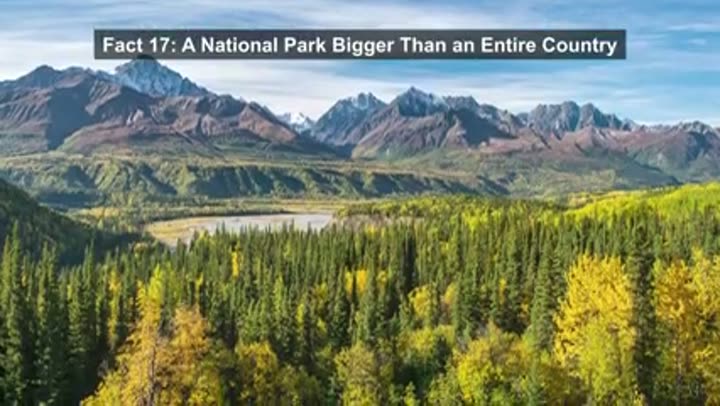
National park larger than a European nation.
Wrangell, St. Elias National Park and Preserve is a colossal wilderness, larger than Switzerland itself. At an astounding **13.2 million acres**, it is six times the size of Yellowstone and encompasses nine of America's 16 highest peaks. This vertical landscape of unexplored glaciers and jagged summits also hides Kennecott, a haunting 14-story red wooden ghost town, once the richest copper mine on the planet.
A land of impossible climatic extremes.
Alaska presents a geographic contradiction, simultaneously hosting a frozen desert on its North Slope that receives less precipitation than the Sahara. Yet, travel south to Little Port Walter, and you will find the second wettest spot in the entire country, drenched by **20 feet of rain annually**. Scientists even hypothesize that high in the Coast Mountains, models estimate an outrageous 450 inches of precipitation, potentially making it the wettest place on Earth.
Record-breaking temperature ranges within one state.
Alaska is a land of extreme thermal whiplash. It holds the US record for the coldest temperature ever recorded, a bone-shattering **minus 80°F** at Prospect Creek. Yet, remarkably, above the Arctic Circle, Fort Yukon once hit 100°F, marking a 180° range. This state even shares its all-time record high temperature with Hawaii, showcasing its truly unpredictable and wild climate.
The Earth's Violent Pulse
Witnessed the highest tsunami in recorded history.
On July 9, 1958, Alaska delivered the tallest wave ever recorded when a 9.2 magnitude earthquake sent 90 million tons of rock flying into Lituya Bay. This created a **1,720-foot** mega tsunami, a wave that would have swallowed the Empire State Building whole. The immense splash stripped mountains down to bare bedrock, leaving a scar still visible from space today.
Unleashed the 20th century's most powerful volcanic blast.
In 1912, the Novarupta volcano triggered the largest volcanic eruption of the 20th century, a blast an astonishing **30 times more powerful** than Mount St. Helens. It choked the stratosphere with ash for 60 straight hours, and the explosion was so loud it was heard 750 miles away in Juneau. The resulting acid rain was even reported to dissolve laundry right off clotheslines in Chicago.
A massive earthquake made the entire planet vibrate.
On Good Friday, 1964, Alaska was nearly shattered by a **9.2 magnitude earthquake**, the second most powerful ever recorded, which ripped through the state for nearly five straight minutes. The raw energy released caused the entire planet to vibrate like a struck bell for days. Shockwaves were so massive they made rivers slosh in Texas and sank boats in Louisiana, utterly destroying the town of Valdez.
A restless island repeatedly emerges and vanishes.
Bogoslof Island, an Alaskan landmass, is a geological enigma that cannot seem to make up its mind. In 1796, it did not even exist, hiding 6,000 feet under the Bering Sea until it peaked through the surface. Since then, it has been blown apart and reborn **nine times**, including a 2016 eruption that generated 70 explosions in nine months and a volcanic lightning storm with 1,000 bolts in a single night.
A post-eruption landscape smoked for over a decade.
Following Novarupta's massive eruption, the surrounding land was utterly transformed. Superheated ash flooded the valley, burying it under **700 feet of volcanic debris**. For 15 straight years, the ground hissed as trapped water cooked under the surface, creating thousands of steam vents that gave the Valley of 10,000 Smokes its name. Today, it remains a silent, ashen moonscape so desolate NASA used it to train Apollo astronauts.
A land of relentless volcanic activity.
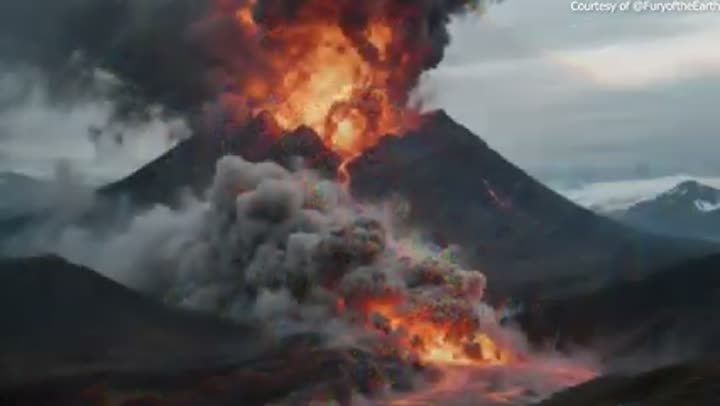
Alaska is essentially a land constantly on fire, boasting over **130 active volcanoes** and accounting for 75 percent of all US eruptions in the last 200 years. The Aleutian Islands alone stretch 1,200 miles of explosive peaks, including Mount Shishaldin, a perfect 10,000-foot cone considered more dangerous than Japan's Mount Fuji. When these volcanoes blow, clouds of glass-sharp ash can melt jet engines mid-flight.
Volcano melted a river with grapefruit-strength acid.
In 2005, the Chiginagak volcano unleashed a torrent that turned an entire river system into a death trap. Its summit crater lake burst, dumping **3.8 million cubic meters** of water as acidic as grapefruit juice into the valley below. This toxic surge dissolved every living thing for 17 miles, wiping out salmon runs for years. Yet, paradoxically, salmon in the remote Aniakchak Caldera swim into the volcano to spawn.
May conceal Earth's next supervolcanic eruption.
In 2020, scientists made a discovery that should make everyone uncomfortable: six volcanic islands in the Aleutians, including the explosive Mount Cleveland, may actually be vents for a massive hidden underwater caldera the size of Yellowstone. Alaska already holds the record for one of the largest eruptions in the last 10,000 years, the Fissure Caldera, which unleashed a wall of ash so strong it leaped over **1,300-foot mountain ridges**.
Violent, unpredictable winds from seemingly clear skies.
In the Aleutian Islands, the wind is absurdly violent and unpredictable. Locals call them "Willawaws," violent blasts of freezing, thick air that plunge down mountainsides at over **140 mph** with absolutely zero warning. Imagine a Category 4 hurricane dropping from a perfectly clear sky, snapping mooring lines like thread. A record-breaking 158 mph gust once hit Kodiak Island, faster than a small plane's cruising speed.
Alaska is essentially a land constantly on fire, boasting over 130 active volcanoes and accounting for 75 percent of all US eruptions in the last 200 years.
Rivers of Ice and Water's Edge
Massive glaciers dwarf entire US states.
Alaska is essentially one giant ice machine, home to over 100,000 glaciers covering five percent of the state, yet less than one percent even have names. The Bering Glacier alone is the size of Delaware. The true king, however, is the Hubbard Glacier, which, unlike most retreating glaciers, is growing quickly. In 1986, it blew forward with enough force to dam an entire fjord, unleashing a flood equivalent to **35 Niagara Falls** in just 24 hours.
The land of 3 million lakes.
Minnesota calls itself the "Land of 10,000 Lakes," but in Alaska, that's merely a rounding error. The Last Frontier boasts over **3 million lakes**, a consequence of 85 percent of the state sitting on permafrost, which prevents water from draining. This creates a massive patchwork of tundra ponds stretching to the horizon. The largest, Lake Iliamna, an inland sea the size of Rhode Island, is rumored to harbor a 30-foot serpentine creature.
America's largest drivable glacier is a surreal wonder.
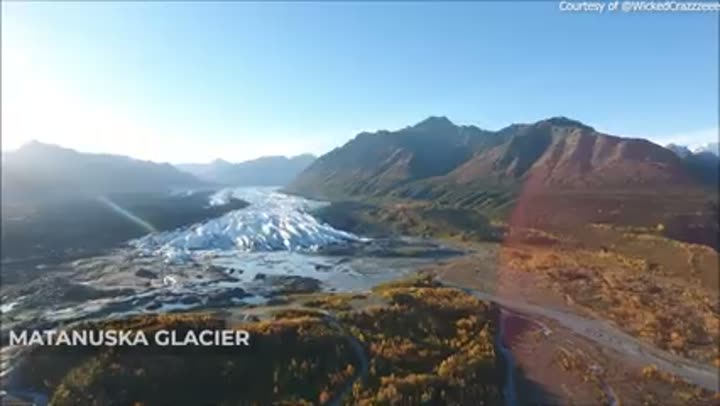
While most Alaskan glaciers require a bush plane to reach, the Matanuska Glacier is a rare exception. Sitting directly off the Glenn Highway, this **27-mile-long** monster is the biggest glacier in the US accessible by car. It's a slow-motion conveyor belt grinding down the Chugach Mountains at one foot per day. Its surreal neon-blue ice, compressed over millennia, reflects only the blue spectrum, but watch out for quicksand-like glacial flour at its edges.
Tidal bore charges faster than a human can sprint.
Just south of Anchorage, Turnagain Arm is home to a stretch of water that can literally outrun you. It produces a massive tidal bore, a **10-foot wall of ocean** charging up the inlet at 15 mph. However, the wave isn't the primary danger. The shoreline, made of glacial silt, acts like liquid concrete, capable of trapping people at low tide as a 35-foot tide rushes in to drown them.
Ancient ice tunnels and towering ice-core hills.
Forget museums, for a true Ice Age experience, head underground near Fox, Alaska. Here, a US Army tunnel cuts straight through **40,000-year-old permafrost**, a frozen time capsule packed with mammoth bones, bison hair, and grass still green. Across the tundra, massive pingos, 17-story ice-core hills, push the Earth skyward like slow-motion volcanoes. The tallest, the Kadalarsik Pingo, stands 180 feet and is still growing.
Rivers that reverse direction twice daily.
Alaska is home to rivers that literally reverse direction twice a day. In Turnagain Arm and parts of the Yukon Delta, tidal forces are so powerful that incoming ocean water pushes entire rivers upstream. This is not just a small ripple, but a full-scale reversal where the current flips and flows the opposite way. This process can push saltwater **dozens of miles inland**, reshaping ecosystems and confusing navigation maps.
Deadly mud flats devour the unwary.
Turnagain Arm, while a scenic masterpiece, hides a deadly trap: its mud flats. The glacial silt shoreline acts like liquid concrete, capable of creating a vacuum seal if stepped upon at low tide. In July 1988, Adena Dickens became stuck, and despite hours of rescue efforts, the **35-foot tide** rose over her head before she could be freed. Modern rescue teams now carry high-pressure water wands to break the silt's grip.
A massive, ancient anomaly deep beneath the Earth's surface.
Alaska holds a profound secret **1,700 miles** beneath its surface. In 1992, a massive Chinese nuclear test sent shockwaves through the planet, acting like a giant X-ray. What they revealed was a mysterious, 300 km wide structure sitting directly on Earth's core right under Point Barrow. Scientists believe it's a slab of ancient oceanic crust that sank hundreds of millions of years ago, a frozen relic of a world that existed before dinosaurs.
Denali's north face, a colossal vertical challenge.
Alaska is home to a cliff face so massive it generates its own weather: Denali's north face, the Wickersham Wall. This is a **14,000-foot vertical sweep** of ice and rock, dwarfing the Eiger's north face and Everest's iconic southwest face. Named after a judge who attempted it in leather boots in 1903, it remains one of mountaineering's deadliest routes, constantly shedding avalanches that rumble like thunder for miles.
Arctic's Unseen Wonders
Massive sand dunes above the Arctic Circle.
Welcome to the Great Kobuk Sand Dunes, a surreal landscape of **25 square miles** of golden peaks reaching 100 feet high, sitting just 35 miles north of the Arctic Circle. This is the largest active dune field in Arctic North America, a geological anomaly that looks like the Sahara was copy-pasted into the tundra. In summer, these dunes can hit a blistering 100°F, despite being frozen solid most of the year.
Dogs literally breathed blinding ice fog into existence.
In Fairbanks, the cold gets so intense that water vapor freezes instantly, creating thick, blinding ice fog when temperatures drop to minus 30°F. In 1969, scientists made a startling discovery: the city's 2,000 sled dogs were exhaling **half a ton of water vapor daily**, literally breathing this dense fog into existence. This K-9 powered ice fog could shut the city down, with drivers navigating by following tail lights in zero visibility.
America's premier destination for aurora viewing.
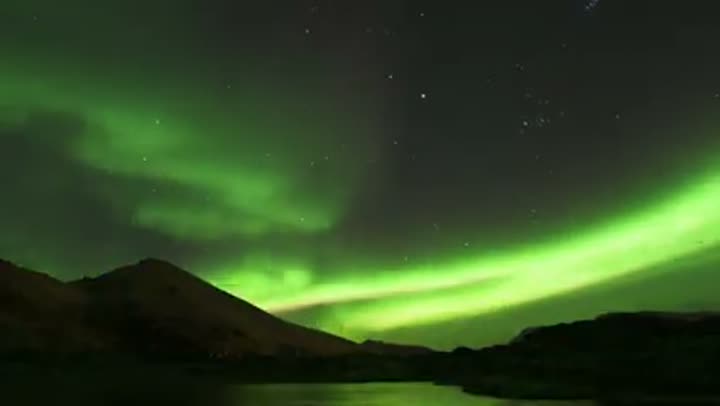
Fairbanks sits directly under the auroral oval, earning it the title of the Northern Lights capital of America. The aurora is visible here an impressive **240 nights a year**, regularly painting the sky in neon green. For decades, locals reported hearing hissing and crackling during intense displays, dismissed as folklore until 2012, when scientists finally confirmed audible claps and pops caused by static electricity discharges in the air.
Arctic wildfires that refuse to die.
When thinking of the Arctic, fire is rarely the first image that comes to mind. Yet, Alaska is burning, and not just from volcanoes. In 2004, an area larger than Massachusetts, **6.7 million acres**, went up in flames. The truly scary part is "zombie fires," blazes that burrow into carbon-rich peat and survive all winter under the snow, only to reignite when spring arrives. North Slope wildfires are now more frequent than at any point in the last 3,000 years.
Thousands of lakes uniformly oriented across the tundra.
Across **25,000 square miles** of the Arctic coastal plain, thousands of oval lakes mysteriously point in the exact same direction. From space, the ground appears like a giant fingerprint pressed into the tundra. For 50 years, scientists have debated this geographic glitch. The leading theory suggests relentless Arctic winds create currents that act like liquid sandpaper, eroding shorelines into perfect ovals that slowly "crawl" across the tundra.
A volatile lake that literally breathes fire.
Under the Brooks Range lies Eol Lake, a body of water so volatile it literally breathes fire. It burps **10 tons of methane daily**, blasting 50-foot craters into the earth around it. In winter, the gas gets trapped beneath the ice, forming ghostly white domes. Strike a match, and these methane bombs erupt into towering pillars of flame. The land around the lake is eating itself, transforming from spruce forest to a drowned, bubbling cauldron.
A colossal canyon hidden beneath a massive glacier.
The Great Gorge of the Ruth Glacier, located on Denali's south side, is a vertical monster dropping **8,000 feet** from the peaks to the bedrock. At nearly two miles deep, it dwarfs the Grand Canyon by 3,000 feet. The only reason it isn't famous is because the Ruth Glacier fills it completely, a river of ice thick enough to bury two stacked Empire State Buildings. Its western wall, Mount Dickey, is a granite cliff twice the height of El Capitan.
Glacier so vast, early explorers mistook it for land.
The Malaspina Glacier is a **1,500 square mile** monster, roughly the size of Rhode Island. It is so massive that early explorers literally mistook it for solid ground. This 2,000-foot-thick slab of ice actually supports a mature forest on its back, with 100-year-old trees rooted in soil sitting directly on top of the glacier. From space, it resembles a psychedelic painting of swirling dirt ribbons, a true geological marvel.
Earth's largest canyon is hidden beneath the ocean.
Earth's largest canyon isn't in Arizona, it's hiding at the bottom of the Bering Sea. The Zemchug Canyon is a submerged titan so massive it makes the Grand Canyon look like a drainage ditch. It drops an astonishing **8,500 feet** and spans 60 miles wide, carved when the Yukon River literally fell off the continental shelf during the Ice Age. Submersibles have barely scratched the surface of what lies within its depths.
In Fairbanks, the cold gets so intense that water vapor freezes instantly, creating thick, blinding ice fog when temperatures drop to minus 30°F.
Life's Extreme Adaptations
A frog that technically dies and reanimates annually.
Alaska's wood frog survives winter by technically "dying." For seven months, it stops breathing, its heart goes still, and its blood ceases to circulate. It is the only frog living north of the Arctic Circle, and its secret lies in a **biological antifreeze**. Its liver floods the body with glucose and urea, causing ice to form around the cells rather than inside them, preventing them from bursting. When spring arrives, the frog reboots in a strict sequence: heart first, then brain, then legs.
Unique ice worms liquefy upon warming.
Meet the ice worm, the only creature on Earth that spends its entire life inside solid ice. These dental floss-thin, jet-black worms thrive at precisely 32°F. However, if they warm up even slightly, they liquefy. At just **41°F**, their cell membranes disintegrate, and they literally melt into a puddle in your hand. A single Alaskan glacier can hold over 30 million of them, hiding under the surface and emerging at night to feed on algae.
Arctic dinosaurs rewrote prehistoric history.
Forget tropical swamps, Alaska completely rewrote dinosaur history with its Arctic discoveries. On the North Slope, a massive fossil graveyard reveals dinosaurs that lived year-round above the Arctic Circle, surviving months of total polar darkness. In 2014, scientists named the **Nanuqsaurus**, or "polar bear lizard," a smaller, feathered cousin of T-Rex built to endure sub-zero winters, proving the Arctic has hosted monsters far longer than imagined.
A state where bears reign supreme in numbers.
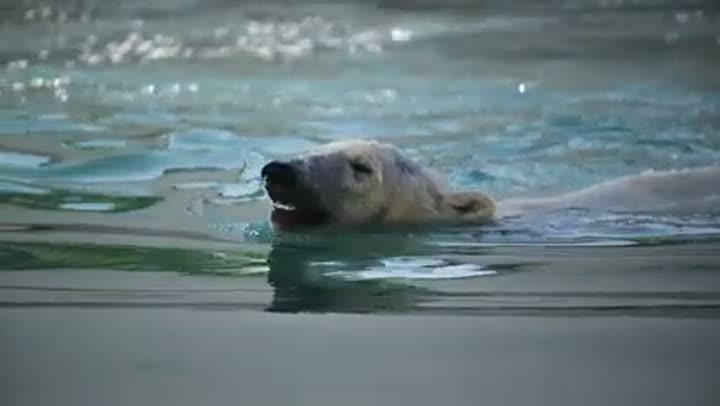
Alaska is the only place on Earth that is home to all three North American bear species, including the formidable **1,500-pound Kodiak**. Genetically isolated for 12,000 years, these 10-foot beasts rival polar bears as the largest land predators on the planet. At Brooks Falls, up to 40 brown bears can be seen fishing at once, the highest concentration on Earth, snatching leaping salmon straight out of the air.
A vast network of thousands of powerful rivers.
Alaska is the world's greatest water machine, boasting over **3,000 rivers**, including the 2,000-mile long Yukon, which moves more freshwater than almost anywhere else on the planet. The Yukon Delta alone is a wilderness the size of Louisiana. The real spectacle, however, is Bristol Bay, where every year **79 million sockeye salmon** return in a silver tide so thick it is visible from the air, fertilizing the interior forests with deep ocean nutrients.
Half the world's fur seals converge on remote islands.
Deep in the Bering Sea, the Pribilof Islands, often called the Galapagos of the North, remained hidden until 1786. An explorer followed a deafening roar through blinding fog to discover these volcanic rocks hosting a chaotic, stinking city of fur, where **600,000 northern fur seals** engage in a breeding frenzy every summer. Above them, 1,000-foot cliffs swarm with 2 million seabirds, forming the most crowded avian neighborhood in the Western Hemisphere.
Human Ingenuity and Historical Echoes
Site of America's only World War II land battle.
In June 1942, Japanese forces invaded the Aleutian Islands of Attu and Kiska, marking the only foreign occupation of US soil during World War II. Retaking Attu was a bloodbath, but the brutal weather was a greater enemy than the Japanese, sidelining more soldiers with trench foot than by enemy fire. The liberation of Kiska was even stranger: **34,000 US and Canadian troops** stormed the island only to find it completely empty, as the Japanese had slipped away undetected under the fog.
An engineering marvel crossing mountains and permafrost.
The Trans-Alaska Pipeline is an **800-mile** engineering miracle, crossing three mountain ranges and over 800 rivers to move oil across a frozen continent. The challenge: hot oil melting permafrost. Half the pipeline sits on passive refrigerators, vertical supports using boiling ammonia to pull heat from the ground with **zero electricity**, preventing the pipe from sinking. This colossal project was built in just three years, making it the largest private construction project in history.
A town's annual gamble on river ice breakup.
In the small town of Nenana, the end of winter transforms into a high-stakes gamble. Since 1917, the Nenana Ice Classic has had everyone betting on the exact moment the frozen Tanana River will break. A massive striped wooden tripod is frozen into the ice and tethered to a clock on shore. When the ice shifts enough to move the tripod, the clock stops, and someone wins a jackpot that is usually over **$300,000**.
Residents receive annual payments for living in the state.
Alaska offers a unique economic incentive: every qualifying resident, from newborns to elders, receives an annual check just for living there. This is the Permanent Fund Dividend, a literal share of the state's massive oil wealth. In 2022, payouts hit **$3,284 per person**, meaning a family of five could receive over $16,000. On top of this, Alaska has zero statewide income tax and zero sales tax, a system designed so every Alaskan owns a piece of the oil under their feet.
Earth's largest temperate rainforest is in Alaska.
The Tongass National Forest is a **17 million acre** cathedral, covering 80 percent of Alaska's panhandle and standing as the biggest temperate rainforest on Earth. Forget frozen tundra; this is a dripping ancient world where 200-foot Sitka spruces live for 700 years. Scientists call it the "salmon forest" because the trees are literally built from fish, with nitrogen from decaying salmon, dragged inland by bears, found in needles hundreds of feet from the nearest river.
A "folly" that became a trillion-dollar bargain.
The greatest real estate deal in history began as a national joke. In 1867, Secretary of State William Seward convinced the US to buy Alaska from Russia for **$7.2 million**, roughly two cents an acre. Critics mocked it as "Seward's Folly," a frozen wasteland nobody wanted. The laughter ceased when the 1890s gold rush hit, and the 1968 Prudhoe Bay oil discovery revealed a treasure trove under the permafrost, proving Alaska a trillion-dollar bargain.
An entire town reclaimed by the sea.
In Alaska, an entire town can disappear in a single afternoon. When the 1964 Good Friday earthquake struck, the town of Portage dropped **8 feet in 5 minutes**. As residents fled, the Pacific Ocean rushed in and never left. Today, this haunting roadside graveyard is visible from the Seward Highway, with cracked foundations swallowed by tidal marshes and roads leading into saltwater. The most eerie sight is the "ghost forest" of thousands of silver, skeletal trees, pickled but not rotted by the sea.
Iconic dog sled race born from a life-saving mission.
The Iditarod, a 1,000-mile trail sled dog race, is a survival trial born from a life-or-death crisis. In 1925, a diphtheria outbreak threatened the town of Nome, and dog sled relays were the only way to haul life-saving serum through a **minus 62°F blizzard**. While the dog Balto received a Central Park statue, Alaskans know the true hero was Togo, a lead dog who ran the longest, deadliest leg, covering 261 miles across the crumbling ice of Norton Sound.
Alaska is a testament to the fact that our planet is far stranger and more dynamic than any textbook can convey. It's a land of constant geological upheaval, ecological marvels, and human ingenuity pushed to its limits. The sheer audacity of its landscapes, from its hidden underwater canyons to its melting ice worms, reminds us that geography is not just about lines on a map, but about the raw, untamed forces that shape our world.