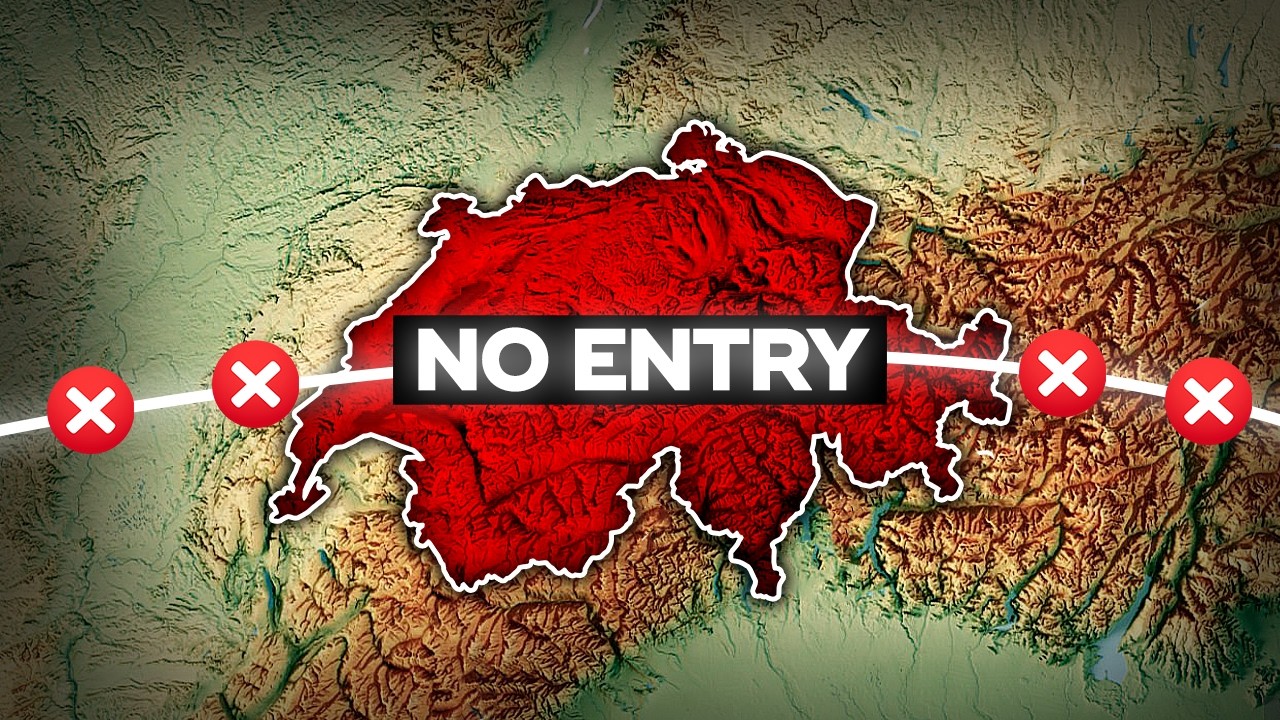
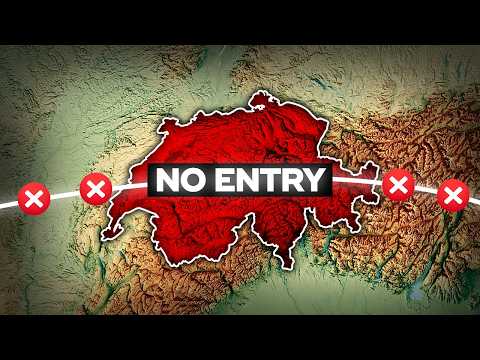
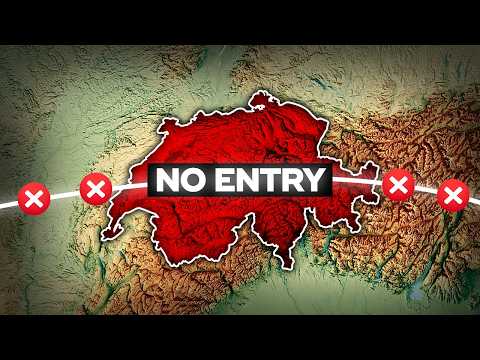
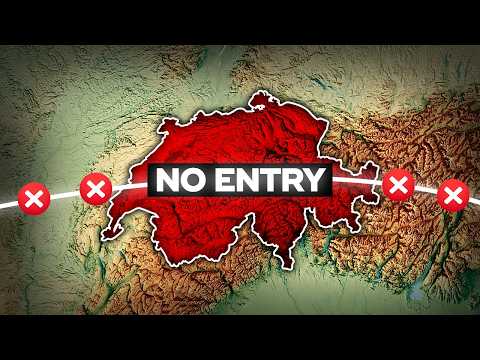
Switzerland, a nation often conjured in images of pristine Alpine vistas, precision timepieces, and discreet banking, presents a paradox that belies its placid exterior. Far from an isolated idyll, this country of approximately nine million people has quietly become one of Europe's most multicultural societies. With over 41 percent of its residents aged 15 and older being either immigrants or children of immigrants, reaching as high as 48 percent in Geneva, Switzerland is an immigration nation by necessity. Yet, in a striking reversal that has largely gone unnoticed on the global stage, 2024 witnessed a dramatic shift: net immigration dropped by 15.6 percent, asylum applications plummeted by 8 percent, and, most tellingly, the number of rejected asylum seekers being deported surged by an astonishing 181.5 percent. This isn't merely a slowing of arrivals, it is an active, engineered pushback, transforming Switzerland from an immigration magnet into a fortress state, challenging conventional notions of geography, economy, and democracy.
A Nation Built on Borrowed Labor
For much of its history, Switzerland maintained an image of ethnic homogeneity, a confederation of German, French, Italian, and Romansh speaking communities united by neutrality. This perception, however, began to unravel dramatically after World War II. The post-war economic boom created massive labor shortages, particularly in the burgeoning industrial and construction sectors. Swiss citizens, increasingly enjoying a higher standard of living, were less willing to undertake these demanding jobs. In response, the government launched guest worker programs in the 1950s and 1960s, recruiting primarily from Italy, Spain, and Portugal. The initial premise was simple: these workers would stay for a few years, send money home, and then return to their countries of origin, providing a rotating supply of temporary labor. This assumption proved to be fundamentally flawed.
Many of these guest workers did not leave. They stayed, established families, and built communities, fundamentally altering the demographic landscape. By 1970, foreign nationals constituted over 16 percent of Switzerland's population, a stunning increase from less than 5 percent in 1860. The next significant wave of immigration arrived in the 1990s when Switzerland negotiated bilateral agreements with the European Union to gain access to the single market. The unavoidable price of this economic integration was the acceptance of the principle of freedom of movement, allowing EU citizens to live and work in Switzerland. This open door policy ushered in a new influx of Germans, French, Austrians, Poles, and Romanians, encompassing a wide spectrum from highly skilled professionals to low-wage laborers, and even retirees seeking the country's appealing tax havens.
By 2023, foreign nationals accounted for 27 percent of Switzerland's permanent residents, totaling approximately 2.4 million people. When naturalized citizens and second-generation immigrants are included, the total population with a migration background reached 41 percent in 2024. In essence, four out of every ten people in Switzerland are either foreign-born or have foreign-born parents. This demographic reality underscores a critical economic dependency: one-third of employees in vital sectors like hospitality and healthcare are foreign-born. Tech companies, pharmaceutical giants, and financial institutions all rely heavily on international talent. With a low fertility rate and an aging population, Switzerland's workforce would face an insurmountable collapse without continued immigration, highlighting a deep-seated economic reliance that stands in stark contrast to its recent political trajectory.
The Ascent of the Swiss People's Party
Amidst this growing demographic shift, Switzerland's political landscape began to move sharply to the right. This political earthquake manifested in the rise of the Swiss People's Party, known by its German acronym, SVP. Under the leadership of millionaire industrialist Christoph Blocher, the SVP transformed from a relatively small agrarian party into a formidable populist nationalist movement during the 1990s. The party's message was uncompromising and direct: Switzerland was being overrun, and mass immigration posed an existential threat to Swiss identity, wages, housing availability, and social cohesion.
The SVP's campaigns were often provocative and highly visual. Posters depicted white sheep symbolically kicking black sheep off a Swiss flag, an unsubtle metaphor for immigration. Other campaign materials warned of an "overcrowded Switzerland" and asylum seekers purportedly flooding the welfare systems. This potent message resonated with a significant portion of the electorate. By 2023, the SVP had cemented its position as Switzerland's largest political party, securing 62 of the 200 seats in the National Council, representing 28 percent of the total. Unlike populist parties in many other European nations that often remain on the fringes, the SVP became an integral part of Switzerland's governing coalition. This afforded the party control over key ministries, allowing it to directly shape policy, and, crucially, to master the unique political instrument of direct democracy.
Direct Democracy: A Double-Edged Sword
Switzerland's system of direct democracy is a cornerstone of its political identity, distinguishing it from most representative democracies. It allows any group that collects 100,000 signatures to force a nationwide referendum on almost any issue, bypassing parliamentary consensus. The SVP has wielded this tool with relentless precision to reshape immigration policy, transforming referendums into a national sport.
One of the earliest and most controversial examples was the 2009 Minaret ban. Swiss voters approved a constitutional amendment prohibiting the construction of new minarets, the towers typically associated with mosques. Despite widespread international condemnation from human rights groups, 57.5 percent of Swiss voters backed the ban, which subsequently became law. While mosques could still be built, the message was unequivocal: Islam's visible presence was unwelcome in Switzerland.
A more far-reaching initiative was the 2014 "Stop Mass Immigration" initiative. In February 2014, Swiss voters narrowly approved, by a margin of just 50.3 percent, a proposal demanding annual immigration quotas and prioritizing Swiss workers. This result sent shockwaves across Europe, as it directly violated Switzerland's treaty with the EU on freedom of movement. Brussels swiftly threatened to invoke a "guillotine clause," which would cancel over 120 bilateral agreements encompassing trade, research, and transportation, potentially crippling the Swiss economy. The Swiss Parliament spent years negotiating a compromise. The final implementation in 2018 avoided explicit hard quotas but mandated that companies first advertise job openings with local unemployment offices, effectively prioritizing Swiss candidates. Firms that failed to comply faced fines of up to 40,000 Swiss Francs. While largely symbolic, this move firmly established the principle of "Swiss workers first."
In 2016, the SVP pushed for an automatic deportation initiative, proposing that any foreigner convicted of two crimes, even minor ones, be automatically deported without judicial review. The campaign was brutal, featuring posters depicting a white hand stamping "Raus" (Out) on a dark-skinned face. Although Swiss voters ultimately rejected this initiative, the margin was not overwhelming: 58.9 percent voted no, meaning over 40 percent of the country supported automatic expulsion with no appeals process.
"Switzerland's political earthquake came in the form of the Swiss People's Party, known by its German acronym SVP, under millionaire industrialist Kristoff Blocker."
The SVP made another attempt in 2020 with the "free movement referendum," aiming to scrap freedom of movement with the EU entirely. This time, every major political party, business group, and union campaigned vehemently against it, arguing that ending free movement would constitute economic self-sabotage. A decisive 62 percent of voters rejected the proposal. However, the SVP's president, Marco Chiesa, immediately vowed to continue the fight, promising more referendums. The latest in this series of referendums was the 2021 "burka ban," which narrowly passed with 51.2 percent support. This ban on face coverings in public was aimed squarely at Muslim women wearing burkas or niqabs, despite estimates suggesting fewer than 100 women in the entire country wore such garments. The ban's significance was symbolic, a statement that Switzerland would enforce "Swiss values," even if it meant targeting an almost non-existent population.
Harsh Policies Beyond the Ballot Box
While referendums captured headlines, Switzerland was simultaneously implementing some of Europe's most stringent asylum policies, often with less public scrutiny. These measures reveal a comprehensive strategy to deter and deport.
One lesser-known policy involves asset seizures. Switzerland has a law, predating even Denmark's controversial jewelry confiscation, stipulating that any asylum seeker arriving with more than 1,000 Swiss Francs in cash or valuables must surrender the surplus to the state. This money is retained to offset reception costs. While essential items and jewelry are exempt, anything of significant value can be seized. If refugees voluntarily leave Switzerland within seven months, they can reclaim their money; otherwise, it is permanently forfeited. Although this policy affects a relatively small number of cases annually, it serves as a powerful symbol of Switzerland's uncompromising approach.
Another striking example was the 10 percent tax on refugees. In 2016, recognized refugees in Switzerland, those who had been granted protection, were required to pay 10 percent of their income for up to ten years to reimburse the state for reception costs. This policy, which went beyond mere asylum seekers to target those granted protection, was abolished in late 2017 but marked a significant escalation in the country's hardline stance.
Switzerland's immigration crackdown extends beyond its own borders. The country notably cut off development aid to Eritrea after the East African nation refused to accept back rejected asylum seekers. Since 2016, Switzerland had invested over 7 million Swiss Francs in vocational training programs in Eritrea, with the explicit dual goal of improving local employment prospects and securing cooperation on the return of deported migrants. When Eritrea continued to accept only citizens who returned voluntarily, not those forcefully deported, Switzerland promptly pulled the plug on its aid. This transactional approach reveals a strategy that weaponizes development assistance to control migration flows at their source, sending a clear message: cooperation on deportations is not merely expected, it is the price of economic partnership.
In 2019, Switzerland overhauled its asylum system to implement accelerated deportations. The new procedure mandated that applications and appeals be concluded within a tight 140-day timeframe. The objective was to deter unfounded claims and remove rejected applicants before they could establish roots. The results have been stark: in 2024, 7,205 rejected asylum seekers left Switzerland, representing an 181.5 percent increase from 2023. Approximately two-thirds of these individuals were escorted out under force, either to their countries of origin or to other EU states under Dublin rules. Switzerland's return rate for rejected asylum seekers, at 57 percent in 2022, stands among the highest in Europe.
Becoming Swiss has always been challenging, but a 2018 citizenship reform made naturalization even tougher. While the residency requirement was lowered from 12 to 10 years, stricter language and integration requirements were introduced. Applicants must now demonstrate at least a B1 level in speaking and an A2 level in writing in one of the Swiss national languages, German, French, or Italian. They must also prove financial self-sufficiency and demonstrate integration into Swiss society. The consequence has been a more selective naturalization process. A 2024 government study revealed that university graduates now account for 57 percent of all new Swiss citizens, a significant jump from 33 percent before the reform. Conversely, the share of new citizens with only basic schooling plummeted. Switzerland is not just limiting who enters, but rigorously filtering who gets to stay. Some communities have gone further, explicitly blocking welfare recipients from applying for citizenship, effectively creating a two-tier system where wealthy, educated immigrants can naturalize, while the poor and vulnerable cannot.
Local Democracy and its Limits
Switzerland's direct democracy extends beyond the national level, with cantons and municipalities also holding their own referendums. This decentralized power has occasionally led to even harderline stances on immigration, though not always successfully.
In August 2013, the small village of Brimgarten held a vote to ban asylum seekers from public spaces, including libraries, parks, and swimming pools. The proposal drew international condemnation as overtly racist and was ultimately overruled by federal law. Nevertheless, the mere fact that a Swiss municipality attempted such a measure highlighted the depth of anti-immigrant sentiment in some areas.
"Switzerland's immigration story is unlike any other in Europe. It's not Denmark's aggressive exclusion or Sweden's open door generosity. It's something more complex."
A more nuanced outcome occurred in 2015 when the affluent village of Oberwil, near Zurich, faced a federal mandate to house 10 refugees. Local SVP politician Andreas Glarner proposed a referendum: instead of accepting the refugees, the village could pay a fine of 290,000 Swiss Francs to opt out. The vote became a flashpoint, attracting international media and activist protests. When the ballots were counted, residents overwhelmingly rejected Glarner's proposal, choosing to accept the refugees rather than pay to exclude them. This incident revealed a surprising paradox: even in conservative areas, Swiss voters can resist the most extreme anti-immigrant measures when confronted with the human reality of the situation. Direct democracy, while weaponized by populists, can also serve as a check on their most radical impulses.
The Insoluble Economic Conundrum
Switzerland faces a profound and increasingly untenable contradiction: its economy is deeply reliant on immigration, yet its political climate demands restriction. The country grapples with systematic labor shortages across numerous sectors. As noted, one-third of employees in hospitality and healthcare are foreign-born. The tech, pharmaceutical, and financial sectors depend on skilled workers from Germany, France, India, and beyond, while construction, agriculture, and elder care are sustained by migrant labor. Despite this undeniable economic dependency, Swiss voters consistently approve measures that make immigration more difficult, such as the 2014 initiative prioritizing Swiss workers, the 2018 citizenship reform that filters out lower-skilled immigrants, and the accelerated asylum policies.
Political leaders are now openly discussing a radical solution: a population cap, aiming to limit Switzerland to 10 million people. This proposal, literally called "No 10 Million," seeks to achieve its goal by halting family reunifications and future asylum admissions once the threshold is reached. Given the country's current population of around nine million, this leaves very little wiggle room. This policy creates an impossible tension. If immigration decreases too significantly, entire sectors risk collapse: hospitals cannot staff their wards, hotels struggle to find workers, and tech companies cannot recruit essential talent. Conversely, if immigration continues unchecked, the political backlash intensifies, housing costs skyrocket, social services strain, and the SVP gains further political ground.
The relationship between migration and crime is also a point of contention. Official crime statistics show an increase in the proportion of non-Swiss offenders, particularly in violent crimes. However, studies also suggest that the overall percentage of crimes involving foreigners has remained relatively stable or even decreased in recent years. This nuanced data allows for varied interpretations, with many Swiss citizens believing that the strict measures in place are indeed leading to a reduction in crime, thus making them less inclined to welcome immigrants. Switzerland is attempting to thread an exceedingly fine needle: accepting skilled EU workers while rejecting refugees, prioritizing Swiss nationals while maintaining open borders with Europe, and growing its economy while capping its population. How long this delicate balancing act can be sustained remains profoundly unclear.
2024: The Turning Point
The year 2024 stands out as a pivotal moment in Switzerland's immigration narrative. After years of steadily rising immigration, the numbers suddenly and dramatically reversed. Net immigration to Switzerland dropped by 15.6 percent in a single year, with new arrivals falling to 83,392, down from 98,000 in 2023. Asylum applications also declined, reaching 27,740, a decrease from over 30,000 the previous year. Simultaneously, deportations and voluntary departures surged, with nearly 7,205 rejected asylum seekers leaving in 2024, an astonishing 181.5 percent increase.
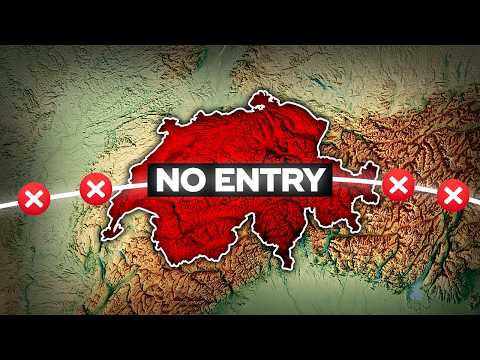
The tangible result of this policy shift has been the closure of asylum centers across Switzerland. Facilities built during the 2022-2023 surge in Ukrainian refugees now sit empty. In October 2024, the Swiss Federal Office for Migration announced the closure of nine reception centers due to low occupancy. This was not an accidental outcome, but the direct consequence of the country's deliberate mission statements. Swiss authorities had tightened enforcement, accelerated deportations, and unequivocally signaled that rejected asylum seekers would not be permitted to stay. The message resonated: people stopped coming, and those whose applications had been rejected began to leave.
However, this sharp drop in immigration raises a multitude of new questions, particularly concerning Switzerland's long-term economic viability. With an aging population and a persistently low birth rate, can the economy sustain lower immigration? The country's pension systems depend on a growing workforce. If fewer workers arrive, who will fund retirements? Who will staff the hospitals? Who will fill the essential jobs that Swiss citizens increasingly do not want? These are not hypothetical concerns, but immediate challenges that underscore the profound dilemma at the heart of Switzerland's current trajectory.
A Model or a Warning?
Switzerland's immigration experiment is far from over. The SVP continues to advocate for more restrictions, making new referendums, including the population cap proposal, more than likely. The party's mission statement outlines objectives reaching as far as 2050. Public opinion, however, remains divided. Swiss citizens generally desire control over who enters the country, rather than outright closure. They have rejected ending free movement with the EU and automatic deportations, and even accepted refugees in Oberwil, demonstrating that Swiss democracy often moderates the most extreme demands of its populist movements.
Yet, the fundamental tension persists: Can a country where nearly half the population has foreign roots maintain social cohesion amidst surging nationalism? Can an economy inextricably dependent on foreign labor survive increasingly stricter controls? Can direct democracy effectively balance pressing economic needs with deeply ingrained cultural anxieties? Switzerland is attempting to answer these complex questions in real time, and the rest of Europe, grappling with its own immigration challenges, is watching intently.
Switzerland's immigration story is unique among European nations. It is neither the aggressive exclusion seen in Denmark nor the initial open-door generosity of Sweden. It is a more intricate narrative of a wealthy, stable democracy wrestling with its own inherent contradictions. Switzerland built a formidable economy on the back of foreign labor, then turned politically against immigration. It relies heavily on access to the EU single market while steadfastly rejecting full EU membership. It has voted to restrict immigration, yet has also rejected the harshest proposed restrictions. It is a country where a significant portion of the population has foreign origins, even as nationalist sentiments surge.
The dramatic reversal of 2024, characterized by falling immigration, rising deportations, and closing asylum centers, marks a new chapter. Whether this trajectory is sustainable remains to be seen. Labor shortages are already emerging in sectors heavily reliant on migrants, and demographics do not lie. Switzerland's population is aging, with the share of people aged 65 or over projected to reach 30 percent by 2060. Without sustained immigration, the welfare state faces an existential threat. The 2025 announcement that Switzerland seeks the authority to restrict the free movement of people from the EU, citing factors like net immigration, cross-border commuters, and welfare dependency, raises serious questions about the country's true intentions, despite official reassurances. While Justice Minister Beat Jans compared the proposed safeguard clause to simply having a fire extinguisher on hand for emergencies, critics view this framing as a strategic softening of what could become a much harder stance on immigration.
Politically, the momentum is clear. The SVP has largely won the immigration debate, with even centrist parties now supporting stricter enforcement. The question is no longer whether Switzerland will restrict immigration, but rather to what extent. Other countries are observing, and many are undoubtedly taking notes. Can a small, wealthy nation, empowered by direct democracy, engineer a controlled reduction in immigration without precipitating economic disaster? Can voters be trusted to make rational policy decisions on such complex issues? Or does Switzerland's model only function due to its unique circumstances, its immense wealth, political stability, small size, and a special relationship with Europe that no other nation can replicate? The answers to these questions will inevitably shape not only Switzerland's future but also the broader trajectory of immigration politics across the developed world. For now, one truth is undeniable: the era of uncontrolled immigration to Switzerland is over. The doors are closing, the wave has receded, and Switzerland is betting that it can thrive with fewer people coming in. Whether that audacious bet pays off will be the defining question of the next decade, a geographic plot twist that proves the world is stranger than school ever taught.