Our planet is a tapestry of diverse landscapes and vibrant cultures, yet beneath the surface, unseen forces often shape nations more profoundly than any mountain range or ocean current. Economic realities, often invisible to the casual observer, can twist the fate of entire populations, turning once-stable societies into arenas of daily struggle. The global stage of 2026 presents a stark picture: countries, rich in history, resources, and human potential, teetering on the edge of unprecedented financial collapse. This isn't just about abstract numbers, it's about the very fabric of daily life unraveling, from blackouts to empty shelves, revealing geographical vulnerabilities and policy missteps that defy easy explanation.
Infrastructure in Ruin: The Breakdown of Daily Life
Daily 18-hour blackouts plague Cuba's collapsing power grid.
Cuba faces its worst economic downturn in 67 years, marked by widespread suffering. The national electrical grid experiences daily power blackouts up to 18 hours, suffering multiple near-total collapses since late 2025. This infrastructure failure is due to busted plants and dwindling oil shipments, pushing nearly 89% of households into extreme poverty.
Zimbabwe's power supply generates less than half demand.
Hyperinflation has returned to Zimbabwe, repeating past mistakes with its new Zigg currency collapsing. The nation endures daily power outages stretching over 18 hours, as the Zimbabwe Electric Supply Authority often generates less than 800 megawatts against a peak demand of 1,850 megawatts. This energy crisis highlights deep-seated corruption and economic mismanagement.
Lebanon's currency lost 98% of its value since 2019.
Lebanon tops the list of economic destruction, ranked by the World Bank among the three worst crises since the 1850s. Since 2019, the Lebanese pound has lost over 98% of its value, rendering currency practically worthless. This catastrophic collapse, fueled by a financial Ponzi scheme and political paralysis, means electricity runs only a few hours daily, and the state can barely function.
The rupee lost approximately 80% of its value, and inflation peaked at 70%, highlighting the severe consequences of fiscal mismanagement and ill-timed tax cuts.
The Vaults Run Dry: Currencies in Freefall
Bolivia's treasury holds only $166 million in spendable USD.
Despite vast lithium deposits, Bolivia's economy nears a critical point with foreign reserves plummeting. By late 2023, reserves dropped to $1.7 billion, but only a mere $166 million of that was actual US dollars, the rest being unspent gold. This scarcity means the central bank's currency peg is on the verge of breaking, promising widespread devaluation and inflation.
Sri Lanka defaulted in 2022, triggering presidential palace storming.
In 2022, Sri Lanka became the first Asian nation this century to default on its foreign debt, leading to national chaos. Fuel queues stretched for miles, hospitals ran out of medicine, and citizens, fed up with 13-hour blackouts, stormed the presidential palace. The rupee lost approximately 80% of its value, and inflation peaked at 70%, highlighting the severe consequences of fiscal mismanagement and ill-timed tax cuts.
Turkey's central bank reserves went negative $151 million.
President Erdogan's unconventional economic policies, forcing interest rate cuts amid soaring inflation, nearly imploded Turkey's economy. By May 2023, the central bank's net reserves plummeted to a staggering negative $151 million, meaning Turkey ran out of its own money and relied on emergency funds. This desperate situation arose from attempts to prop up the Lira before elections, causing it to crash by 44% in 2021 and inflation to rocket to 85%.
The Weight of Debt: Fiscal Black Holes
Kenya dedicates 40% of tax revenue to debt interest.
Kenya struggles under a massive debt burden, a consequence of years of heavy borrowing for projects like Chinese-built railways. The nation now spends approximately 35 to 40% of its total tax revenue just on interest payments for its $80 billion debt. This dire situation has led to civil servants, and even members of parliament, going unpaid for an entire month.
Nigeria's debt servicing once exceeded 100% of revenue.
Africa's most populous nation, Nigeria, faces a paradox, being a major oil producer yet struggling financially. At certain points in 2022, debt servicing costs actually exceeded total government revenues, forcing borrowing just to pay interest. Despite recent reforms like fuel subsidy removal, which caused inflation to blow past 25%, weak tax collection and massive oil theft continue to drain the treasury.
Egypt faces $100 billion in foreign debt obligations by 2027.
Egypt's economy is suffocating under a massive debt load, planning to borrow an additional 3.6 trillion Egyptian pounds for fiscal year 2025-2026. The country faces approximately $100 billion in foreign debt obligations through 2027, with over 40% of government revenue consumed by interest payments. A sharp drop in Suez Canal tolls, a vital source of hard currency, has exacerbated this crisis, pushing over 30% of Egyptians below the poverty line.
Pakistan's repeated reliance on the International Monetary Fund, having approached the IMF for assistance over 20 times, shows a long history of fiscal challenges and economic vulnerability.
Political Standoffs: Crisis of Governance
Tunisia rejects IMF loan, risking total economic collapse.
Tunisia, once the spark of the Arab Spring, now faces severe fiscal challenges with public debt exceeding 90% of GDP. President Kais Saied has rejected a crucial $1.9 billion IMF loan offer, deeming it unacceptable interference. Without this external financing, the country struggles to pay foreign creditors, and inflation continues to dismantle purchasing power.
Myanmar's civil war plunges millions into poverty.
Following the February 2021 military coup, Myanmar's economy faces a devastating crisis. The World Bank estimates millions have fallen below the poverty line as civil war rages, causing the Kiat to plummet and export revenues to dive. Food prices have skyrocketed, while the military junta burns through shrinking foreign reserves to fund its war, leaving many in urban centers facing real hunger.
Pakistan approaches IMF for assistance over 20 times.
Pakistan, with its 240 million people, has a long history of fiscal challenges, having approached the IMF for assistance over 20 times since joining in 1950. The country is currently operating under its 25th IMF arrangement, highlighting persistent structural issues. Reserves were once as low as $3.5 billion, enough for only three weeks of imports, making it perpetually vulnerable to default without comprehensive reforms.
Resource Riches, Human Poverty: A Stark Contradiction
Bangladesh's garment industry, 80% of exports, is crumbling.
Bangladesh is entering 2026 in its worst economic state, primarily due to the crumbling of its vital garment industry. This sector, accounting for over 80% of all exports, is collapsing as global demand drops and domestic instability deters Western buyers. Factory orders are plummeting, and the banking system teeters on the brink with surging non-performing loans, while foreign exchange reserves drain rapidly.
Venezuela's oil output plummeted 75% from its peak.
Despite possessing the world's largest proven oil reserves, Venezuela is an economic disaster, with over 90% of households living in poverty since 2017. Decades of mismanagement and corruption have caused oil output to plummet by more than 75% from its late 1990s peak. The state oil company, PDVSA, is a hollowed-out shell, unable to capitalize on even decent oil prices due to underinvestment and sanctions, leaving millions starving.
Argentina's radical reforms balance budget, but poverty exceeds 50%.
President Javier Milei's radical "chainsaw" reforms in Argentina achieved a 0.3% budget surplus in 2024, slashing nearly $8 billion in spending. While monthly inflation dropped significantly from 25% to around 2%, the human cost has been crushing. Poverty surged above 50%, real wages flopped, and unemployment climbed, as subsidies disappeared, leaving streets filled with protesters struggling for basic necessities.
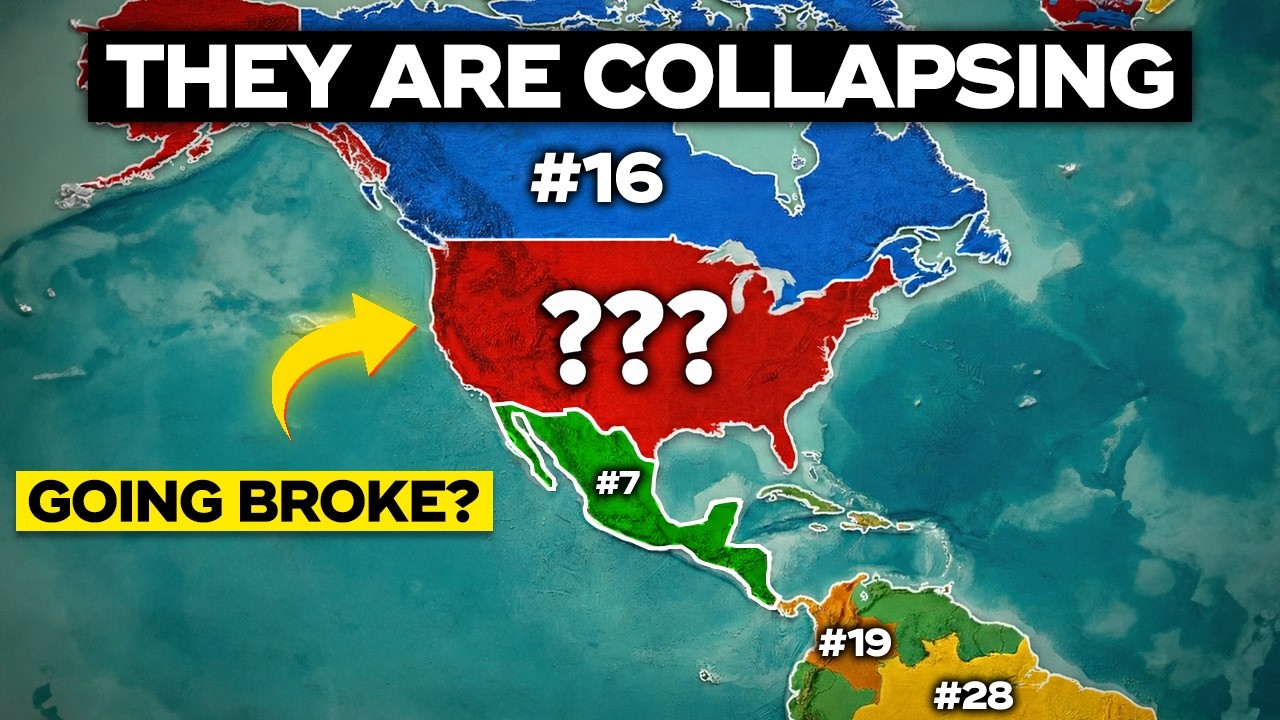
The stories of these 15 nations are not merely tales of economic statistics; they are vivid geographical narratives of human resilience, political miscalculation, and the harsh realities of a globally interconnected world. Our maps might show borders and capitals, but the true geography of a nation is often etched in its balance sheets, its power grids, and the daily struggles of its people. As Across The Globe continues to explore the world's hidden contours, these collapsing economies serve as a potent reminder that the most profound plot twists often unfold not in fiction, but in the complex, ever-evolving landscape of our own planet, proving that the world remains far stranger than any textbook ever taught.