West Virginia, often dubbed the Mountain State, presents a demographic enigma unlike any other in the United States. While the nation has embraced one of the most significant waves of immigration in its history, West Virginia has largely remained on the sidelines. Picture this: a mere 20-minute drive can transport a traveler from the bustling, multicultural environs of Northern Virginia, where immigrants make up a third of the population, into a state where barely one in fifty residents was born abroad. This striking contrast creates one of America's sharpest demographic borders, revealing a unique tapestry woven from geographic isolation, economic legacy, and historical trajectory. It is a story of a state that, in many ways, has been bypassed by the very forces reshaping modern America.
The Demographic Anomaly: A State Apart
With a population of approximately 1.8 million people, West Virginia stands as an outlier in the national demographic landscape. Only about 2% of its residents were born in another country, translating to roughly one in every fifty people. To grasp the peculiarity of this figure, consider a simple thought experiment: if one were to randomly stop fifty individuals on a West Virginia street, statistically only one would be foreign-born. Contrast this with Northern Virginia, where the same exercise would likely yield fifteen to twenty foreign-born individuals. Nationally, the average stands at about one in seven, making West Virginia's statistic profoundly unusual. In fact, the state has consistently held the title for the lowest share of foreign-born residents among all American states for years.
The disparities become even more pronounced when examining neighboring regions. Virginia, West Virginia's eastern neighbor, boasts a foreign-born population of approximately 13%, closely aligning with the national average. Within Virginia, specific counties in the northern region see foreign-born populations soaring to between 30% and 40%. Montgomery County, Maryland, situated directly adjacent, is home to around 365,000 immigrants, a staggering number that is nearly ten times the entire foreign-born population of West Virginia. To put West Virginia's total immigrant count of 37,000 people into perspective, it could comfortably fit inside a single NFL stadium, with thousands of seats left unoccupied. Meanwhile, Fairfax County, a single suburb of Washington, D.C., alone houses approximately 350,000 foreign-born residents, effectively ten times West Virginia's entire immigrant contingent. Even other surrounding states, such as Pennsylvania at 7% to 8% foreign-born, Ohio at 5% to 6%, and even the rural Appalachian state of Kentucky at nearly 5%, far outpace West Virginia. The Mountain State truly exists in a category of its own, ranking 50th out of 50 states in virtually every measurable immigration metric, including naturalizations, green cards, refugee arrivals, asylum seekers, and temporary visas.
Echoes of Industry: A History of Missed Tides
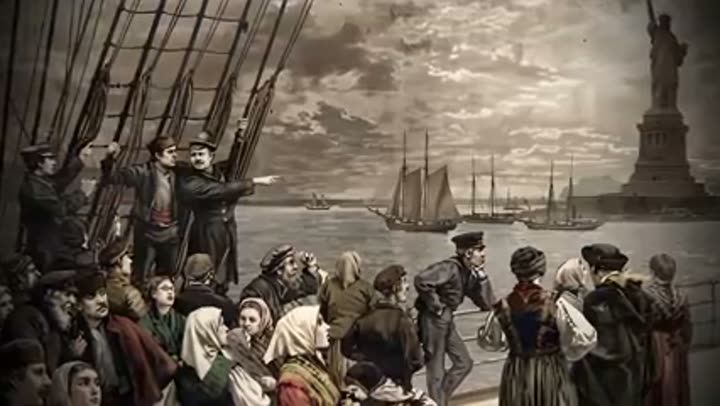
West Virginia's diminutive immigrant population is not a recent phenomenon; it is deeply rooted in its historical development. Unlike states that became powerful magnets during America's great immigration waves of the late 1800s and early 1900s, West Virginia largely missed out on this transformative period. While some Italian and Eastern European families did arrive to work in the coalfields, the scale was minuscule compared to Pennsylvania's bustling coal country or the industrial factories of Pittsburgh and Philadelphia. Even at the turn of the 20th century, when the nation as a whole registered a foreign-born population of about 14% (a figure remarkably similar to today's numbers), West Virginia barely managed a few percentage points.
The situation further deteriorated in the late 1940s, when the Appalachian coal mining industry underwent rapid mechanization. The introduction of machines like the continuous miner, combined with roof bolting technology, drastically improved efficiency but drastically reduced the need for human labor. Jobs vanished, and by the 1950s, many mining towns could no longer sustain their populations. This triggered a mass exodus of young people, who left in droves for places like Ohio and Washington, D.C., in search of employment that the mountains could no longer provide. Since the 1950s, West Virginia has consistently experienced a net loss of residents due to outward migration. Its population, which peaked at 2 million people in 1950, has since fallen to its current 1.8 million.
The state's demographic stagnation continued into the 21st century. Between 1990 and 2010, West Virginia's population grew by a meager 3.3%, starkly contrasting with the national growth rate of 24% during the same period. The subsequent decade, from 2010 to 2020, brought an even more severe decline, with the state shedding 3.2% of its people, amounting to approximately 59,000 residents. West Virginia was the only state to lose population in the 2020 census, apart from slight drops in Illinois and Mississippi. This significant decline led to the loss of one of its three seats in the U.S. House of Representatives, reducing its representation from three districts to two. This trend is crucial because newcomers, whether from other states or other countries, typically gravitate toward places that are expanding and dynamic, not those experiencing contraction. While other regions absorbed new cultures and labor forces, West Virginia remained a demographic snapshot of an earlier era.
The Mountain Barrier: Geography's Unyielding Hand
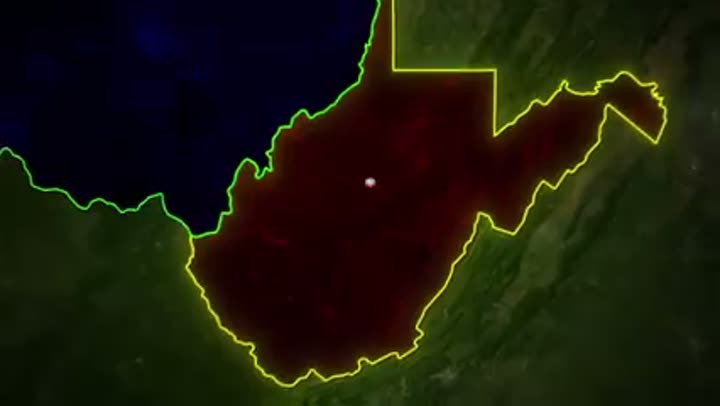
Location plays an undeniable role in immigration patterns, and West Virginia's geography presents significant disadvantages. The state is landlocked, nestled deep within the Appalachian Mountains, far removed from any international boundaries or coastal entry points. The vast majority of migrants entering the United States do so through major coastal gateways in New York, California, Florida, and Texas, or via land borders. West Virginia simply does not lie on any significant international migration route.
Regionally, while West Virginia borders the busy Northeast Corridor, immigrants heading to the Mid-Atlantic typically land in major metropolitan centers like Washington, D.C., Baltimore, Philadelphia, or Northern Virginia. These areas boast large international airports and established immigrant communities, offering familiar support networks and easier access. West Virginia, in stark contrast, possesses no large international airport or metropolitan hub of its own. The closest major airports, such as Dulles, Reagan National, BWI, and Pittsburgh, are all located in neighboring states. An immigrant family flying into D.C. or New York is, therefore, far more likely to establish roots in those metro areas, where communities and services already exist, rather than venture west over the mountains into rural West Virginia. The state capital, Charleston, has a population of just 48,000, and Huntington, its next largest city, has around 45,000 residents. The entire state lacks a single city ranked among the top 150 U.S. metro areas by population, which are typically the major hubs where immigrants find robust job markets and cultural communities.
"West Virginia's entire immigrant population, all 37,000 people, could fit inside a single NFL stadium with thousands of seats to spare."
The data further underscores this geographic isolation. Between 2019 and 2023, the Parkersburg-Vienna area in West Virginia recorded the lowest share of foreign-born residents of any U.S. metro, a mere 0.98%. This means roughly just one person out of every hundred in that area was born abroad. Compare this to a vibrant gateway city like Miami, where immigrants constitute a massive 41.9% of the population. Other West Virginia metros, such as Wheeling and Weirton-Steubenville, also cluster near the bottom nationally, with foreign-born shares hovering around 1.5% and 1.2% respectively. These are exceptionally tiny numbers, even considering their proximity to Ohio, highlighting the profound impact of geography and infrastructure on immigration patterns.
An Economy in Transition: The Scarcity of Opportunity
Immigrants, like most people seeking a new life, typically move to places with ample job opportunities: booming cities in need of engineers and doctors, agricultural regions requiring field laborers, or towns with meatpacking plants seeking workers. Unfortunately, West Virginia has not been a place of booming opportunities. The state grapples with what might be termed a chicken-and-egg dilemma, where its economic structure both results from and contributes to its low immigration rates. A long-term economic decline and a narrow job market have rendered the state largely unattractive to newcomers.
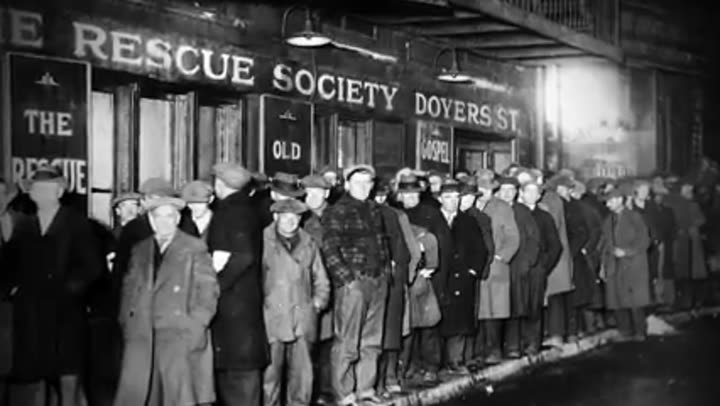
West Virginia's traditional industries, including coal mining, steel, and chemicals, are either a shadow of their former selves or have become highly automated. Coal mining, once a massive employer, now hires only a fraction of the workers it did in the mid-20th century, relying instead on massive machinery rather than thousands of manual laborers. Crucially, West Virginia has also failed to develop the newer industries that typically attract modern immigrants. The tech sector, for instance, has fueled immigration to regions like Northern Virginia, with its Dulles tech corridor, or North Carolina's Research Triangle. West Virginia's tech sector remains minimal at best. The state hosts zero Fortune 500 companies, and no major multinational corporations have established headquarters or large offices there to draw international talent. In contrast, neighboring Virginia boasts giants like Amazon, Microsoft, and Capital One, along with government contractors that regularly hire foreign-born experts. Maryland is home to biotech firms and federal laboratories, while Ohio features large manufacturers and universities. West Virginia's largest employers primarily serve the local population, focusing on healthcare, education, government, and energy.
Even sectors like agriculture and food processing, which often drive immigrant labor in other rural states, are largely absent. States like Iowa, Nebraska, and Arkansas, despite being predominantly rural, have sizable immigrant populations due to their meatpacking plants and large-scale farms employing migrant workers. West Virginia lacks a comparable agribusiness sector; its mountainous terrain simply does not lend itself to large industrial farms. Demand in construction and manufacturing has also been limited, with many factories having shuttered or downsized over the years. The labor market is characterized by fewer jobs and an aging workforce. West Virginia consistently records one of the lowest labor force participation rates in the nation, with only about 54% of its native-born working-age adults actively working or seeking work in 2023, compared to the national average of 63%.
Interestingly, West Virginia's small immigrant population demonstrates a much stronger workforce engagement, with about 65% participating in the labor force. They are more likely to be of working age and actively employed, although their sheer scarcity means this positive impact is largely muted. The state also consistently ranks near the bottom for median household income, usually only surpassed by Mississippi, with the gap between the two often less than $1,500. This disparity is even more stark when compared to Maryland and Virginia, which consistently rank in the top ten nationally, with median incomes often exceeding $85,000 to $95,000. The promise of higher earnings is a classic pull factor for immigrants, a factor West Virginia's wage scale and job openings simply cannot compete with. The state's population decline itself creates a vicious cycle: businesses hesitate to invest in a shrinking market, leading to fewer new jobs, which in turn offers fewer reasons for outsiders to relocate. In the 2010s, 47 of West Virginia's 55 counties either lost population or barely held steady, further compounding the challenge.
Invisible Bridges: The Power of Social Networks
Beyond economics and geography, social networks represent a crucial, often overlooked, factor in immigration. New arrivals typically gravitate toward places where they know someone, or where an established community from their homeland already exists. This phenomenon means that even small initial demographic differences can snowball into significant disparities over time. West Virginia faces a unique paradox: because it historically attracted so few immigrants, there are currently no substantial established communities to draw new arrivals today. This creates a demographic feedback loop, perpetually reinforcing its low immigration rates.
For a recent immigrant from, say, India, the natural inclination might be to move to places like Edison, New Jersey, or Herndon, Virginia, where large Indian-origin communities, grocery stores, and temples already thrive. West Virginia, however, possesses no equivalent of a Little India, a Chinatown, or a sizable Mexican-American community. Moving to the Mountain State as an immigrant can, therefore, be a profoundly lonely proposition. The state's demographics are remarkably homogeneous; West Virginia is approximately 92% white, and the overwhelming majority of families have deep, multi-generational local roots. Only about 0.8% of West Virginians are U.S.-born with at least one immigrant parent, illustrating the limited intergenerational integration of immigrant populations.
"If the US mirrored West Virginia's level of immigration, we'd only have around six or seven million immigrants nationwide. That's roughly the number of foreign-born residents just in greater Los Angeles today."
Interestingly, West Virginia's tiny immigrant community, though small in absolute numbers, is unusually diverse in its origins. No single ethnic group dominates the foreign-born population. Approximately 32% were born in Asia, 29% in Europe, and 31% in Latin America. This contrasts sharply with the national picture, where Mexican-born immigrants alone constitute about 25% of the U.S. foreign-born population. While this diversity might seem positive, in practice, it means that immigrants from specific countries arrive in such minuscule numbers that building robust ethnic community support becomes exceedingly difficult. There might be just a dozen Pakistani families in the entire state, or perhaps fifty Vietnamese households in total, with handfuls of families representing dozens of different countries. This fragmentation prevents the formation of the critical social networks that often serve as invisible bridges for new immigrants.
A Shifting Political Landscape: Welcoming or Withholding?
Beyond the structural factors of geography, history, and economics, perceptions and attitudes also play a role in shaping immigration patterns. West Virginia has evolved into a politically conservative state in recent years. While West Virginians are widely renowned for their friendliness and hospitality, there has been comparatively little enthusiasm for immigration within the political realm. Some state leaders have publicly voiced concerns about the "dangers of illegal immigration," despite West Virginia having the smallest immigrant population to begin with, rendering such concerns largely theoretical in the state's context.
At the same time, West Virginia has historically made minimal effort to actively market itself as immigrant-friendly. While some cities and states, such as Indiana and Michigan, have implemented programs to attract immigrant entrepreneurs to their Rust Belt cities, West Virginia's governments, until very recently, have not pursued such a strategy. Although Governor Jim Justice agreed in 2019 to continue accepting refugees, in practice, West Virginia resettles very few. That same year, the state resettled fewer than ten refugees total. Another contributing factor is the state's aging population. West Virginia has one of the oldest populations in America, with a median age of around 43 years, ranking third highest after Maine and Florida. Older communities can sometimes be less dynamic and less overtly open to the changes that new populations bring, further contributing to the state's demographic stasis.
The Unseen Costs: A State in Demographic Peril
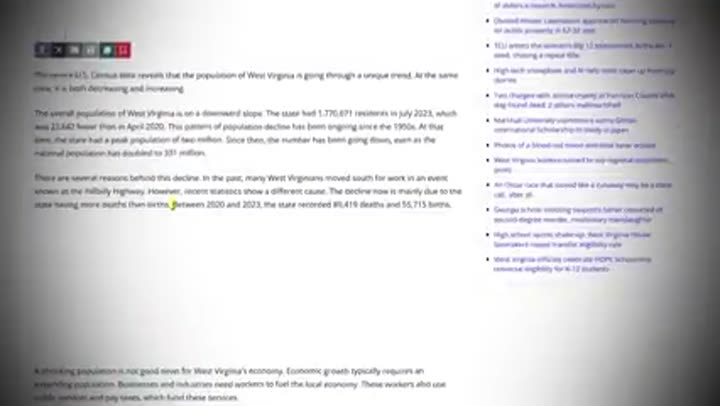
West Virginia's unique demographic status carries tangible consequences. First and foremost is the profound demographic impact: the lack of immigrants has significantly contributed to the state's population crunch. Nationwide, immigrants and their children account for a substantial share of population growth, a boost that West Virginia entirely misses. For years, the state's births have consistently trailed its deaths, and West Virginia records one of the highest mortality rates in the nation. Between 2020 and 2023, the state recorded approximately 34,000 more deaths than births. This imbalance means the median age continues to rise, schools are forced to consolidate or close, and as previously noted, congressional representation has shrunk.
Local economists are increasingly recognizing that to halt this downward spiral, West Virginia may need to look to outsiders, including immigrants. A 2019 report, for instance, indicated that even the modest growth in the state's small immigrant population has helped to slow the overall population loss. It presents a profound irony: a state with almost no immigrants may desperately need them to help turn things around, to start new businesses, fill critical job vacancies, and raise families. The immigrants who are present in West Virginia often "punch above their weight." As mentioned, their workforce participation rate stands at about 65%, significantly higher than the 54% for native-born residents. This means newcomers are more likely to be of working age and actively employed, often filling crucial roles in healthcare, engineering, and academia. Over half of West Virginia's foreign-born workers hold white-collar professional and healthcare positions.
Visiting a rural hospital or university in West Virginia often means encountering a doctor, professor, or researcher who was born in another country. International medical graduates, frequently from India, Pakistan, or Africa, play a vital role in staffing many underserved clinics and hospitals through visa waiver programs. These are often positions that American-trained doctors tend to avoid, making foreign-born doctors literal lifesavers for Appalachian communities. However, because the absolute number of immigrants is so low, their positive impact can easily be overlooked. West Virginia's immigrant population is also highly concentrated, with a large chunk of the 37,000 immigrants settling in just a few locations: Morgantown, the Eastern Panhandle near Martinsburg, and pockets around Charleston. Enormous swaths of West Virginia have practically zero foreign-born residents, and it is not uncommon to find schools with hundreds of students that do not have a single immigrant child among them.
West Virginia's current immigrant share of around 2% falls below what the nation as a whole recorded even during the Great Depression and World War II. To further illustrate, the lowest national foreign-born percentage in U.S. history was 4.7% in 1970; West Virginia today registers less than half that figure. As one West Virginia journalist aptly put it, "finding an immigrant in rural West Virginia is about as rare as finding a coal miner in Manhattan." Both exist, but they are few and far between. Bluntly, West Virginia's pervasive lack of immigrants might actively be hindering its ability to solve pressing problems. As the population ages, industries ranging from healthcare to trucking face severe worker shortages. Many other states bridge these gaps with immigrant labor. West Virginia's healthcare sector, for example, faces a 19.3% vacancy rate, a problem exacerbated by the scarcity of foreign-born workers available to fill nursing and physician roles. This creates a vicious cycle: the absence of immigrants arguably worsens West Virginia's economic struggles, yet those very economic struggles were part of the initial reason immigrants did not come.
Charting a New Course: The Road Ahead for the Mountain State
What we observe in West Virginia is the culmination of a perfect storm: a potent cocktail of geographic isolation, a legacy economy that has struggled to adapt, and a political culture that has not historically looked abroad for its future. For more than two decades, West Virginia has been on a lonely trajectory, drifting away from the increasingly diverse and urbanizing reality of the rest of America. As we look toward the 2030s, the stakes are rising. With a shrinking workforce and the nation's oldest population, West Virginia is not merely missing out on new cultures; it is facing a critical shortage of the very people it needs to sustain itself.
While the U.S. foreign-born share climbed from about 11% in 2000 to nearly 15% today, West Virginia has mostly remained on the sidelines. To truly comprehend the extent of this anomaly, imagine if the entire United States mirrored West Virginia's level of immigration. In such a scenario, the nation would have only around six or seven million immigrants nationwide. This figure is roughly equivalent to the number of foreign-born residents living in greater Los Angeles alone today. This stark comparison vividly illustrates just how far on the fringe West Virginia's demographic situation lies. It is as if a defining trend of modern America, the melting pot of cultures, almost entirely bypassed the Mountain State.
However, there are nascent signs that West Virginia is beginning to recognize this challenge and may be contemplating a change in course. Community leaders have started openly articulating a powerful message: "What West Virginia needs is more West Virginians," explicitly including immigrants who can become integral members of the state. They argue that even a modest influx of newcomers could fundamentally alter the demographic fortunes of the state for generations to come. It is a remarkable conversation, a place that historically has had shockingly little immigration now considering it as a lifeline. Whether this will translate into significant change over the next two decades remains an open question. If West Virginia can successfully diversify its economy, improve its infrastructure, and actively invite newcomers, it might just begin to inch up from its last-place standing. Even a move from 2% to 4% foreign-born over time could inject tens of thousands of new residents and a much-needed surge of youthful energy. For now, though, the numbers speak clearly: in the realm of immigration, West Virginia is profoundly different from its neighbors. It stands as an island of homogeneity, surrounded by an increasingly diverse America. The factors underpinning this reality are not random; they are deeply entwined with West Virginia's unique geography, its historical narrative, and its distinctive economic path. Understanding these factors not only explains the present but also illuminates the way forward for any future efforts to reshape its story.
The world is often stranger than our school textbooks suggest, and geography, in particular, has a way of throwing unexpected plot twists into the human story. West Virginia's demographic isolation is one such twist, a frozen moment in time within a nation defined by constant flux. This isolation, perhaps more than any other factor, might just be its biggest challenge yet.