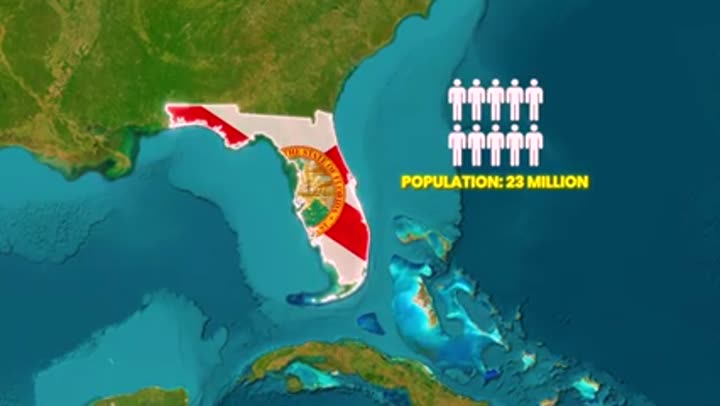
Florida, a slender finger of land extending into the Atlantic, appears idyllic, a sun-drenched haven. Yet, beneath the veneer of swaying palms and pristine beaches lies a geographical paradox, a constant battle between human ambition and unforgiving natural forces. This 500-mile limestone peninsula, largely built on reclaimed swampland, contends with a unique combination of hurricane exposure, porous geology, and relentless sea level rise. Its very existence is a testament to both human ingenuity and persistent hubris, often resulting in dramatic, costly, and sometimes tragic consequences. The state's landscape is a dynamic canvas, constantly reminding its 23 million residents that nature always bats last.
The Built Environment's Reckoning
Engineering a swamp for profit, Golden Gate Estates disaster.
In the 1960s, Gulf American Land Corporation bought 175 square miles of Everglades swamp, carving 813 miles of roads and 183 miles of canals. They sold 40,000 parcels to buyers who never saw them, only conducting sales tours in winter when the ground was dry. The canal network hemorrhaged 233 billion gallons of fresh water yearly, destroying marine ecosystems and causing the water table to drop four feet, creating perfect wildfire conditions.
Cape Coral's 400-mile flood trap funneled Ian's storm surge.
Developers in the 1950s bulldozed mangroves to create 400 miles of artificial canals in Cape Coral, more than Venice, Italy. During Hurricane Ian, these canals acted as superhighways for a nine-foot storm surge, funneling ocean water directly into homes. With natural wetlands paved over, the saltwater had nowhere to drain, leading to massive financial and health consequences, including flesh-eating bacteria outbreaks.
Miami Beach's sunny day flooding, a $500 million pump gamble.
Sunny day flooding, caused by high tides, has increased over 400 percent in Miami Beach since 2006. The ocean doesn't crash over seawalls, but bubbles up through porous limestone bedrock and backs through storm drains. Miami Beach is spending $500 million on 80 plus pump stations and raising roads, yet a 2017 power outage proved these measures are vulnerable, with sea levels rising an inch every three years.
Fort Lauderdale's 1 in 1,000-year flood trapped 88 billion gallons.
In April 2023, Fort Lauderdale received almost 26 inches of rain in just 12 hours, a third of its annual rainfall. The international airport became a lake, grounding flights for days. Port Everglades, critical for 40 percent of Florida's gasoline, flooded, paralyzing the region as gravity-based drainage failed when canal levels exceeded street height, trapping 88 billion gallons of water.
Beneath the Surface: The Ground's Betrayal
Land of Lakes mega sinkhole swallowed two homes on live TV.
On July 14, 2017, a 250-foot wide, 50-foot deep sinkhole opened in Land of Lakes, Pasco County, in just 30 minutes. Two homes collapsed completely, one crumbling on camera, and seven others were condemned. Both destroyed homes had previous sinkholes remediated, with one owner spending over $30,000 to drive steel underpins 60 feet deep, which ultimately proved futile against the collapsing limestone.
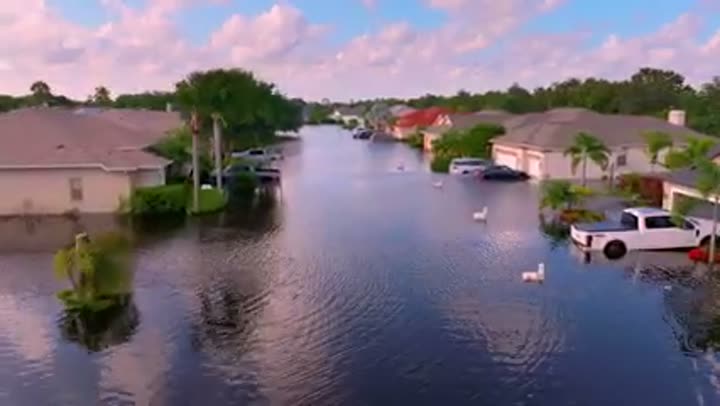
Winter Park sinkhole swallowed luxury cars and a house.
In May 1981, a massive 350-foot wide sinkhole opened in Winter Park, swallowing a three-bedroom house, a large portion of the city's Olympic-size swimming pool, and five Porsches from a nearby dealership. Two of the Porsches remain buried 100 feet deep. This event highlighted Florida's precarious geology, leading to the creation of the Sinkhole Research Institute.
Swallowed alive while sleeping, a man vanishes into the earth.
In March 2013, Jeffrey Bush was swallowed by a 20-foot void that opened beneath his bedroom in Seffner while he slept. His brother Jeremy attempted a rescue but was pulled out seconds before the entire room collapsed. Rescuers never recovered Jeffrey's body, and the home was demolished. The sinkhole reopened in August 2015 and again in July 2023, a haunting reminder of Florida's unstable ground.
Champlain Tower South collapse, saltwater's slow structural destruction.
On June 24, 2021, half of the 12-story Champlain Tower South in Surfside pancaked in under 12 seconds, killing 98 people. The building sat on a barrier island of reclaimed wetland, perched on porous limestone. Rising saltwater corroded the steel rebar inside concrete columns for decades, weakening the structure. A 2020 study identified the building as a localized pocket of subsidence, sinking one to three millimeters yearly between 1993 and 1999.
The state is spending a small country's GDP trying to rebuild what we spent a century destroying.
A Toxic Legacy: Polluting the Sunshine State
Indian River Lagoon collapse, manatees starving in poisoned waters.
Nutrient pollution from septic tanks and fertilizer runoff into the 156-mile Indian River Lagoon led to massive algae blooms that obliterated almost 98 percent of the seagrass manatees depend on. Over 1,000 manatees died in 2021 alone, with emergency feeding efforts dumping 600,000 pounds of lettuce. A federal judge ruled Florida violated the Endangered Species Act through its failure to regulate pollution.
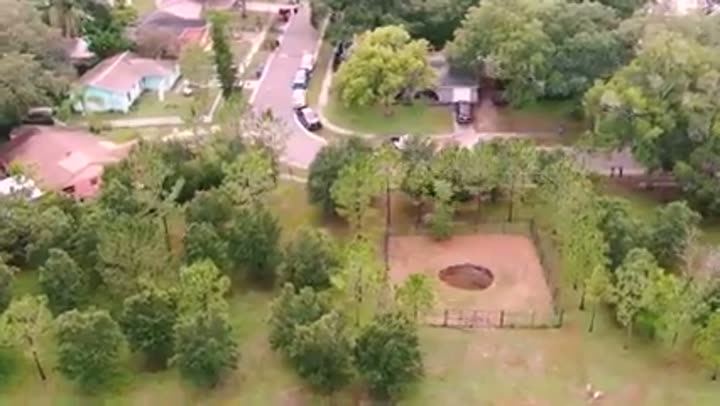
Lake Okeechobee's lost summer, toxic algae chokes the heartland.
In May 2016, Lake Okeechobee, Florida's liquid heart, became a neon green nightmare due to a 33-square mile bloom of toxic cyanobacteria. To prevent the lake's aging dikes from failing, the Army Corps flushed the sludge towards the coast, coating beaches with guacamole-like slime and causing toxins linked to liver disease. A $1.75 billion restoration plan had been cancelled years prior, costing local economies over $230 million.
Red tide crisis, 16 months turned coastline into wildlife graveyard.
For 16 straight months, from October 2017 to January 2019, Florida's Gulf Coast experienced a massive Karenia brevis bloom, leading to ecological and economic collapse. Over 2,400 tons of rotting marine life were scraped from beaches, and fish kill reports jumped 400 percent. The death toll included 171 manatees, 76 dolphins and whales, and 190 turtles, with tourism losses hitting $2.7 billion.
Coral reef mass bleaching, ocean heatwave kills critical species.
In summer 2023, waters off the Florida Keys reached 101.1 degrees Fahrenheit, causing the worst marine heatwave in the satellite era. Water temperatures stayed above 93 degrees Fahrenheit for months, leading to the functional extinction of elkhorn and staghorn coral, with 98 to 100 percent of colonies dying. Florida's 350-mile reef has lost roughly 90 percent of its coral cover in 40 years.
Mosaic phosphate mining sinkhole, radioactive waste in the aquifer.
In August 2016, a 215 million gallon pond of toxic, radioactive waste disappeared into a 45-foot wide sinkhole at a Central Florida fertilizer plant. This direct pipeline into the Florida aquifer, a cocktail of sulfuric acid, sodium, and low-level radiation, was kept secret by the Mosaic Company and the state for three weeks. It ultimately took $84 million and 20,000 cubic yards of concrete to plug the hole.
Piney Point phosphogypsum disaster, deliberate toxic dumping.
On April 3, 2021, a mandatory alert warned of the imminent collapse of a five-story mountain of industrial waste at Piney Point. Engineers found a massive leak in a reservoir holding nearly half a billion gallons of contaminated processed water. To prevent a catastrophic breach, the state pumped 215 million gallons of nutrient-rich wastewater directly into Tampa Bay at 22,000 gallons per minute, fueling a massive red tide bloom.
When you build massive concrete towers on shifting barrier island sand, you aren't owning the beach, you're just renting it from the tide.
Everglades: A River Drained, A Debt Paid
Everglades drainage, rebuilding a river at immense cost.
In 1904, Governor Napoleon Broward promised to drain the Everglades, which was actually a 60-mile wide river. By the 1940s, Florida had carved over 2,100 miles of canals, reducing the Everglades to 50 percent of its original size. This diversion caused saltwater intrusion into Miami's Biscayne Aquifer, ground subsidence of six to nine feet near Lake Okeechobee, and dead zones in Florida Bay. The Comprehensive Everglades Restoration Plan, initially $8.2 billion, is now estimated at $23.2 billion, stretching to 2050.
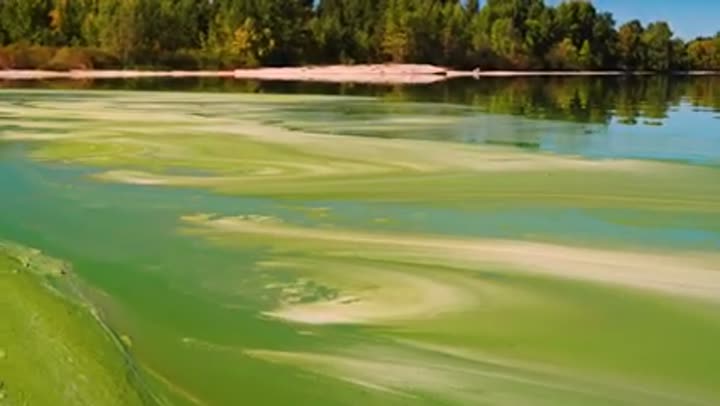
Moore Haven flood, 1926, a deadly warning ignored.
On September 18, 1926, the Great Miami Hurricane pushed a 15-foot wall of water across Lake Okeechobee, aimed at Moore Haven. The town's protection, muck dikes barely five to six feet high, disintegrated, drowning at least 150 people. Despite this brutal warning, Florida made almost no improvements to the dikes over the next two years, setting the stage for an even greater catastrophe.
Okeechobee hurricane, 1928, Florida's deadliest, most shameful disaster.
In 1928, a Category 4 hurricane pushed a 20-foot wall of water out of Lake Okeechobee, drowning at least 2,500 people, mostly black migrant farm workers. Developers had sold rich muckland dangerously below the lake's level, protected only by flimsy four-foot dirt mounds. The National Guard forced black survivors to collect decomposing bodies, and 674 victims were bulldozed into an unmarked mass grave, not officially memorialized until 2008.
Hurricane's Fury: When Nature Reclaims
Labor Day hurricane, 1935, sand blasted to death in the Keys.
The most powerful storm to ever hit the United States, a Category 5 monster, struck the Florida Keys on Labor Day 1935, with sustained winds of 185 miles per hour and an 18 to 20-foot storm surge. Nearly 700 World War I veterans were stationed in flimsy work camps on exposed islands. A delayed rescue train meant 423 people died, including 259 veterans. Ernest Hemingway, aiding rescue efforts, saw bodies tangled in mangroves for miles.
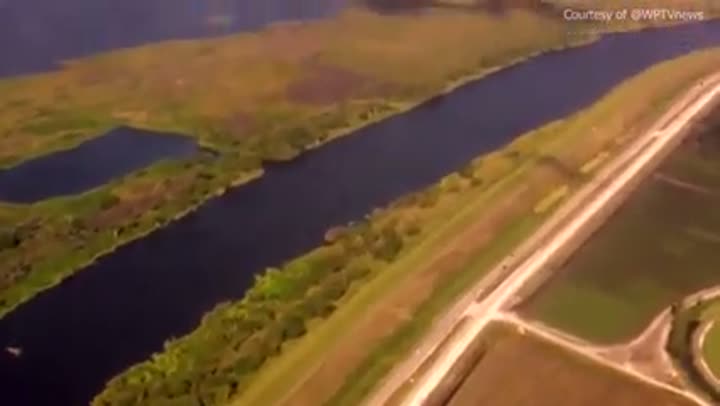
Hurricane Andrew, 1992, staples instead of nails scandal.
Hurricane Andrew, a Category 5 beast with 165-mile per hour winds, dismantled the myth of Florida's robust construction. Investigators found developers used industrial staples instead of nails for roofs, low-grade plywood, and zero truss bracing. This failure of oversight resulted in 65 deaths, 63,000 destroyed homes, and $27 billion in damage. It bankrupted 11 insurance companies and forced a complete rewrite of state building codes.
Great Miami Hurricane, 1926, killed the Florida dream.
In September 1926, a Category 4 hurricane with 150-mile per hour winds pushed a 10-foot surge across Miami Beach and into downtown. When the eye passed, thousands of residents emerged, unaware they were only at halftime. When the back half of the storm struck 35 minutes later, it turned streets into a graveyard, leaving 372 dead, 6,000 injured, and 25,000 homeless. Normalized for today's wealth, the damage would be $300 billion.
Hurricane Michael, 2018, Category 5 wakeup call for building codes.
Hurricane Michael, the first Category 5 to hit the Florida Panhandle, exposed a $25 billion lesson in building for the wrong storm. For decades, Panhandle building codes required homes to withstand only 130 mph winds, compared to 175 mph in South Florida. Michael's 160 mph winds wiped Mexico Beach off the map, destroying 89 and damaging 1,584 of its 1,692 buildings. One steel-reinforced home, built for 250 mph winds, stood alone.
7.7 million without power, Irma unplugged the state.
Hurricane Irma, a 400-mile wide monster in September 2017, triggered the largest power outage from a tropical cyclone in US history, leaving 7.7 million homes and businesses dark, approximately 73 percent of all electrical customers. The Florida Keys took a direct hit, with one in four homes destroyed, including 727 mobile homes pulverized. In a Hollywood nursing home, 14 elderly residents died of hyperthermia after air conditioning failed.
Volusia County condos falling into the Atlantic, erosion's relentless march.
In late 2022, back-to-back storms, Hurricane Ian and Nicole, caused Volusia County's eroding Atlantic coast to collapse. Ian stripped away protective dunes and cracked seawalls, but the already defenseless land allowed Nicole, a weaker storm, to cause $481 million in damage, exceeding Ian's $377 million. Homeowners watched their properties, including a condo's newly rebuilt $240,000 seawall, wash into the sea.
Hurricane Ian, 2022, delayed evacuations proved a death sentence.
In September 2022, Hurricane Ian, a high-end Category 4 monster, brought a 15-foot storm surge, the highest in 150 years, effectively erasing Fort Myers Beach and Sanibel Island. Lee County officials delayed mandatory evacuations until just one day before landfall, despite clear warnings 72 hours in advance. This fatal breakdown in judgment contributed to 156 deaths, with 72 in Lee County alone, and $113 billion in damages.
Hurricane Milton's 180 mph gamble, a future warning.
In October 2024, Hurricane Milton, depicted as the most intense Gulf hurricane ever recorded at 180 miles per hour, aimed directly at St. Petersburg. Officials set up a base camp for 10,000 first responders in Tropicana Field, whose roof was rated for only 115 mph winds. They evacuated hours before the storm shredded the roof. Milton also turned uncollected debris from a previous hurricane into lethal projectiles, proving that ignoring the timing of back-to-back storms is a dangerous gamble.
Florida's narrative is a potent reminder that geography is not merely a backdrop, but an active, often unpredictable, protagonist. From the subterranean threats of sinkholes to the relentless assault of hurricanes, the Sunshine State constantly illustrates that the world is far stranger, more dynamic, and more demanding than any textbook might suggest. Building on a foundation of shifting sand and porous rock, in a hurricane corridor, means every development is a negotiation with nature, a negotiation Florida has often lost, proving that the planet always has the last word.