In an age where global urbanization often conjures images of ever-denser metropolises, a curious geographical paradox persists across the United States. Certain major cities, sprawling across vast tracts of land and recognized by millions, maintain surprisingly sparse populations. These urban centers defy expectations, presenting an intriguing puzzle of low population density amidst significant municipal footprints. From sun-drenched desert expanses to the frigid northern frontier, these cities challenge our assumptions about what it means to be a "big" city, revealing hidden spaces and unique local dynamics that shape their distinctive character.
The Paradox of Plenty: Sprawl and Stagnation
Tucson, Arizona: Declining density despite half-million population.
Tucson, Arizona, home to nearly 547,000 residents, covers approximately 241 square miles, resulting in a population density of about 2,267 people per square mile. Intriguingly, its density has actually declined by 1.15% over the past decade. This trend is largely attributed to significant urban sprawl, as the city expands outwards, making it less densely populated overall.
Memphis, Tennessee: Population decline despite density increase.
Memphis, Tennessee, with a population around 620,000 across 297 square miles, has a density of approximately 2,091 people per square mile. While its density has increased by 6.5% since 2010, the city's overall population has been declining. Reasons for this include high crime rates, with homicide rates reportedly tripling in recent years, and a struggling economy marked by a lack of job opportunities and increasing poverty.
Reasons for this include high crime rates, with homicide rates reportedly tripling in recent years, and a struggling economy.
Resilience on the Water's Edge: Tourists vs. Residents
New Orleans, Louisiana: Hurricanes and crime thin the crowds.
Despite its vibrant image, New Orleans maintains a low population density of about 2,181 people per square mile, with 369,000 residents spread over 169.5 square miles. The city's challenging history with hurricanes, particularly Hurricane Katrina in 2005 which temporarily displaced almost 100% of its population, has significantly impacted its growth. High crime rates also contribute to its sparse residential footprint.
Virginia Beach, Virginia: Tourist magnet, low permanent density.
Virginia Beach, with its 455,000 residents, sees a massive influx of 13.6 million tourists annually, creating an illusion of density. However, its expansive land area of over 244 square miles results in a relatively low permanent population density of 1,862 people per square mile. While this density has slowly increased by 2.45% since 2010, its vastness ensures ample space for its year-round inhabitants.
Plains and Programs: Heartland's Expanses
Tulsa, Oklahoma: State's low density reflected in urban core.
Tulsa, Oklahoma, with about 412,000 people across 197.5 square miles, has a density of 2,085 people per square mile. This reflects Oklahoma's status as one of the least densely populated states. While Tulsa's population is growing, partly due to programs like Tulsa Remote offering $10,000 grants to new residents, this growth has ironically led to issues like a lack of affordable housing and increased homelessness.
Kansas City, Missouri: Massive land area, suburban growth dominates.
Kansas City, Missouri, spans a vast land area of approximately 319 square miles, accommodating just over half a million people, resulting in a density of 1,619 people per square mile. Its density has increased significantly by 7.54% since 2010, yet much of this growth occurs in the surrounding metropolitan area rather than the city center. High violent crime rates, ranked the eighth highest in the country in 2020, deter central urban development.
Oklahoma was called the second worst state in the entire country to live in due to factors like unpredictable weather, high rates of uninsured people, drug problems, and homelessness.
Sunbelt's Sprawling Giants: Growth and Growing Pains
Nashville, Tennessee: Rapid growth strains infrastructure.
Nashville, Tennessee, despite hosting 14.4 million tourists annually, has a resident population nearing 700,000, with a density of 1,456 people per square mile across its roughly 500 square miles. The city experiences rapid growth, with an estimated 80 people moving there daily in 2022. This swift expansion, however, contributes to increased housing costs, heightened commute times, and persistently low ratings for its public school system.
Jacksonville, Florida: Enormous footprint, low density leader.
Jacksonville, Florida, boasts a population exceeding 970,000, making it one of the largest cities by population on this list. Its immense land area of 747.3 square miles, roughly 25% smaller than the entire state of Rhode Island, yields a low population density of only 1,300 people per square mile. While it attracts 22 million visitors annually, its sheer size ensures a dispersed residential footprint despite significant population growth over the past decade.
Oklahoma City, Oklahoma: Expansive layout, state-level challenges.
Oklahoma City, with nearly 694,000 residents, is the second largest city by land area on this list, covering 606.5 square miles, resulting in a density of 1,146 people per square mile. Its population density has increased by 12.53% since 2010, yet the state of Oklahoma itself faces significant challenges. A recent report ranked it the second worst state to live in, citing unpredictable weather, high rates of uninsured individuals, and prevalent drug and homelessness issues.
The Alaskan Anomaly: Ultimate Solitude
Anchorage, Alaska: Extreme isolation, lowest population density.
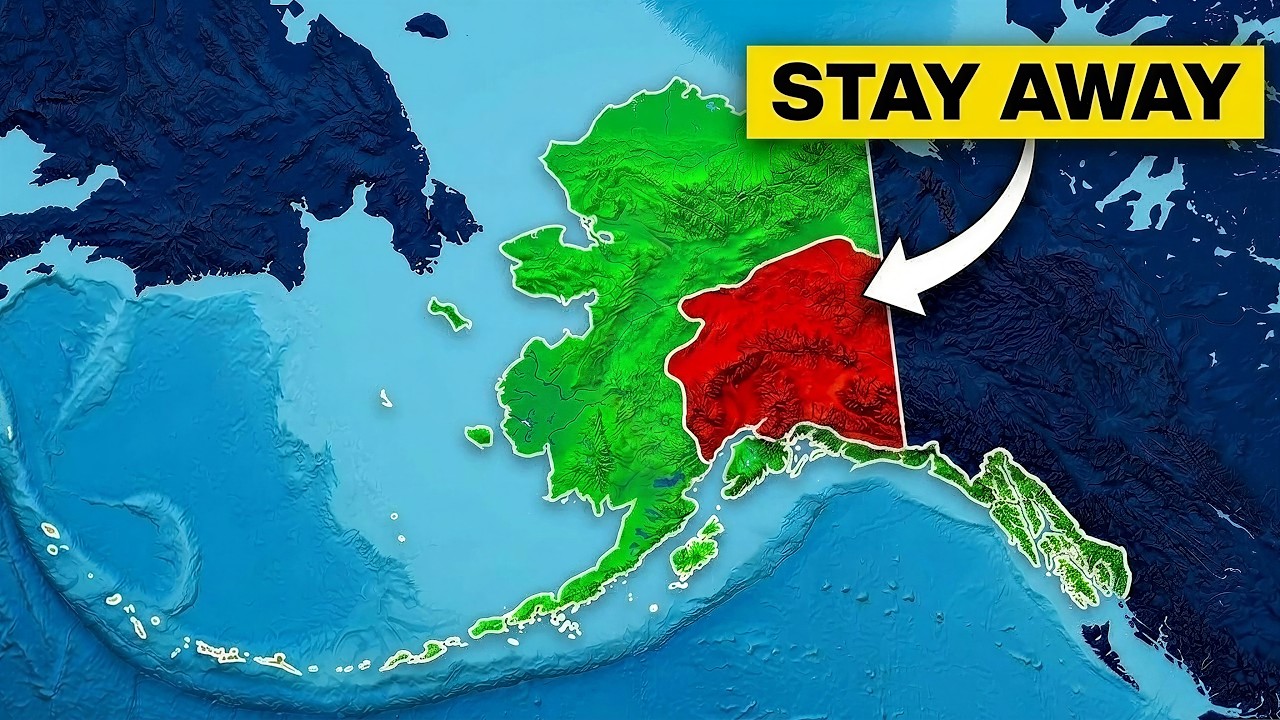
Anchorage, Alaska, stands out as the least densely populated major city on this list, with only 168 people per square mile. Its population of about 287,000 is spread across an astonishing 1,706.9 square miles. This extreme sparsity is largely due to Alaska being the least densely populated state in the US, averaging just 1.3 people per square mile. Factors like its geographic isolation, limited job opportunities, and high cost of living contribute to its unique, uncrowded character.
The geography of American cities, it turns out, is far more complex and surprising than a simple glance at population numbers might suggest. These ten cities, despite their prominent names and vast boundaries, offer a compelling counter-narrative to the prevailing story of urban density. They remind us that the world is often stranger than the maps in our schoolbooks, filled with unique spatial dynamics and human adaptations that continue to shape our understanding of what an urban center can truly be.