For decades, Finland meticulously navigated its geopolitical landscape with a cautious neutrality, a delicate dance along its 1,340 kilometer border with Russia, the longest land frontier shared with the European Union. This strategic equipoise, however, shattered in the wake of escalating global tensions. What followed was not a conventional military confrontation, but a novel form of hybrid warfare that forced Finland to enact a response so swift and absolute, it has since become a chilling blueprint for other nations. The story of how Finland effectively sealed itself off from a perceived threat, by fundamentally altering its approach to international asylum law, offers a stark look at the evolving nature of sovereignty and security in the 21st century, revealing a world far stranger than any textbook might suggest.
The End of Neutrality's Illusion
Finland's historical position as a neutral nation, maintaining careful relations with its powerful eastern neighbor, defined its foreign policy for over seven decades. This delicate balance, which had preserved peace and allowed for steady development, was abruptly upended in February 2022, when Russia launched its full-scale invasion of Ukraine. The conflict sent seismic waves across Europe, fracturing long-held assumptions about security and national defense. For Finland, the realization was stark: neutrality, once a shield, had become a potential target. In a monumental shift that reshaped its place on the continent, Finland made the decisive move to join NATO in April 2023, ending **72 years of military non-alignment**. This accession transformed Finland overnight into the alliance's newest member, and, inevitably, into one of Moscow's newest points of contention. The Kremlin's reaction was immediate and overtly hostile. Russian officials issued stern warnings of unspecified retaliatory steps and hinted at "military technical measures." Yet, the true response did not manifest as tanks rolling across the border or conventional troop movements. Instead, Moscow opted for a more insidious form of pressure, one that leveraged human desperation as a geopolitical tool.
A New Front: Migration as Weapon
As 2023 drew to a close, a disturbing pattern began to emerge at Finland's remote eastern border crossings, such as those near *Valima* and *Salah*. Finnish border guards reported an unusual influx of migrants, predominantly from Syria, Iraq, Yemen, and Somalia. These individuals were not arriving on foot from nearby Russian cities, nor were they appearing spontaneously. Rather, they were being "delivered" to the border in organized groups, often on bicycles supplied by Russian authorities. Evidence quickly mounted, indicating that many of these individuals, some of whom had resided in Russia for years, possessed Russian transit visas that appeared specifically issued for the purpose of facilitating border crossings into Finland. Within weeks, the numbers surged dramatically. Approximately **1,300 asylum seekers** arrived in border towns typically accustomed to processing only a handful of cases each month. The impact on small, remote communities was immediate and overwhelming. In *Lima*, a town with a population of barely 100 people, the arriving migrants suddenly outnumbered the local residents. Local officials found themselves scrambling to cope, converting school gymnasiums into makeshift shelters as essential resources like food and supplies began to dwindle. Finland's processing systems, designed for gradual, manageable flows, collapsed almost overnight, sending alarm bells ringing in Helsinki. Finnish government officials swiftly recognized the tactic. This was not a spontaneous humanitarian crisis, but a deliberate strategy, one they had observed before. In 2021, Belarus had employed a similar approach against Poland, weaponizing migration by flying in thousands of individuals and directing them to the Polish border in retaliation for Warsaw's support of the Belarusian opposition. Now, Russia appeared to be employing the same playbook against Finland, ostensibly as punishment for its NATO membership. Interior Minister Mary Rantnan explicitly labeled it "instrumentalized migration," defining it as the intentional use of people to exert political pressure. Prime Minister Peter Orpo went further, describing the situation as an "organized attempt to destabilize the Finnish state." Moscow, through Kremlin spokesman Dmitri Pescov, predictably dismissed the accusations as "completely unsubstantiated." However, Finnish border guards meticulously documented the organized crossings, and local journalists filmed convoys arriving on the Russian side, leaving little doubt about the orchestrated nature of the influx.
The Iron Curtain Descends: Border Closure and Its Rationale
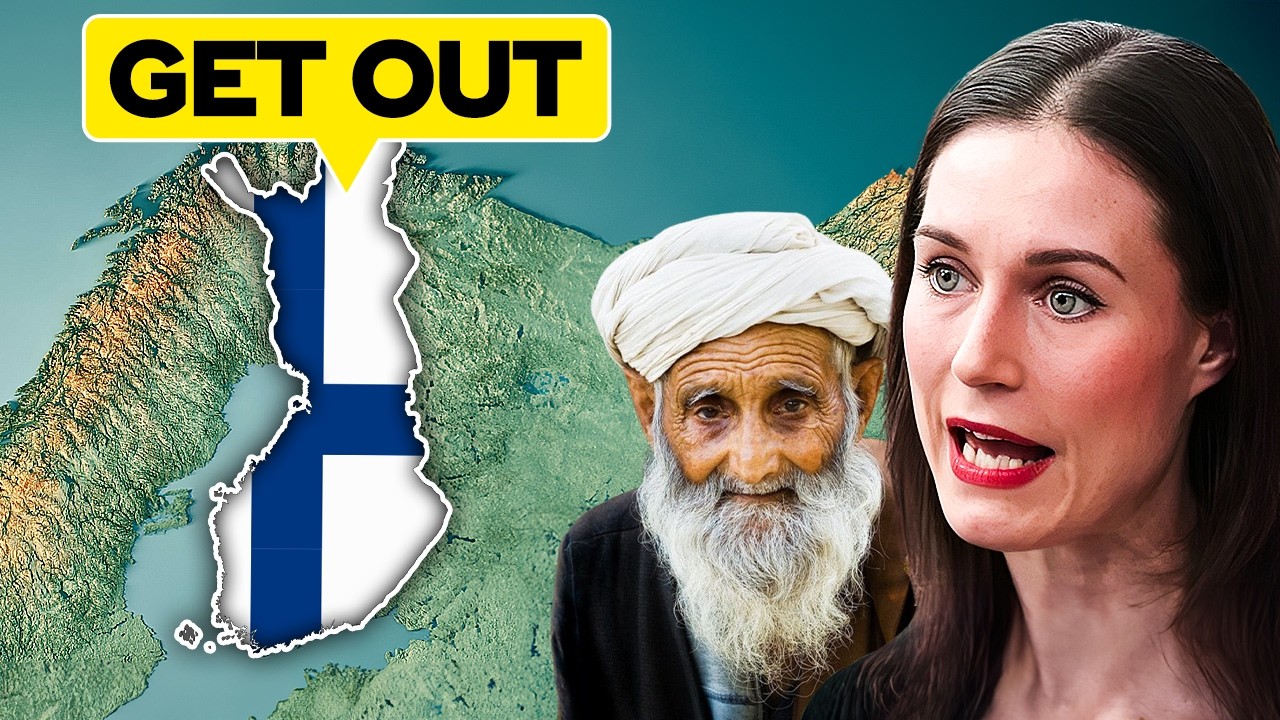
Finland's strong message "GET OUT" reflects its response to weaponized migration.
By late November 2023, the Finnish government faced a crisis, not necessarily due to the sheer number of arrivals, as Finland had historically absorbed larger refugee flows. The true crisis was political. Prime Minister Orpo's center-right coalition government included the nationalist Finn's Party, a political faction that had long advocated for stricter immigration controls. The Finn's Party seized upon the situation, framing it as a national security emergency and a direct attack on Finnish sovereignty. They exerted intense pressure for decisive action, specifically advocating for a complete border closure. This pressure proved effective. On November 18, 2023, Finland responded by shutting down four of its eastern border crossings, leaving only five operational. When the flow of migrants simply redirected to the remaining open points, more crossings were progressively closed. The culmination of this escalating response came on December 15, 2023, when Finland took a step unprecedented in modern European history: it closed its entire **1,340 kilometer land border with Russia**, effectively sealing off every single crossing point. The sole remaining link was a freight rail line at *Vayakala*.
"Finland didn't close its border because of a migration crisis. It closed it because of a threat from Russia and the 1300 people who became pawns in a geopolitical chess game between NATO and the Kremlin."
However, closing the physical border was merely the first step. The Finnish government understood that a temporary closure would not suffice. They sought a permanent solution, a legal framework that would justify turning away individuals, even asylum seekers, even refugees fleeing war zones. They aimed to fundamentally alter the existing legal landscape.
The Legal Hammer: Suspending Asylum Rights
Finland's border closure and "Get Out" policy mark a new era.
In early 2024, Finland began drafting its legislative response: the "Act on temporary measures to combat instrumentalized migration." This legislation, though cumbersome in name, represented Finland's constitutional "nuclear option." From its inception, the proposed law was highly controversial, as it went beyond mere tough border enforcement. It represented a fundamental suspension of established asylum rights. The new law granted Finnish border guards unprecedented authority. It empowered them to refuse entry and reject asylum claims from anyone arriving via Russia, without the need for individual processing or case-by-case assessment. The directive was clear: immediate rejection and turnaround. While the law did allow for exceptions for vulnerable groups, such as children, individuals with disabilities, and those with serious illnesses, and mandated the provision of humanitarian aid, including food, water, and blankets, before turning people back, for all others, the border effectively became an impermeable wall. The law's application was restricted to specific border zones and could only be activated for one month at a time, requiring renewal. Crucially, and most controversially, decisions made by border guards under this act could not be appealed; there was no provision for judicial review, meaning no court could overturn a rejection. The immediate outcry from legal and human rights organizations was vociferous. Finland's non-discrimination ombudsman warned that the law directly conflicted with the Constitution. The Chancellor of Justice, Finland's highest government lawyer, stated unequivocally that it violated both EU asylum laws and international human rights obligations. Amnesty International condemned the act as a "green light for violence and pushbacks," cautioning that it severely undermined access to asylum and the critical protection from *refoulement*, the fundamental principle prohibiting the return of individuals to places where they face persecution or danger. The UN Refugee Agency (UNHCR), the Finnish Red Cross, and a coalition of NGOs issued a joint statement urging Finland to uphold its international agreements. Moreover, over **200 academics** signed an open letter, arguing that the government was exaggerating the perceived threat to justify dismantling asylum protections. Despite the widespread condemnation, the Finnish government remained resolute. Interior Minister Rantnan reiterated her stance, emphasizing that the threat of instrumentalized migration remained high and unpredictable. She contended that traditional asylum procedures were simply inadequate when a hostile foreign power was deliberately weaponizing human migration.
The New Normal: Dismantling the Asylum System
The political landscape surrounding the new law became increasingly complex. Passing such legislation required a two-thirds supermajority in parliament, a significant hurdle for any government. To secure this broad support, the government framed the issue as a national security emergency, invoking the specter of hybrid warfare. They presented the border closure as a temporary measure, arguing that Finland urgently needed a robust legal tool for when the border eventually reopened. This strategy proved successful. On July 12, 2024, the Finnish Parliament voted, with **167 members in favor and 31 against**. The law passed with a commanding supermajority, granting Finland legal permission to turn away asylum seekers without assessing their claims. In doing so, the nation suspended constitutional protections in the name of national security, with broad parliamentary backing. Meanwhile, the border remained closed. After seven months, on April 4, 2024, the government extended the closure indefinitely. In March 2025, Parliament further extended the emergency law through the end of 2026, with Interior Minister Rantnan again citing the "high and unpredictable" nature of the threat. Critics, however, pointed out that this framework allowed the government to renew the measures indefinitely, simply by continuously declaring the situation a crisis. The practical effects of these measures were immediate and dramatic. By mid-2025, Finland's Interior Ministry reported only **8 illegal crossings** since January 2024. Asylum applications plummeted by **45 percent**, from over 5,300 applications in 2023 to fewer than 3,000 in 2024. The Finnish Immigration Service (Migri) noted that, despite ongoing global conflicts in Syria, Afghanistan, and Ukraine, the number of applications remained "moderate." Finland was not merely closing its borders; it was actively shrinking its existing migrant population. Voluntary returns surged by **73 percent** to 313 individuals in 2024, and deportation orders jumped by **64 percent** to 1,965, primarily affecting Russian, Iraqi, and Turkish citizens. Migri also revoked more than 500 residence permits, a significant increase from previous years. The country was, in essence, dismantling its asylum reception system in real time. With the sharp decline in asylum numbers, Migri announced the closure of **18 reception centers**. Approximately 47 percent of the 2,200 residents in these centers were relocated to municipalities, while the remainder were consolidated into fewer, more controlled facilities. Simultaneously, the border patrol assumed an increasingly militaristic posture. Finland augmented its patrols along the Russian frontier with increased support from Frontex, the EU border agency, and deployed advanced tools such as dogs and top-notch drones. The government even considered activating Army reservists to assist in border control, transforming the 1,340 kilometer border from a mere line on a map into an actively defended barrier.
The Export of a Playbook: Europe Takes Note
Finnish leaders implement strict policies, dismantling asylum systems for new arrivals.
The "dark genius" of Finland's approach lay in a peculiar detail: the controversial pushback law, on the books since July 2024, had not actually been applied in practice. Officials admitted it had not been used because it didn't need to be. The border was already closed, and the mere threat of immediate rejection proved sufficient. Would-be asylum seekers understood that even if they managed to reach Finnish territory, their claims would not be acknowledged, and they would be turned back. Consequently, they simply stopped coming. Or, more accurately, they went elsewhere. Reports quickly emerged that smugglers had redirected migrants towards Poland and Lithuania, countries already grappling with similar hybrid migration tactics orchestrated by Belarus and Russia. This led many to conclude that Finland had effectively externalized its problem, pushing the burden onto its neighbors. This is where Finland's narrative transcended its national borders, becoming a case study intently observed across Eastern Europe. Poland, during the Belarus crisis, had already passed its own pushback legislation in 2021. Lithuania and Latvia followed suit with similar laws in 2022 and 2023, all three Baltic states citing instrumentalized migration and hybrid warfare as their primary justifications. A clear "playbook" was rapidly spreading:
1. Declare a migration crisis at the border.
2. Frame it as a national security threat or hybrid warfare.
3. Pass emergency legislation that suspends normal asylum procedures.
4. Close the border or create legal mechanisms for immediate rejection.
5. Extend the emergency measures indefinitely. Finland, it appeared, had perfected this formula, demonstrating that with the right framing and political will, access to asylum could be almost entirely shut down, and with a parliamentary supermajority to boot. Even the European Union, typically a staunch defender of asylum rights, was quietly enabling this shift. In 2024, new EU crisis regulations were introduced, granting member states limited exemptions from standard asylum procedures during emergencies. While not a complete carte blanche, these regulations provided just enough legal flexibility for governments to justify tougher border policies, including pushbacks, which might otherwise have violated EU law.
Crisis of Capacity or Will? The Deeper Questions
The critical question arising from the EU's new regulations, however, is: who defines an emergency? Finland deemed 1,300 asylum seekers over a few weeks a crisis, while Poland considered 4,000 at the Belarusian border a crisis. Where is the line drawn? At what point does an emergency transform into permanent policy? Critics warned that this represented the normalization of pushbacks across Europe, transforming what was once considered a clear violation of international law into standard operating procedure. The Council of Europe criticized Finland's law as "insufficiently justified," and the EU Commission expressed concerns about its compatibility with EU asylum rules. Amnesty International reiterated its argument that the law "gravely undermines access to asylum and the protection from refoulement." Yet, none of these criticisms carried any real weight. Finland faced no sanctions, nor was it brought before EU courts. The law stood, the border remained closed, and other countries continued to watch, and learn.
"Finland's government insisted this was about national security. They pointed to Russia's history of using migration as a weapon. They noted that Belarus did the same thing to Poland. They argued that when a hostile power deliberately weaponizes migration, normal asylum procedures simply don't work."
The human rights groups warned of a dangerous "race to the bottom." If Finland could effectively close its **1,340 kilometer border** in response to **1,300 arrivals**, what would prevent Italy from pushing back boats in the Mediterranean, or Greece from further militarizing its sea borders? What would stop any other EU member from declaring hybrid warfare and suspending asylum rights? A precedent was being set, and it was rapidly spreading. So, was Finland's action a legitimate defense against hybrid warfare, or something else entirely? The Finnish government steadfastly maintained it was about national security, citing Russia's documented history of weaponizing migration and Belarus's similar tactics against Poland. They argued that in such circumstances, normal asylum procedures were simply unworkable. There was some logical basis to this argument: Russia did appear to facilitate the crossings, the timing immediately after NATO accession was suspicious, and the organized nature of the arrivals was well-documented. However, an uncomfortable truth lingered: **1,300 people was not a crisis** for a nation like Finland, a country of **5.6 million** with robust institutions, significant resources, and the backing of the European Union. Finland had successfully managed larger refugee flows in the past. Germany, for instance, absorbed over a million asylum seekers in 2015, and Sweden welcomed 163,000 in the same year. Finland, by contrast, declared a national emergency over 1,300 arrivals in a few weeks. This raised a crucial question: was it truly a crisis of capability, or rather a crisis of willingness? Finland's actions went beyond a temporary border closure. They permanently altered the legal framework governing asylum, creating a mechanism that could be indefinitely renewed. The emergency, in effect, became the new normal. The timing was also telling. Prime Minister Orpo's coalition government included the nationalist Finn's Party, which had long campaigned for stricter immigration controls. The 2023 migration spike provided the perfect political opportunity to implement policies they had desired for years. Critics argued that Finland exploited the Russian threat to justify policies it already wanted, transforming **1,300 arrivals** into an excuse to dismantle asylum protections that had been under scrutiny for years. The open letter signed by over 200 academics articulated this very point: the government exaggerated the threat to push through a law that would have been politically impossible under normal circumstances. The fact that the law itself had never actually been used, despite being on the books since July 2024, further complicated the narrative. The border had been closed since December 2023, and officials admitted the pushback law hadn't been applied because there was no one to apply it to. So, what was its purpose? Why enact a law that violated international obligations if it wasn't to be used? Critics suggested the answer lay in legitimization. Finland sought to normalize the idea that asylum rights could be suspended, to establish a legal precedent, and to demonstrate to other EU countries that such measures could be implemented without consequence. And it worked. Poland, Lithuania, and Latvia adopted similar playbooks, while the EU's new crisis regulations provided a degree of cover. No one faced repercussions. Meanwhile, the real human cost was externalized. Many of the **1,300 asylum seekers** who crossed in late 2023 found themselves in legal limbo. Some were deported, others remained in reception centers, awaiting decisions that might never arrive. Thousands who might have sought asylum in Finland were now pushed towards more dangerous routes, trapped in Russia and Belarus, where they faced persecution and danger. Thus, many argued that Finland "solved" its crisis by simply making it someone else's problem, weaponizing the law to circumvent its international obligations, all with parliamentary supermajority support and tacit EU acceptance.
A Template for Disassembly: The Replicability and the Peril
Can other countries truly replicate Finland's approach? In the short term, some already have. Poland, Lithuania, and Latvia enacted similar pushback laws. Italy has experimented with offshore processing deals with Albania, and the United Kingdom attempted, though unsuccessfully, to send asylum seekers to Rwanda. Denmark has passed laws allowing deportations to undefined third countries. However, the long answer reveals a more nuanced reality, as Finland's success was contingent on several specific conditions. First, its geographic advantage was paramount. Finland possessed a single, defined land border with Russia, which could be physically closed and effectively patrolled. Countries with multiple entry points, extensive coastlines, or porous borders would struggle to replicate such a definitive closure. Second, a rare degree of political consensus was achieved, with the law passing with a **two-thirds supermajority** in parliament. This level of political unity is uncommon in many EU nations, where fractured parliaments would likely prevent such legislation. Third, Finland successfully framed the migration influx as hybrid warfare orchestrated by a hostile power. This geopolitical framing was a much easier sell to the public and parliament than addressing normal asylum flows. Few countries could credibly claim that every migrant was a weapon. Lastly, the quiet tolerance of the European Union played a crucial role. Finland was able to implement these measures because the EU was, for the most part, willing to tolerate pushbacks, particularly on its eastern borders. There are limits, however; a major Western European country attempting similar actions would likely face a far stronger backlash. What is undeniably replicable, though, is the playbook itself. Any country facing border crossings can now point to Finland's example and argue, "They did it. They closed the border, passed emergency legislation, suspended asylum rights, and it worked. Why can't we?" And therein lies the profound danger. Finland did not merely close its border; it provided a legal and political template for dismantling asylum systems across Europe. The playbook is now public, and the guardrails of international refugee protection are visibly crumbling. Today, the frozen Finnish-Russian border remains silent. Reports indicate Russia is ramping up military bases near the Finnish border, but drone footage reveals only snow-covered forests, empty crossing points, and border guards patrolling with their dogs. No migrants, no arrivals, no crisis. Finland's government hails this as a success, having protected its border, deterred hybrid warfare, and maintained control. Yet, from a broader perspective, a different picture emerges: a NATO member state that responded to **1,300 asylum seekers** by effectively shutting down its entire asylum system. A country that enacted a law its own government watchdog declared violated international obligations. A precedent being replicated across Eastern Europe, contributing to the slow, deliberate dismantling of the post-World War II refugee protection regime. Finland's solution, ultimately, works only if one accepts that some people's suffering is no longer one's problem. It works only if closing a border is deemed more important than assessing individual asylum claims. It works only if one is willing to externalize the human cost onto neighboring countries and the individuals trapped in legal limbo. It works only if the right to seek asylum, enshrined in international law since 1951, is now understood to be conditional, negotiable, and suspendable. This is what makes Finland's story so profoundly dangerous, not simply because it closed a border, but because it has demonstrated that with the right framing, the opportune political moment, and the designated enemy, asylum protections can be dismantled and rebranded as "national defense." People can be transformed into "weapons" and called "hybrid warfare." Human rights can be suspended and simply labeled "security." And across Europe, other countries are indeed taking notes. Finland solved its immediate immigration crisis, but the question of what was lost in the process continues to reverberate, a potent reminder that geography, as always, is a plot twist.