Imagine a nation blessed with the world's largest proven oil reserves, a staggering 304 billion barrels, more than even Saudi Arabia. Now imagine this same nation unable to extract, refine, or even export its own black gold, forcing it to import fuel from thousands of miles away just to keep its pipelines flowing. This is the paradox of Venezuela, a country whose immense natural wealth has become a curse, fueling not prosperity but an unprecedented economic collapse, a mass exodus of its people, and a geopolitical chess match that has drawn in global powers. As its infrastructure crumbles and its population flees, a massive naval strike force, the largest in the region since the 1980s, now patrols its coastal waters, signaling a potential confrontation that could reshape the Western Hemisphere.
Decades of Defiance: The US-Venezuela Collision Course
The current crisis gripping Venezuela and its fraught relationship with the United States did not materialize overnight. It is the culmination of decades of escalating tensions, a slow-motion collision course set in motion at the turn of the millennium. The narrative truly began in 1999, with the ascent of Hugo Chávez to power. Chávez, a charismatic figure, immediately adopted a stance of defiance against the United States, positioning himself as a leader committed to Latin American sovereignty and a bulwark against perceived American imperialism. By 2002, this relationship had already deteriorated significantly, reaching a nadir when the Central Intelligence Agency (CIA) reportedly backed a coup that briefly removed Chávez from office. This event served as a stark warning, demonstrating that US intervention in Venezuela was not a mere conspiracy theory, but a tangible reality that would cast a long shadow over the subsequent two decades.
Chávez skillfully built his entire political identity around this defiance, constantly portraying the United States as an imperialist enemy. His successor, Nicolás Maduro, inherited and then amplified this message, effectively turning an anti-American stance into Venezuela's official national brand. The result was a spiraling cycle of retaliation. Venezuela, under Chávez and Maduro, initiated actions such as seizing oil fields, which were met with rising sanctions from the United States. The 2000s thus became a period of increasing friction, inevitably leading to the explosive situation we observe today. Washington, by the mid-2000s, had firmly placed Venezuela in its crosshairs, initially applying labels such as "failing counter-narcotics partner" before progressively introducing sanctions that targeted officials and allies of Hugo Chávez. However, the intensity of these measures escalated dramatically under Maduro's leadership.
A pivotal moment arrived in 2019 when the United States made a move reminiscent of a spy novel, declaring opposition leader Juan Guaidó the legitimate interim president of Venezuela and openly backing an attempted coup. While the plan ultimately failed, the message was unmistakable. Each crisis, each new round of sanctions, was publicly framed as an effort to promote democracy or control drug trafficking. Yet, behind this official narrative, the underlying motives consistently revolved around three core objectives: securing access to Venezuela's vast oil reserves, exerting geopolitical power in the region, and, crucially, blocking Russia, China, and Iran from establishing a significant foothold in America's traditional sphere of influence. By 2025, Maduro had cemented his hold on power, forcing his way into a third term following a blatantly rigged election that saw thousands of political opponents imprisoned. The international community largely condemned the outcome, but Maduro remained unconcerned. This act of defiance left Venezuela completely isolated, devoid of diplomatic ties with many nations and with no trust remaining on either side. It was at this juncture that the true danger set in, transforming every supply ship, every military advisor, and every frozen bank account into a potential spark that could ignite open conflict. The entire US-Venezuela relationship had devolved into a high-stakes chess match, where a single misstep threatened to trigger an all-out confrontation.
The Paradox of Black Gold: Venezuela's Oil Collapse
On paper, Venezuela possesses the ingredients for immense wealth. It sits atop the world's largest proven oil reserves, exceeding 300 billion barrels, a volume greater than that of Saudi Arabia. In the 1990s, the country was a formidable oil producer, pumping over 3 million barrels per day, with nearly 2 million of those flowing directly to the United States. Yet, today, this oil giant has collapsed, its production plummeting to less than 20 percent of its historical peak. The irony is devastating, and the reasons are deeply complex.
Venezuela's crude oil is notoriously thick and heavy, so dense that it cannot flow through pipelines without being mixed with lighter fuels. This peculiar geological characteristic means that the country, despite possessing more oil than any other nation, must import fuel from Iran simply to facilitate the movement of its own crude. The entire system is in an advanced state of decay. Over 25 pipelines, some more than 50 years old, are constantly leaking and rupturing, akin to arteries failing in a dying body. Oil spills, widespread blackouts, and processing plants operating at less than 10 percent capacity have become routine occurrences. Repairing this dilapidated infrastructure and restoring production to 1990s levels would require an estimated $58 billion, an astronomical sum for a country facing economic ruin.
When Caracas attempted to diversify its energy strategy by pivoting to natural gas, that hope too was extinguished. The Dragon Field, a colossal $35 billion project with the potential to supply Trinidad, was abruptly halted when Washington, in 2025, revoked the licenses for Shell and BP. This move sent a clear and unequivocal message: the United States was not merely applying pressure on Maduro, but actively seeking to choke Venezuela's energy lifeline completely. The collapse of Venezuela's oil sector is not merely a matter of broken pipelines, however; it is a profound death spiral. Each failure leads to reduced revenue, which in turn means fewer funds for repairs, inevitably resulting in even larger, more catastrophic failures. In the late 1990s, the state oil company PDVSA boasted a workforce of over 40,000 trained engineers. Today, fewer than 12,000 remain, and many of them lack the specialized expertise required to manage the world's heaviest crude. The nation's most talented professionals have fled to Canada, Colombia, and Texas, taking with them decades of irreplaceable knowledge and experience. What remains is a nightmarish landscape of Soviet-era machinery that breaks down weekly, and workers forced to patch dangerous leaks with improvised fixes that would horrify any safety inspector. Venezuela still possesses the largest oil reserves on Earth, but it has become a country that literally cannot extract, refine, or export its own resources, a so-called oil superpower that cannot even power itself.
Venezuela still possesses the largest oil reserves on Earth, but it has become a country that literally cannot extract, refine, or export its own resources, a so-called oil superpower that cannot even power itself.
A Nation in Freefall: Economic Ruin and Humanitarian Crisis
The catastrophic collapse of Venezuela's oil sector unleashed an economic freefall almost unparalleled outside of wartime. The numbers are staggering and paint a grim picture of national devastation. Just two decades ago, Venezuela's Gross Domestic Product (GDP) stood at approximately $300 billion. By 2025, it had shrunk to barely $110 billion, a contraction on par with the Great Depression. Inflation, at one point, was not merely high, but absurdly so. Prices spiraled with such breathtaking speed that annual inflation reached over 1 million percent. At this peak, people carried stacks of cash that were insufficient to purchase even a single loaf of bread. While it cooled to around 48 percent by 2024, forecasters anticipate it will rocket back toward 200 percent in 2025. The national currency, the bolivar, tells an even more poignant story of economic ruin. Ten years ago, one US dollar exchanged for six bolivars. By the end of 2024, it cost 52 bolivars. On the street, where most Venezuelans conduct their daily transactions, the dollar is already worth closer to 95 bolivars. The government's attempts to stem this tide, including printing larger 200 and 500 bolivar notes and experimenting with digital currency, have proven futile, as the US dollar has become the only real currency Venezuelans can trust.
The social impact of this economic implosion is staggering beyond comprehension. Basic necessities such as food, medicine, and even electricity, which most countries take for granted, are now scarce commodities. Surveys conducted in 2023 revealed that 82 percent of Venezuelans were worried about running out of food, with almost half the country facing moderate to severe hunger. The official poverty line hovers at over 50 percent, though independent estimates place it closer to 70 percent, meaning seven out of ten people are trapped in poverty in what was once South America's richest nation. Perhaps the most shocking figure, however, is the sheer scale of human displacement. Nearly one in three Venezuelans has fled the country. As of mid-2025, the United Nations reports that 7.9 million Venezuelans are living abroad, making it the second largest refugee crisis in the world, surpassed only by Syria. This represents a human tide larger than the entire population of Switzerland, on the move and in desperate search of a better life. Colombia alone now hosts 2.5 million Venezuelan refugees, while Peru has taken in almost 2 million. Millions more are scattered across Brazil, the Caribbean, and are even undertaking the perilous journey north to the US border. This cruel twist of fate means that while Venezuela's economy imploded at home, its refugee crisis exploded abroad, destabilizing entire regions and even reshaping American politics. The overwhelming nature of this human exodus prompted the United States to announce plans in 2023 to revoke Temporary Protected Status (TPS) for over 300,000 Venezuelan migrants. This policy came into effect in April 2025, sparking widespread fears of potential mass deportations back to a country in freefall, illustrating the profound and far-reaching consequences of Venezuela's economic devastation.
America's Adversaries: A Strategic Outpost in the Hemisphere
As Venezuela's economy spiraled into collapse, Nicolás Maduro desperately sought lifelines. The countries that answered his calls, however, were not allies of Washington. Russia, China, and Iran all stepped into the void, seizing a strategic opportunity to transform Venezuela into a critical outpost in America's own backyard. This growing network of alliances sent shockwaves through Western intelligence agencies. A particularly alarming development occurred in May 2025, when Maduro stood in Moscow and signed a sweeping 10-year strategic partnership with Russia. This comprehensive agreement covered a wide array of sectors, including energy, financial aid, advanced technology, and, most alarmingly for the United States, military cooperation. Venezuela's own foreign minister proudly declared it the first time in history a Latin American nation had signed a deal of this scale with Russia, a point that state television eagerly hammered home, emphasizing that military ties were now a top priority. To US analysts, this was far more than a desperate maneuver by a crumbling regime; it was seen as the opening chapter of a proxy war unfolding in the Western Hemisphere.
Russia's involvement began with quiet shipments of spare parts to keep Venezuela's aging fleet of Soviet-era fighter jets operational, alongside efforts to upgrade its air defenses. Intelligence sources now indicate that Russian military advisors are embedded on the ground, with discussions even underway for joint weapons factories within Venezuela. Next came China. Beijing reopened crucial oil credit lines, providing Maduro with access to the hard currency he so desperately needed. In spring 2025, Venezuela's vice president traveled to Beijing to negotiate sweeping new oil deals with China's state giant, CNPC. At the United Nations, China has consistently shielded Maduro, repeatedly vetoing resolutions that might have further isolated his regime. Concurrently, Beijing has poured significant investment into infrastructure projects designed to lock up Venezuelan resources for decades to come. However, perhaps the most combustible partnership of all is with Iran. Since 2021, Tehran has supplied refinery technology, signed contracts worth nearly half a billion dollars, and even assisted in overhauling Venezuela's largest refineries. At one point, the two countries engaged in a bizarre two-to-one oil swap deal, where Venezuela shipped out two barrels of crude for every single barrel of refined product Iran sent back. This arrangement ultimately collapsed when Caracas failed to meet its quotas, leaving Venezuela even more dependent on Iranian support. Alarmingly, intelligence reports now suggest that Iranian drones, anti-ship missiles, and small naval vessels have already been integrated into Venezuela's arsenal. When one adds to this the thousands of Cuban security advisors still embedded within the government, alongside Colombian guerrilla groups and narco cartels who operate freely across the porous border, the result is clear: Venezuela is no longer merely a failing state. It is rapidly becoming a forward operating base for America's adversaries, situated directly in the US's own hemisphere. An estimated 100 to 200 Russian military advisers, over 2,000 Cuban security personnel, and dozens of Iranian technicians now operate openly inside the country, transforming it into a nexus of hostile foreign influence.
The "Maximum Pressure" Campaign: Washington's Escalation
When Donald Trump returned to the White House in January 2025, Washington wasted no time in tightening the screws on Venezuela. Oil waivers were scrapped, and Chevron's license, a crucial lifeline, was summarily terminated. Venezuela's last reliable revenue streams were cut off overnight, exacerbating the nation's economic woes. The real shock, however, came on July 25, 2025, when, for the first time in American history, the US Treasury Department designated an entire foreign military leadership, Venezuela's so-called Cartel de los Soles, as a global terrorist organization. This unprecedented move meant every asset associated with this military leadership was frozen, and every bank transfer criminalized. No military in the world had ever before been hit with such a label. Simultaneously, Trump doubled the bounty on Nicolás Maduro's head to an outrageous $50 million, while quietly instructing the Pentagon to prepare military options for potential intervention.
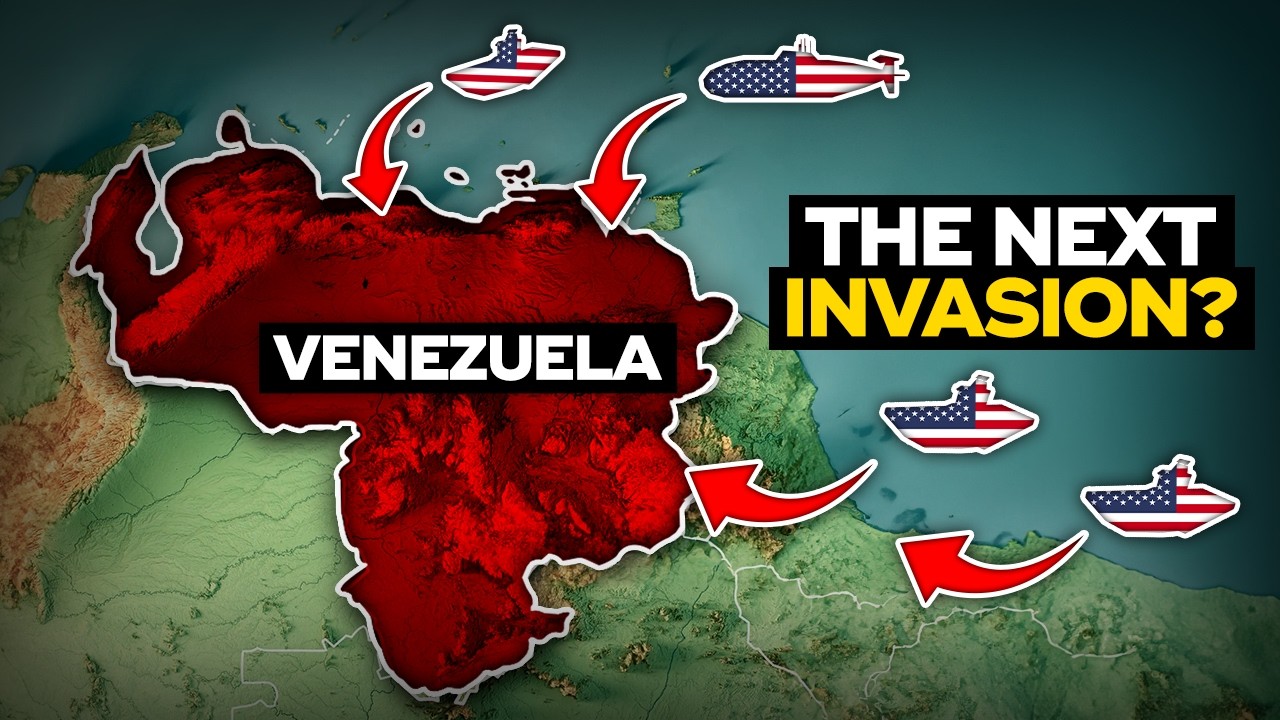
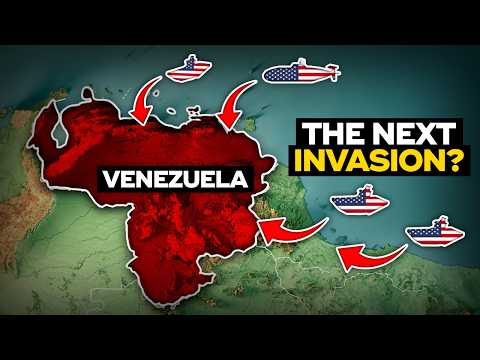
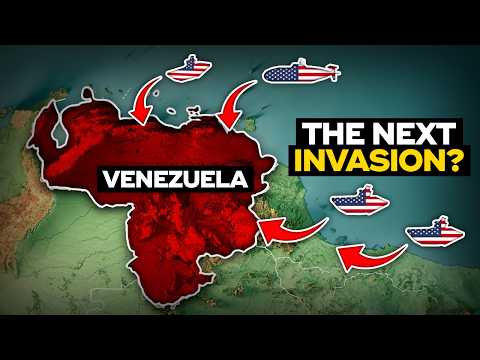
By late August, those military options suddenly looked very real. A US naval strike group, comprising seven warships and a nuclear submarine, moved into the southern Caribbean. This represented the largest American show of force in the region since the 1980s, a clear demonstration of intent. The lineup was far from a token patrol; it included three Aegis destroyers, a guided missile cruiser, and the amphibious assault ship USS Iwo Jima. The Iwo Jima alone carried 4,500 troops, including 2,200 Marines, complete with helicopters and amphibious vehicles. This formidable array of firepower was sufficient to seize beaches, neutralize air defenses, and potentially topple a government in mere days. Officially, Washington maintained that this deployment was about drug interdiction and refugee control. However, the sheer scale and composition of the buildup conveyed a far louder message, suggesting an objective that looked less like policing cartels and more like preparing for war. By the beginning of September, the stage was set for a showdown the Western Hemisphere had not witnessed in decades.
Despite public assurances from US officials that there would be "no boots on the ground," behind the scenes, multiple invasion blueprints were being quietly stockpiled. The naval strike group positioned offshore was overwhelmingly powerful. The USS Iwo Jima, though officially on hurricane watch duty, carried a full Marine expeditionary unit, essentially functioning as a floating invasion force. Its accompanying Aegis destroyers possessed the capability to wipe out Venezuela's air defenses in a matter of hours. The guided missile cruiser USS Lake Erie, an asset typically reserved for high-intensity conflicts requiring advanced air defense capabilities, transited the Panama Canal on August 29 specifically to join the Caribbean task force. Pentagon sources privately acknowledged that this represented the largest US naval concentration in Caribbean waters since the 1980s interventions in Grenada and Panama. Roughly 4,500 American personnel, including elite Marines and naval aviators, were now operating within hours of Venezuelan territory, conducting increasingly aggressive training exercises with regional partners, further amplifying the pressure on Caracas.
On the Brink of Conflict: Venezuela's Defense and the Global Chessboard
Caracas was acutely aware of the implications of this formidable US military presence. Satellite images, even released by Venezuela itself, showed frantic preparations across the country. New defense corridors were carved out around vital oil facilities, coastal radar systems were reinforced, and dozens of small gunboats began patrolling the shoreline. The most serious move came when President Maduro personally toured border states, deploying 15,000 troops to the frontier with Colombia. At a September press conference, Maduro delivered his most defiant warning yet, claiming the US had positioned eight warships, a submarine, and over 1,200 missiles within striking distance of Venezuela. Whether or not his numbers were exaggerated, one fact was clear: Caracas genuinely believed an invasion was no longer speculation, but an imminent threat. Maduro vowed that if American forces crossed the line, Venezuela would unleash "Republican arms," a declaration implying the mobilization of not just the army, but millions of civilians for a protracted guerrilla warfare campaign. In his own words, the entire population would become a battlefield.
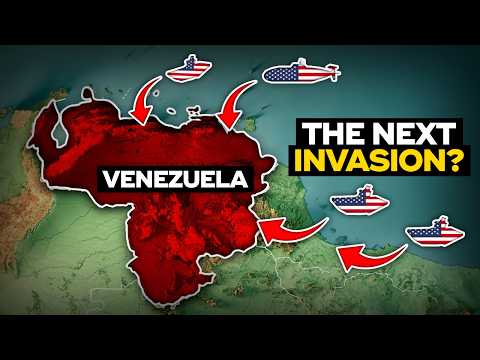
The offshore presence was no bluff. While the amphibious assault ship USS Iwo Jima was officially on hurricane watch duty, its true capabilities as a full Marine expeditionary unit were unmistakable. Lurking just behind it, the nuclear submarine USS Newport News served as a silent, powerful deterrent to any potential Russian or Chinese response. The message from both sides could not have been more obvious: Venezuela was preparing to fight for its very survival, while Washington had assembled the tools to dismantle its government in days. The timeline of escalation underscores this rapid movement towards confrontation. From January to March 2025, devastating sanctions cut off Venezuela's last viable avenues for oil exports, with the termination of Chevron's license alone resulting in an estimated $200 million a month in lost revenue. Maduro's phony inauguration led to total diplomatic isolation. Between April and June 2025, the cancellation of the Dragon gas pipeline destroyed Venezuela's most promising energy diversification project, while Chinese and Russian support agreements accelerated, intensifying a bipolar competition for influence over Venezuelan resources. In July 2025, the branding of the Cartel de los Soles as a terrorist organization, according to Caracas, went too far, effectively criminalizing the entire Venezuelan military, while Trump's approval of anti-cartel military operations hinted at armed involvement. By August 2025, Maduro responded with enormous militia mobilization and coastal defense preparations, as the largest US naval task group in decades gathered in Venezuelan waters. Finally, in September 2025, with both sides publicly prepared for possible armed conflict and international mediation attempts deadlocked, Maduro's "Republican arms" declaration marked a clear escalation to a war posture.
The message from both sides could not have been more obvious: Venezuela was preparing to fight for its very survival, while Washington had assembled the tools to dismantle its government in days.
What makes this standoff even more perilous is not just the weapons or the sanctions, but the accelerating tempo of escalation. Each round of pressure now triggers a faster and sharper response, dramatically shrinking the window for diplomacy and magnifying the risk of a direct clash. This scenario echoes the Cold War, characterized by economic strangulation, proxy maneuvers, and military posturing, stacked layer by layer until both sides stand on the precipice of open conflict. One wrong move, a misread radar ping, a skirmish at sea, or a single misfire, could be enough to tip this delicate brinkmanship into a full-blown war.
Unanswered Questions and the Price of Intervention
Beyond the official narratives of drug interdiction and migration control, a series of far more uncomfortable strategic questions remain largely unanswered, revealing the true complexities and potential pitfalls of this crisis. If narcotics enforcement were genuinely the primary objective, why deploy amphibious assault capabilities and 4,500 Marines, rather than focusing on intelligence sharing with Colombia and traditional anti-narcotics cooperation? The sheer scale and composition of the naval buildup strongly suggest objectives far beyond conventional counter-drug operations, bearing historical parallels to preemptive interventions like Panama in 1989 and Iraq in 2003, which ostensibly targeted criminal networks but ultimately achieved regime change.
Even more critically, how would Russia and China respond to direct military action against their strategic partner? Would Beijing or Moscow risk a direct confrontation over Venezuela, or would they limit their involvement to supplying arms for any resistance movement? Without United Nations Security Council authorization, unilateral US action would undoubtedly face condemnation as illegal aggression, forcing Washington to construct some form of NATO-style collective defense argument based on terrorism threats. Regionally, Brazil has openly opposed any intervention, and Mexico has explicitly rejected US military transit rights, raising significant questions about whether regional diplomatic efforts can effectively prevent escalation. Conversely, some Caribbean nations, grappling with the massive refugee flows from Venezuela, might actually support limited actions, potentially influencing the broader regional dynamics surrounding the situation. Perhaps the most puzzling question is whether Washington genuinely expects economic pressure to trigger an internal revolt, thereby making an invasion unnecessary through a "color revolution" scenario. Or, if the Pentagon has developed realistic occupation plans for governing a hostile population of 26 million people spread across mountainous terrain that extends far beyond easily secured oil facilities and urban centers.
Looking at the accumulated evidence, the argument that the US is actively preparing for a potential invasion of Venezuela rests on a compelling convergence of motive and unprecedented opportunity. Venezuela's profound economic collapse has transformed it from a regional power into a destabilizing burden, simultaneously creating a strategic opening for hostile powers seeking influence in the Western Hemisphere. The Trump administration's maximum pressure campaign, characterized by the elimination of oil revenues, the criminalization of military leadership, and the assembly of overwhelming naval forces, strongly suggests that Maduro's removal is viewed as a necessary strategic objective. The drug interdiction narratives, in this context, appear to provide political cover for contingency planning that extends far beyond conventional law enforcement. Indeed, because Venezuela possesses the greatest oil reserves in the world, is experiencing a severe refugee crisis, and has become a focal point of fierce great power competition, the United States has a strong incentive to destabilize the country while simultaneously gathering the resources to execute such a strategy. The US has systematically prepared to pressure the regime to fall through the deployment of naval task groups, terrorist designations, and comprehensive sanctions. This strategy exemplifies a well-known pattern: using military positioning and economic strangulation to overthrow an adversarial government without resorting to an open invasion or explicitly admitting its broader consequences. However, the risks remain enormous, encompassing potential casualties, international condemnation, prolonged guerrilla warfare, and possible great power confrontation, while the benefits remain uncertain given Venezuela's already devastated state. The question of "why now" specifically arises because the perceived costs of inaction, including ongoing mass migration, accelerating Chinese and Russian penetration, unchecked narcotics trafficking, and potential state collapse, have reached a critical threshold where Washington apparently considers confrontation preferable to the status quo. Whether or not the US ultimately acts, the trajectory is unmistakable: invasion has evolved from mere speculation to a realistic contingency plan. The standoff is expected to continue, with US forces maintaining their Caribbean presence while Maduro strengthens Venezuela's coastal defenses and militia networks. Diplomatic engagement through the UN, and in coordination with regional allies, particularly Colombia, may ultimately determine whether this crisis escalates toward direct military confrontation or finds some negotiated resolution. Simply put, with both sides now positioned for potential conflict, the haunting question of why America might invade Venezuela next no longer sounds like mere conspiracy theorizing, but rather a sobering assessment of how quickly geopolitical competition spirals toward military confrontation when economic warfare fails to achieve desired objectives.