Norway, a nation synonymous with pristine fjords and Nobel ideals, now stands at a geopolitical crossroads. Its Arctic border, a stark landscape of ice and isolation, recently became the unlikely stage for a peculiar mass migration, where thousands cycled through sub-zero temperatures seeking sanctuary. This remote frontier, once a quiet demarcation, transformed into a flashpoint, revealing a profound and rapid transformation in a country that once championed open-door humanitarianism. What began with bicycles across a frozen wilderness has culminated in Norway redefining its very identity, a shift as dramatic and unexpected as its rugged geography.
From Humanitarian Beacon to Immigration Fortress: Norway's Seismic Shift
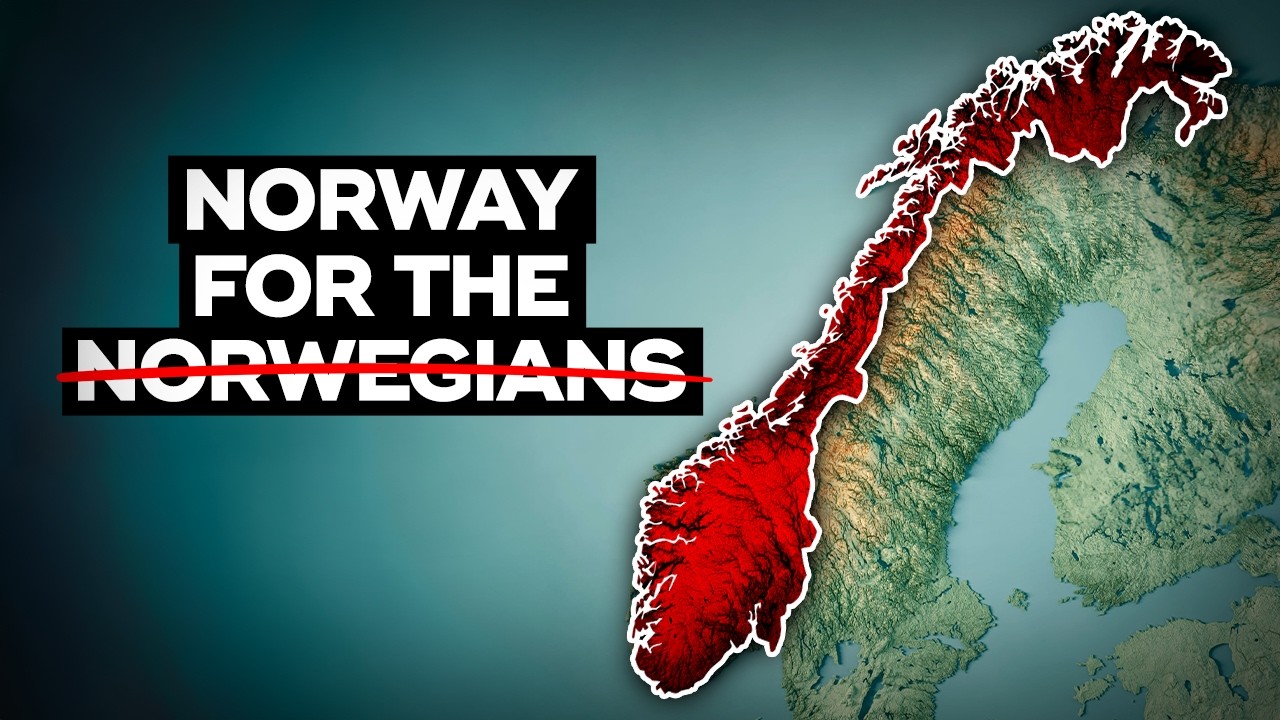
For decades, Norway, a country of over 5.6 million people and one of the richest on Earth, proudly presented itself as a humanitarian beacon. Built upon the twin pillars of vast oil wealth and deeply ingrained humanitarian ideals, it opened its doors wide to refugees and asylum seekers, often while other nations hesitated. This philosophy, termed "bounded universalism," envisioned a system where everyone who entered Norway would have equal access to the nation's robust welfare benefits and comprehensive services. The underlying assumption was that newcomers would reciprocate, integrating into society by finding work, learning Norwegian, and contributing to the social fabric, thereby earning full rights as residents.
For much of the 20th century, and well into the 1990s and 2000s, this approach fostered little public concern. Immigration remained relatively limited, yet Norway took immense pride in welcoming those fleeing conflicts in the Balkans, the Middle East, and various parts of Africa. The country's social model was believed strong enough to absorb new arrivals without strain, and immigration was largely unpoliticized. However, this era of unquestioning confidence was not destined to last. By 2024, a significant demographic shift had occurred, with 20.8 percent of Norway's residents now identified as immigrants or children of immigrants, a remarkable change for what had been one of Europe's most homogeneous societies. This transformation, while gradual for many years, was about to accelerate dramatically, shattering the long-held confidence in its social model.
The Unthinkable Turning Point: Breivik's Shadow and a Shifting Political Landscape
The true turning point in Norway's immigration narrative arrived in 2011, though not in the manner many might expect. In July of that year, the nation was rocked by its worst peacetime atrocity, perpetrated by a far-right extremist named Anders Behring Breivik. His rampage began with the bombing of government buildings in Oslo, which claimed the lives of eight people. Subsequently, he traveled to a youth camp on Utøya Island, where he systematically murdered an additional 69 individuals, the majority of them teenagers. Breivik's manifesto, filled with warnings about the Islamization of Europe and virulent anti-immigration rhetoric, laid bare a dark undercurrent of anxiety.
The entire nation mourned, united in horror, and politicians from all parties unequivocally condemned Breivik's ideology. Yet, beneath the surface of national solidarity, a crack had formed. The massacre exposed how immigration anxiety, previously considered a minor fringe concern, had metastasized into something far more intense and sinister. Public discourse, once measured, became charged. Questions that had long been taboo now felt urgent and unavoidable. This simmering unease culminated in a political earthquake in 2013, when elections brought a center-right government to power. Crucially, this new coalition included the Progress Party, a populist, immigration-skeptical faction that had been steadily gaining ground for years. For the first time, Norway had a government willing to adopt a harder line on immigration, signaling an immediate and profound shift.
The change was palpable and swift. By early 2014, Norway was deporting foreigners at unprecedented rates. In just the first few months of that year, over 1,160 people were forcibly removed, representing a 40 percent increase from the previous year. The ambitious target for the full year was set at 6,700 deportations. Anders Anundsen, the Progress Party's justice minister, reinforced this new uncompromising approach with a stark declaration, stating, "If you're not allowed to stay, you must leave the country quickly." The message was clear: deterrence was paramount. Quick removals were intended to discourage future arrivals and even prompt voluntary returns. However, this aggressive stance was merely the beginning of Norway's transformation; the true crisis, and the dramatic policy shifts it would ignite, were still on the horizon.
The Arctic Bicycle Exodus: When a Loophole Sparked a Policy Revolution
The year 2015 marked a profound watershed moment, as war and chaos across the Middle East triggered the largest refugee movement since World War II. Over a million people, fleeing conflicts in Syria, Iraq, Afghanistan, and Eritrea, sought refuge in Europe. Images of overcrowded boats navigating the Mediterranean, families trekking through the Balkans, and desperate individuals clinging to the undercarriages of trucks dominated international headlines. Even Norway, far to the north, isolated and cold, felt the immense surge. In 2015 alone, 31,000 asylum seekers arrived in Norway, a staggering figure when put into perspective; the country typically received around 10,000 applications per year, meaning this influx was triple its usual capacity. For a nation of five million people, the scale of arrival was overwhelming.
Reception centers quickly filled beyond capacity, and small towns across the country found themselves hosting refugee facilities seemingly overnight. Local municipalities were stretched thin, scrambling to provide essential housing, healthcare, education, and social services to thousands of new arrivals. Many of these refugees possessed limited formal education, no proficiency in the Norwegian language, and hailed from cultures significantly different from Norway's largely non-religious, egalitarian society. Unlike the structured guest worker programs of past decades, there was no integration plan equipped to handle an influx of this magnitude, and the existing system simply wasn't built for such a challenge. It was against this backdrop that the peculiar Arctic bicycle crisis unfolded, a situation that epitomized Norway's feeling of having lost control of its borders.
Norway shares a remote, sparsely populated border with Russia at Storskog in its far northern reaches. For years, Russia had forbidden pedestrians from crossing, and Norway had made it illegal for drivers to transport undocumented migrants. However, bicycles, an oversight in existing regulations, remained unchecked. Word of this bizarre loophole spread rapidly among refugee communities. By the fall of 2015, asylum seekers, predominantly Syrians, began arriving at the Russian side of the border with cheap bicycles. They would cycle across the frozen border into Norway, abandon their bikes, and immediately claim asylum. Over 5,500 people made this journey in late 2015 alone. The images that emerged were surreal: vast piles of abandoned bicycles accumulating at a remote Arctic checkpoint, a poignant symbol of Europe's chaotic response to the crisis.
"The images were surreal. Piles of abandoned bicycles at a remote Arctic checkpoint. It became an international story, a symbol of Europe's chaotic response to the crisis. But it also became a symbol of something else, Norway's feeling that it had lost control of its borders."
In response, the Norwegian Parliament swiftly passed emergency legislation with rare bipartisan support, tightening asylum rules across the board. On December 16, 2015, Sylvi Listhaug was appointed as Norway's first Minister of Immigration and Integration, with a clear mandate: stop the flow. She delivered on this promise with remarkable speed. By January 2016, Listhaug announced that anyone who had crossed at Storskog without proper documentation would be sent directly back to Russia, without the right to claim asylum or appeal, only deportation. What followed was truly bizarre: Norwegian police collected all the abandoned bicycles at the border, with the stated plan to hand them back to the refugees for their return journey, forcing them to pedal back across the Arctic to Russia. When questioned about this policy, a police official admitted it felt "a bit awkward and odd." Following public outcry, authorities eventually promised to bus people out instead, but the message had been unequivocally delivered: Norway was no longer a pushover. This incident, emblematic of the country's resolve, prefaced one of the most intense policy shifts in modern European immigration history.
A Barrage of Barriers: Norway's Unprecedented Policy Overhaul
Within months, Norway transitioned from being one of Europe's more welcoming countries to one of its strictest, implementing a comprehensive overhaul of its immigration policies. The legislative changes were sweeping and designed to create a formidable barrier to future asylum seekers.
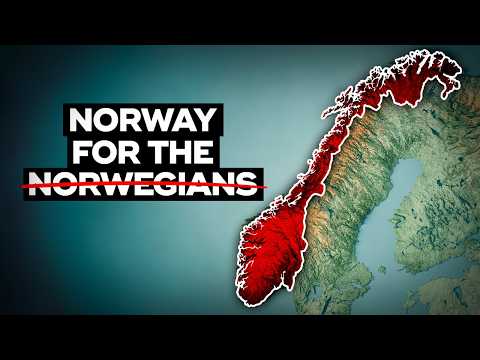
One of the first measures, enacted in June 2016, was parliamentary legislation authorizing border officials to refuse entry to asylum seekers during periods of extraordinarily high influx. This meant that if another refugee crisis were to hit, Norway could simply shut its frontier, even to people arriving from fellow Nordic countries. This represented a profound departure from earlier practices, which had enshrined the right to claim asylum for anyone physically present within Norway.
Simultaneously, the government accelerated its deportation processes. The window for appealing a rejected asylum claim was drastically slashed from three weeks to just one week. This fast-track system left individuals with almost no time to gather evidence or mount a legal challenge, with the clear objective of removing rejected applicants before they could establish roots within the country.
Further tightening the screws, Norway modified its immigration act to allow deportation to "safe third countries," even if those countries would not actually process asylum claims. Previously, Norway could only transfer someone to a country that would examine their case, a crucial safeguard that was now deleted. The result was that Norway began sending asylum seekers back to Russia, regardless of whether Russia would grant them protection. Despite strong pushback from the UN refugee agency, which explicitly warned that Norway was wrong to regard Russia as a safe country for refugees, Norway pressed forward with this policy.
The concept of temporary protection replaced the expectation of permanent sanctuary. Norway shifted towards issuing temporary protection permits with the explicit goal of revoking them once countries of origin were deemed stable. Since 2017, Norwegian authorities have systematically reviewed and revoked hundreds of refugees' residency permits. The primary targets were Somalis, with nearly 1,000 Somalis and their family members losing their Norwegian residence permits in just a few years, as the government argued that parts of Somalia were now safe enough for return. Syrian refugees have also been targeted, with Damascus-controlled areas deemed stable. The underlying idea was unequivocal: asylum is temporary, not a path to permanent residency.
Family reunification rights were also severely curtailed. New rules made it significantly harder for refugees to bring over family members. An obscure clause now allowed officials to deny reunification if they believed a refugee's family could live safer in a third country where they had stronger ties than in Norway, forcing many families to remain separated. Stricter income and housing requirements were also introduced, compelling refugees to prove they could financially support family members and had adequate housing before bringing them to Norway.
In a drastic break from tradition, Norway reduced welfare benefits for new arrivals. The country introduced waiting periods for refugees to access certain welfare programs and cut some social support entitlements. This directly violated the principle of equal treatment that had underpinned Norway's system for decades. Politicians justified these changes by arguing that generous benefits acted as a "pull factor," attracting economic migrants rather than genuine refugees. The proposed solution was simple: make Norway less attractive.
The bar for obtaining permanent residence was also significantly raised. By 2021, new rules required at least three years of full-time work or education in Norway, combined with Norwegian language proficiency tests, before immigrants could even qualify for permanent residence. Previously, the criteria had been far more lenient. Obtaining citizenship now demanded even stricter ID verification, advanced language skills, proof of self-sufficiency, and clean financial records, meaning no debts, no unpaid fines, and no criminal history. In essence, Norway raised every conceivable hurdle for immigrants attempting to build permanent lives within its borders.
Throughout this period, deportations reached record highs. Police forces were given performance targets, and immigration enforcement became a top priority. Norway did not shy away from controversial deportations, becoming one of Europe's leading countries in sending Afghan asylum seekers back to Afghanistan, despite ongoing violence there. In 2016, only Germany, Greece, Sweden, and the United Kingdom returned more Afghans than Norway, a remarkable statistic for a small country of five million. When criticized, Minister Listhaug consistently refused to back down, instead pressing even harder for stricter enforcement.
Unmasking Deception: DNA Scandals and the Fraudulent Claims
Beyond the sweeping policy shifts, Norway's immigration story during this period is replete with scandals and bizarre episodes that underscore the severity of its transformation. Starting as early as 1999, Norwegian immigration authorities began implementing DNA testing for Somali migrants who applied to bring over family members. The results of these initial tests were startling: up to 25 percent of applicants were found to be lying about their family relationships.
In 2010, the scope of DNA testing was expanded to include Somali couples who claimed to be married but had no children. The findings from this group were even more astonishing: 40 percent of these purported husbands and wives were, in fact, siblings posing as married in order to exploit family reunion regulations. The revelation sent shockwaves through the system, compelling the government to extend DNA testing to other immigrant groups.
Further investigations in 2015 uncovered additional layers of fraud. It was discovered that some Somalis residing in Norway had previously lived in safe nearby nations, such as Ethiopia or Kenya, before falsely claiming to be refugees escaping the civil war in Somalia. Norway's response to these deceptions was, predictably, unforgiving. Countless individuals, and in some cases even their Norwegian-born children, subsequently lost their citizenship due to these fraudulent claims, signaling a zero-tolerance approach to deceit within the immigration system.
The Swedish Shadow: Crime, Culture, and the Quest for Identity
The transformation of Norway's immigration stance was not confined to its own borders; it also involved a distinct narrative shaped by observations of its neighbor, Sweden. In April 2017, Immigration Minister Sylvi Listhaug traveled to Stockholm and controversially claimed that "parallel societies" had developed in more than 60 places in Sweden, describing them as "no-go zones" where criminals were in control. The Swedish government reacted with fury, with the Swedish migration agency canceling meetings with Listhaug and dismissing her statements as "complete nonsense." Even Norway's own prime minister gently admonished her to "stick to facts." Yet, the message had been unequivocally delivered: Norway was actively using Sweden as a cautionary tale, implying that its generous immigration policies had led to undesirable outcomes. The phrase "Don't let Norway become Sweden" implicitly became a campaign slogan for anti-immigration sentiments, with politicians pointing across the border as proof that expansive immigration policies could lead to increased crime, segregation, and social breakdown.
Fueling this narrative were crime statistics that amplified public anxiety. While Norway has not experienced the widespread gang violence seen in Sweden, a comprehensive study by Statistics Norway revealed unsettling figures. Somali-born residents, for instance, had a criminal charge rate roughly double that of native Norwegians, approximately 124 per 1,000 Somalis compared to 45 per 1,000 natives over a four-year period. Even after adjusting for age and gender, the Somali rate remained around 89, nearly twice the native average. Other immigrant groups also showed elevated rates. The Progress Party successfully pressured the government to release these previously withheld ethnic crime statistics, and one figure in particular stood out: nearly half of young Somali-Norwegian men in Oslo had been investigated for violent offenses in recent years. While these statistics are subject to various interpretations, they were undeniably "weaponized politically," giving mainstream traction to the narrative that immigration posed a threat to law and order. Paradoxically, even preventative measures, such as "no means no" classes designed to educate migrants about consent and prevent violence against women, sometimes inadvertently made native Norwegians more fearful.
"The narrative that immigration threatens law and order gained mainstream traction."
Beneath the policy debates and crime statistics lies a deeper, more existential question for Norway: can it maintain its national identity amidst such rapid demographic change? By 2022, a reported 33 to 34 percent of Oslo's population had an immigrant background. Certain neighborhoods in East Oslo became minority-majority, populated largely by immigrants from Pakistan, Somalia, Poland, and Iraq. While many embraced this newfound diversity, others expressed caution and concern about "ghettoization." In an effort to control the ethnic composition of neighborhoods, the Conservative Party's 2025 platform even suggests prohibiting asylum applicants from relocating to places where immigrants already constitute more than 25 percent of the population, a measure aimed at preventing the formation of ethnic enclaves.
The housing crisis further exacerbated tensions. A surge in population contributed to skyrocketing rents and home prices. Over half of immigrant renters in urban areas like Oslo and Vegan (likely a transcription error for a city like Bergen or Stavanger, but faithfully reproduced from the source) spent more than 30 percent of their income on housing. Many native Norwegians, struggling to find affordable homes, pointed to refugees being allocated municipal apartments, which fostered significant resentment. This created a toxic dynamic where natives and immigrants found themselves competing for stretched housing resources, with each group often believing the other was receiving unfair advantages.
Concerns about welfare dependency also mounted. Despite generous integration programs, many refugees struggled to find work in Norway's high-skilled economy, owing to factors such as low formal education, implicit biases in hiring, occupational segregation, and difficulties in translating foreign qualifications. As a result, unemployment rates among immigrants were significantly higher than among natives, with some individuals remaining on public assistance long-term. This fostered a narrative of "welfare state strain," suggesting that the system inadvertently incentivized dependency rather than genuine integration. Critics argued that Norway was inadvertently creating "subsidized isolation," where immigrants lived in ethnic enclaves, supported by benefits rather than employment. The government responded by mandating participation in Norwegian language classes and work-oriented activities, but significant gaps persisted, and the worry about the welfare system's long-term sustainability continued to grow.
Cultural integration also presented challenges, sparking numerous debates. Discussions erupted over the dress codes of Muslim women, leading to Norway banning face-covering veils in schools and universities in 2018. Refusals by some Muslim men to shake hands with women, and the broader role of religious practices in public life, also became points of contention. Violent altercations even arose from aggressive Quran burnings orchestrated by the far-right organization SIAN (Stop Islamization of Norway) in immigrant neighborhoods, further highlighting the deep cultural divisions emerging within society.
The Danish Blueprint: Norway's March Towards a Hardline Future
With all these internal shifts and external pressures, the question inevitably arises: is Norway becoming the next Denmark? Denmark has undeniably gone further than any other European country in restricting immigration, implementing policies such as confiscating jewelry from refugees at the border, forcing asylum seekers onto temporary permits, setting "ghetto quotas," and pursuing offshore asylum processing in Africa. The answer to whether Norway is following Denmark's playbook is a resounding yes, albeit with some nuanced caveats.
Like Denmark's "paradigm shift" in 2019, Norway now treats asylum as temporary, routinely revoking protection permits once origin countries are deemed safe. Both nations have dramatically tightened family reunification rules. Denmark's "ghetto plan" explicitly limits the percentage of non-Western residents in certain areas, and Norway's Conservative Party now proposes avoiding refugee settlement in areas where immigrants constitute over 25 percent of the population, a policy clearly inspired by the Danish model. Most notably, former Prime Minister Erna Solberg has stated that a Conservative government would send asylum seekers to third countries for processing, a strategy directly mirroring Denmark's approach. The Conservatives also advocate for slashing Norway's UN refugee quota, further aligning with Denmark's significant cuts.
The primary difference between the two countries lies in their tone. Denmark pursues a "zero asylum seekers" policy with clear-cut, intense rhetoric. Norway's rhetoric has been comparatively softer, yet when ministers declare they "don't give a damn" about criticism or warn that immigration could fundamentally alter Norway's character, the gap in intensity quickly narrows. Norway's transformation from a humanitarian haven to an immigration fortress has occurred with blazing speed. A confluence of external shocks, including the 2011 terror attack and the 2015 refugee crisis, combined with internal pressures such as welfare concerns, crime statistics, and cultural anxieties, created the perfect conditions for a political earthquake. Where Norway once prided itself on equal treatment and open doors, it now emphasizes stringent integration requirements, ambitious deportation targets, and the preservation of what it defines as "Norwegian values."
The country that once readily offered shelter to refugees now signals that newcomers must earn their place, and for many, that they simply will not get to stay at all. While Norway may not appear as overtly hardline as some other nations, its plans and methods are demonstrably tough, and they show every sign of becoming tougher. This profound shift has gone somewhat underreported internationally, often overshadowed by Denmark's more aggressive measures. Yet, as evidenced by the bicycle deportations, the DNA scandals revealing fraudulent families, the revocation of citizenships, the record deportations to Afghanistan, and the defiant "I don't give a damn" from government ministers, Norway has been implementing its own restrictionist revolution. These are not fringe positions; they are mainstream Norwegian policy, forged with bipartisan consensus. For a country famous for awarding the Nobel Peace Prize and its international selflessness, this represents a serious reversal.
Norway's leaders, however, argue that they are being realistic, not cruel. They contend that they are protecting the welfare state that makes Norway unique, preventing the social problems they observe in Sweden, and ensuring that immigration remains manageable and integration genuinely possible. Whether these policies will ultimately achieve those goals, or whether they represent a betrayal of Norway's foundational humanitarian values, remains a hotly debated question. What is undeniable is that Norway is no longer an outlier in its approach to immigration; it is firmly in step with a broader European trend toward closed borders and conditional welcomes. The era of easy immigration is over, and Norway, once a beacon of generosity, is now openly prioritizing self-preservation over asylum. In January 2025, former Prime Minister Erna Solberg perfectly captured the prevailing mood: "The next 20 years cannot be a copy of the last years." The translation is clear: the doors are closing, fast and with a firm hand, and they are not expected to open again anytime soon.
The world, as geography teaches us, is rarely static, and national narratives are often more complex than initially perceived. Norway's journey from an open-hearted sanctuary to a nation prioritizing self-preservation is a profound reminder that even the most steadfast ideals can be reshaped by unforeseen forces and internal anxieties. This isn't just a policy shift, it's a dramatic re-plotting of a nation's course, proving that even in a world meticulously mapped, the most significant borders are often redrawn not on paper, but in the hearts and minds of its people.