France, the storied birthplace of the Declaration of the Rights of Man, the nation that rallied the world behind the ideals of Liberty, Equality, Brotherhood, now stands at a stark crossroads. In a dramatic shift from its historic embrace of humanitarian principles, the country has deployed thousands of armed officers in military-style operations across its cities, rounding up migrants and enforcing a stringent new era of zero-tolerance immigration policy. This isn't a scene from a dystopian novel, but the chilling reality of June 2025, a culmination of mounting internal and external pressures that have fundamentally reshaped one of Europe's most progressive nations. The transformation is not random, nor is it a sudden madness, but rather the result of a calculated political pivot, born from anxieties and crises that threaten to redefine not only France, but the very fabric of the European continent.
The Republic's Retreat: A Zero-Tolerance Dawn
The dawn of June 2025 painted a stark picture across France, one that few would have imagined just years prior. In coordinated operations, 4,000 police and soldiers fanned out across major transport hubs in Paris, Lyon, and Marseille. Their purpose was unambiguous: papers were checked, individuals were pulled aside, and some were handcuffed, all under the watchful eyes of families in shock. The interior minister's voice, broadcast widely, cut through any lingering ambiguity, declaring, "Do not come to France. We will tolerate nothing. It's zero tolerance." This aggressive posture was not merely rhetorical. Shortly before 6:00 a.m. in Paris, police began the eviction of nearly 450 migrants living in the historic Geek Theater, a move that symbolized the new operational reality. The image of France, once a beacon of asylum and human rights, now conducting military-style operations in civilian spaces to round up migrants, marked a profound and troubling departure from its foundational values. This bold move signaled an end to traditional parliamentary debate on immigration, replacing it with direct, forceful enforcement.
The Tinderbox of 2023: Sparks of Crisis
The seeds of this dramatic shift were sown in 2023, a turning point year largely unrecognized at the time. That June, Paris suburbs erupted in literal fires, with riot police clashing with crowds night after night, cars torched, and shops looted. The initial spark was a police shooting, a tragic incident that, while not uncommon in cities, ignited a far more volatile reaction. Within hours, far-right politicians, notably Marine Le Pen's party, seized the narrative, connecting the chaos directly to "mass immigration" and "failed integration." They argued this was the inevitable price of allowing too many foreigners into France. While critics pointed to police violence and economic inequality in the suburbs as the root causes, the immigration narrative proved too potent, offering a clean, singular cause and solution: close the borders. The riots persisted for weeks, necessitating the deployment of over 45,000 police, and when the unrest finally subsided, something fundamental had shifted: immigration was no longer just a policy issue, but was now firmly linked in the public consciousness with chaos and danger.
The anxieties deepened significantly in October of that year with the brutal murder of a teacher, Dominique Bernard, at his school in Arras. The attacker was a young man of Chechen origin who had arrived in France as a refugee at the age of five. This shocking event, widely reported as a suspected terror attack, dominated news cycles and prompted statements from nearly every politician. The central question that emerged was not about preventing violent extremism or understanding radicalization, but rather, "How was this person allowed to be here? How did the system fail?" By the time the dust settled, the Arras attack had become the irrefutable proof anti-immigration hardliners needed. They no longer had to theorize; they could point to a slain teacher and declare, "This is what immigration looks like. This is the cost." The government, already under pressure from the surging far right in the polls and a publicly anxious populace, recognized that with blood on the ground, a political calculus had irrevocably shifted, demanding immediate action.
From Policy to Pincer Movement: The Legislative Onslaught
Responding to this escalating pressure, then-Interior Minister Gérald Darmanin introduced a new immigration bill late in 2023 with a palpable sense of urgency. This was not a thoughtful, deliberative process, but a government reacting to crisis. The proposed measures were uncompromising, signaling a significant hardening of France's stance. The public's anxiety about immigration was deeply intertwined with other domestic fears, including housing shortages, job insecurity, and the perception of overcrowded schools and hospitals, all contributing to a widespread desire for less immigration. Furthermore, the nation was still reeling from other high-profile cases, such as the 2022 murder of 12-year-old Lola by an immigrant who reportedly should have been deported. These incidents transformed the abstract threat of immigration into a tangible, present danger, fueling a cultural anxiety that French identity itself was at risk. Far-right politicians, like Marine Le Pen, had been articulating this message for years, and now, with people feeling squeezed on multiple fronts, it resonated more deeply than ever.
The debates in parliament following Macron's introduction of the new immigration law became notoriously blunt and vicious. Macron's own party found itself divided over the bill, with the left fiercely opposing it for betraying French values and the right arguing it did not go far enough. Despite this internal strife, the government relentlessly added tougher measures, including provisions for faster deportations, stricter family reunification rules, and limits on welfare benefits for asylum seekers. Some proposals, such as the introduction of immigration quotas, ventured into territory that would have been unthinkable in French politics just a few years prior. Marine Le Pen rightly declared this an "ideological victory" for her movement, as the entire spectrum of French politics visibly shifted, bringing far-right ideas into the mainstream policy discourse. While the bill passed in December 2023, the Constitutional Council delivered a significant rebuke, striking down about a third of its provisions, including the immigration quotas and some limits on benefits, deeming them unconstitutional. However, instead of reconsidering, Macron defiantly ordered his ministers to immediately implement whatever parts of the law had survived judicial scrutiny.
The political landscape continued its radical transformation into 2024. Macron, seeking a renewed mandate, dissolved parliament and called snap elections, a gamble he ultimately lost, resulting in a fractured National Assembly with no clear majority. In response, he forged a deal with conservatives, bringing in Michel Barnier as prime minister and Bruno Retailleau as interior minister, both known hardliners on immigration. Within weeks, Retailleau issued clear directives to regional officials: "Deport more, regularize less." This was not mere advice; it was a command, signaling that France had decisively shifted from a centrist government attempting to balance humanitarian values with security concerns to a right-leaning administration laser-focused on a singular objective: pushing people out. The entire machinery of government was now pointed firmly in one direction.
The French National Assembly has opened a controversial debate on immigration, which is part of an effort by the government to heed voters concerns about migration. The French government insisting it will still enact tough measures against illegal migration after the National Assembly rejected its flagship immigration bill.
Fortress France: The New Operational Reality
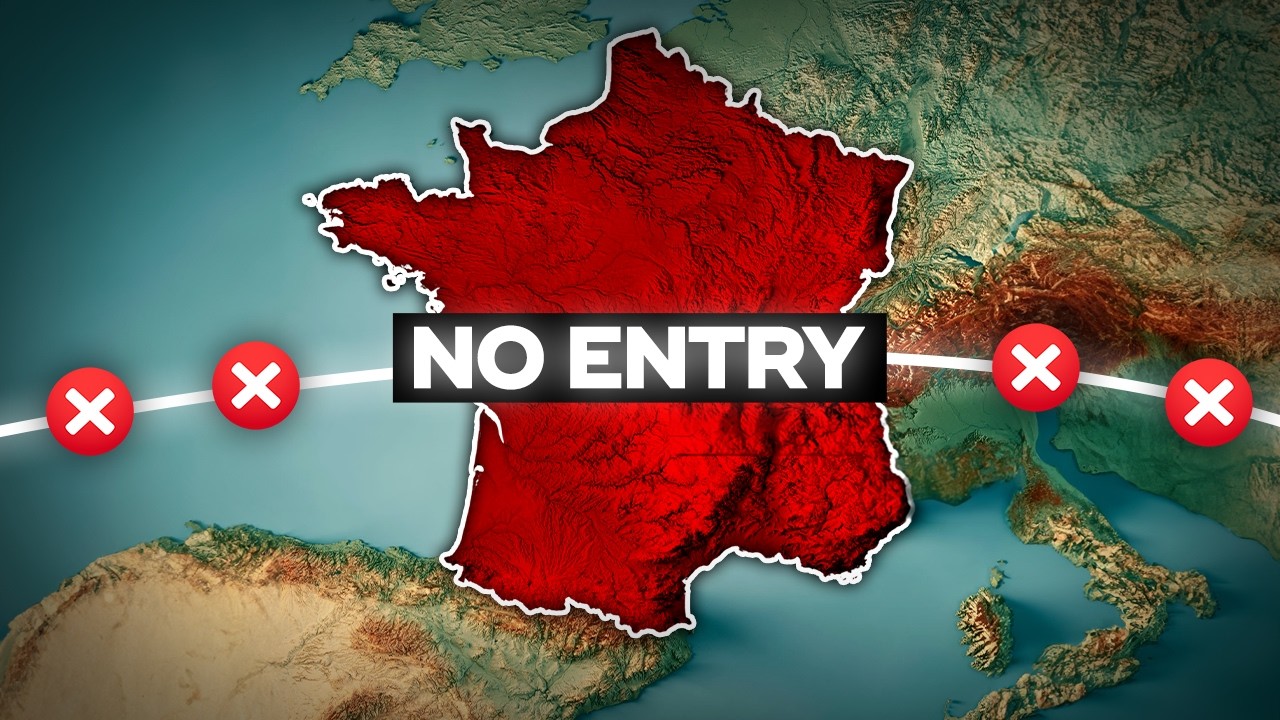
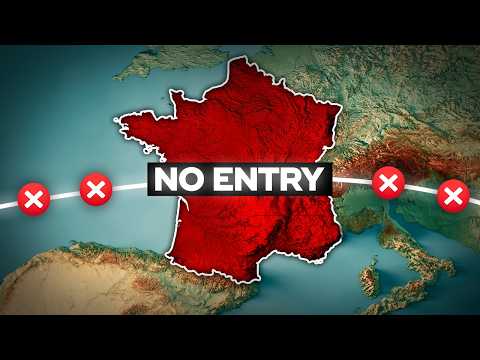
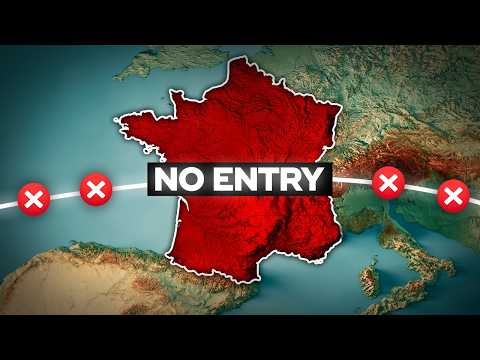
The June 2025 operations at Gare du Nord and across the country were not an anomaly, but rather the blueprint for France's new operating procedure. Getting on a train without valid papers now means entering a zone of constant random identity checks. Officers regularly board trains, moving through cars, demanding documents. Those unable to produce them are taken off, and within hours, can be processed and issued a deportation order. The system is designed for speed, leaving no time for lengthy bureaucratic processes, gathering documentation, or finding a lawyer. France has also significantly reimposed internal border controls, a move that carries profound implications for the Schengen Area, the system designed to allow free movement across European borders and a foundational achievement of the European Union. While justified as temporary responses to terrorism and migration, these measures, which include police presence at the Italian border in the Alps and checkpoints for travelers from Spain or Germany, are becoming permanent. For the first time in decades, driving from Italy into France now routinely involves encountering officers demanding identification and questioning destinations.
The government has also dramatically streamlined deportation procedures. For any foreigner accused of a crime or deemed a security threat, the path from accusation to deportation has been significantly shortened, with fewer avenues for appeal and diminished opportunities to argue one's case. Gérald Darmanin, in a previous statement, openly boasted that the new law granted authorities "unprecedented power to expel delinquents," their term for foreign nationals targeted for removal. Further tightening the screws, there are plans to restrict the Aide Médicale d'État (AME), the program providing healthcare to undocumented migrants. The government intends to tighten eligibility requirements, reduce covered services for adults, and impose seniority requirements for certain benefits. Critics, including doctors and medical professionals, have warned that this will inevitably push untreated illnesses into emergency rooms, ultimately costing hospitals more in the long run, but the government's logic remains firm: make access to care harder, and people will leave. Even more intensely, discussions are ongoing about reintroducing a criminal offense for illegal residents, a throwback to laws replaced years ago as Europe moved towards more humane standards. This would mean that sneaking into France illegally could lead to actual incarceration, not just deportation.
The proposed new immigration law for 2025 includes an even more shocking provision: extending the detention of undocumented migrants from 90 days to a staggering 210 days, or seven months, locked up while awaiting deportation. This extended period in a detention center, devoid of freedom, represents an extreme measure, as no other major Western democracy has imposed detention on this scale in recent decades. Complementing these legislative changes is a massive enhancement of the border force, pooling police, gendarmes, and potentially even military resources. This combined force can be deployed to reinforce any border zone at any time there is a perceived migration threat, elevating border security to a level France has not witnessed in peacetime. To grasp the full scale of this intensity, one need only look at Operation Wombushu, launched in Mayotte. In 2023, the French territory in the Indian Ocean saw the deployment of roughly 1,800 police and soldiers with a mission to "take back control." This translated into demolishing migrant shantytowns with bulldozers, armed police sweeping through neighborhoods, and rounding up thousands of undocumented residents. Rights groups decried the scenes as a "humanitarian disaster," with residents calling it "apocalyptic," and journalists reporting that migrants were "hunted, humiliated, and insulted," families separated, and people deported to countries where they might face persecution. This operation, explicitly framed as reclaiming control, was merely a preview. Retailleau and Barnier are now actively looking to apply this same model, with its intensity and willingness to deploy armed forces against populations deemed illegal, to mainland France. In 2025, France's enforcement is in overdrive, with police raids on construction sites for undocumented workers and the clearing of migrant camps from Paris and other cities becoming routine. The government proudly touts its numbers: arrests up, deportations up, residence permits down, treating every statistic as a victory, and signaling that this is just the beginning of an accelerating crackdown.
A Nation Divided: Echoes of Resistance and Discontent
This unprecedented intensity has not gone unchallenged. In January 2024, tens of thousands of French citizens took to the streets in Paris, Lyon, Marseille, and dozens of other cities, protesting the controversial immigration law. Marchers carried signs proclaiming "No to immigration law," "Migrants equal humans," and "France, land of asylum," with families, young people, and teachers participating. These were not merely professional activists, but regular French citizens expressing a profound belief that their government was betraying France's core values, asserting that "this wasn't who France was supposed to be." Civil society organizations also mobilized, with doctors' unions warning that cuts to medical care would inevitably lead to preventable diseases and overwhelm emergency rooms. Churches invoked Christian values of compassion, while labor unions highlighted the economy's reliance on migrant workers in critical sectors like agriculture, construction, and healthcare. Teachers voiced concerns about the climate of fear impacting refugee children in schools.
The criticism extended far beyond France's borders. The United Nations Special Rapporteur on Racism issued a statement asserting that the law violated France's commitment to equality and actively fueled xenophobia. Human Rights Watch published a report condemning the legislation as an "attack on migrants' rights" and a "concession to the far right." Even France's own independent Defender of Rights, a body established to protect citizens, declared that the law "strikes at the heart of republican principles." These were not fringe organizations, but serious institutions signaling that France had crossed a critical line. Internally, the government faced significant friction. Some of Macron's own parliamentarians voted against the law or abstained, and a health minister even resigned in protest over the direction immigration policy was taking. Macron's centrist party was visibly being torn apart, simultaneously attacked by the left for betraying French values and playing into far-right narratives, and criticized by the right for not going far enough. He found himself trapped, taking fire from both directions.
What is particularly telling is that even with these sweeping changes, the far right remained unsatisfied. Despite achieving an undeniable ideological victory, seeing their ideas move into the mainstream, they demanded more. Marine Le Pen pushed for a referendum on immigration, arguing that only a direct popular vote could impose truly tough measures, implying that even Macron's aggressive policies were insufficient. This dynamic reveals a crucial point: there is no finishing line. The goalposts simply keep moving, with the far right consistently demanding harsher measures the tougher the government becomes. Internationally, friction also began to brew, with Italy's government complaining that France's tightening border controls were merely funneling migrants towards Italy. Within the European Union, officials expressed concern that countries were engaging in a competitive race to be the toughest on immigration, thereby threatening the entire European project. Free movement, a foundational EU principle, faced genuine peril. The human cost of these policies is also impossible to ignore, with images of police raids, families separated at train stations, and people living in constant fear of deportation reshaping French society. While supporters believe the government is finally taking control, others perceive a betrayal of France's stated ideals. For immigrant communities and French citizens of immigrant backgrounds, there is a pervasive feeling of being targeted, marked by increased reports of racial profiling and police stops concentrated in immigrant neighborhoods, fostering a climate of suspicion, fear, and uncertainty.
For those who support the crackdown, it feels like finally the government is taking control. For others, it feels like a betrayal of what France claims to be. And for immigrant communities and French citizens of immigrant backgrounds, there's a feeling of being targeted.
The Schengen Strain: Europe's Shifting Sands
The events unfolding in France are not isolated; they are part of a much larger and more troubling European narrative. Across the continent, far-right or hard-right parties are either in government or wielding significant political power in roughly half of the European Union's countries. Italy has a far-right prime minister, Hungary has been aggressively cracking down on migrants for years, Poland has seen hard-right governments, Sweden has shifted decisively to the right, and the Netherlands is following suit. Even traditionally progressive nations are experiencing this ideological drift. This trend is intrinsically linked to one issue above all others: immigration. Many observers believe it has become the defining political battle across Europe, a potent tool for politicians to win elections and rally supporters. There is a palpable "race" underway to see which country can appear toughest and most credible in its opposition to immigration. The logic is clear: if a government is not tough enough, the far right will step in, claiming to be the true protectors of the nation.
In this continental race, France is not merely participating; it is arguably "winning." The country has transitioned from serious debates about humanitarian obligations and integration policy to deploying thousands of armed officers in train stations to round up migrants. If France, the self-proclaimed land of human rights and the nation that gave the world the Declaration of the Rights of Man, is adopting such measures, it sends a powerful signal about Europe's trajectory. It suggests that this approach is becoming normalized, effectively granting other countries permission to go even further. The European ideal of free movement, the very principle that underpins the Schengen system, relies on all member states sharing a basic commitment to it. However, if every country begins to reintroduce border controls and competes to be the harshest on migrants, the entire system risks breakdown. This would lead to a Europe that is increasingly closing in on itself, rather than opening up, replacing the post-Cold War vision of a unified, borderless continent with a "fortress mentality."
The European Union attempted to address this fragmentation with a new Migration Pact, agreed upon in 2023 after a decade of disagreements. This framework aimed to modernize asylum rules and distribute responsibility more fairly among member states. Yet, with major players like France now charting their own course, unilaterally imposing barriers and calling it control, the pact is already showing signs of unraveling. This lack of cooperation among countries has dire consequences for migrants themselves. Safe routes are closing, making dangerous routes more appealing, leading to more deaths in the Mediterranean and overflowing camps. The crisis, it seems, does not disappear when borders are closed; it merely exacerbates at the margins and in places out of sight.
An Identity in Flux: The Soul of France at Stake
Beyond the practical implications, there is a profound values question that, while harder to quantify, holds immense significance. For decades, Europe distinguished itself from authoritarian regimes by its unwavering commitment to human rights, democracy, and the rule of law. But when established democracies begin treating certain groups, specifically migrants and religious minorities, as less deserving of these fundamental rights, the very distinction becomes blurred. If Europe's primary claim to moral superiority rests on human rights, and those rights are increasingly violated, what remains? Some observers believe that France's current approach could become a template for others. If it proves politically successful and does not incur major international repercussions, other countries may indeed copy it, leading to a "race not just to be tough, but to see how far you can go." This could result in an increasingly fortress-like Europe, with hardening borders and restricted movement, replacing the post-1989 dream of a unified continent with something far more fragmented and defended.
However, another possibility exists: France's experience could serve as a cautionary tale. The social upheaval, the unsettling images of police raids, and the chorus of international criticism could galvanize significant opposition. Civil society groups are organizing, pro-refugee movements are gaining strength in various regions, and young people are protesting. The critical question is whether this resistance will be robust enough to halt the momentum of the current policies or merely delay their inevitable progression. For France specifically, this moment touches upon its national identity in a deeper way. France has long seen itself as the home of the revolution, a beacon of liberty since 1789, a part of its national DNA. But if France is now defined by aggressive border control, by mass deportations, and by treating migrants as invaders, then something fundamental has undeniably changed. The question "Is France still France?" is not merely philosophical; it profoundly impacts how French people perceive their country and themselves, and how the rest of the world views France. The nation that once prided itself on offering refuge to the persecuted is now unequivocally telling the world to stay away.
This transformation has occurred with astonishing speed. Just five years ago, most of the current policies and actions would have seemed politically impossible. Now, they are treated as common sense. Laws that would have been unthinkable in 2015 are now standard in 2025. Politicians once dismissed as extremists are now setting government policy, and ideas that resided on the fringes have moved to the very center of national discourse. The question for Europe, then, is simple yet immense: Is this a temporary reaction to a crisis that will eventually pass? Or is this the new permanent state? Is France an outlier that has gone too far, or is it merely showing everyone else where they are ultimately headed, providing a solid blueprint for a more restrictive future? The answer will likely depend on the events of the next few years: what other countries choose to do, whether civil society's pushback proves effective, whether this aggressive approach actually solves the underlying issues or simply creates new problems down the road, and whether people ultimately decide the price of this kind of control is simply too high. What is certain is that France has made a choice. It has chosen to declare war, and the unfolding story of what that war means for France, for Europe, and for the millions seeking safety and a better life, will echo far beyond the boulevards of Paris.