New Zealand, a landmass profoundly isolated in the vast South Pacific, has long captivated the global imagination with its dramatic landscapes and unique biodiversity. Yet, beneath this picturesque surface, a different kind of drama has unfolded, one concerning the very fabric of its society: immigration. For a nation of just over 5 million people, grappling with the pressures of globalization and internal growth, the challenge of managing human movement became a crucible for policy innovation. What began as an uncontrolled influx, straining infrastructure and social services, morphed into a radical reimagining of how a modern Western democracy approaches migration. This is not merely a story of policy adjustments, but a profound geographical and societal pivot, offering a compelling case study for a world increasingly wrestling with similar demographic tides.
The Unraveling Consensus: When Open Borders Strained a Nation
By 2020, New Zealand was experiencing an unprecedented surge in migration, a wave that appeared boundless. Net migration had reached a staggering 85,000 people annually, translating to nearly 2 percent population growth in a single year for a country of its modest size. This peak was even surpassed by March of that year, hitting 91,700 new arrivals. Auckland, the nation's largest city, had transformed into a truly global metropolis, with a remarkable 40 percent of its residents born overseas. On paper, this seemed to be the quintessential immigration success story, marked by robust economic growth, a flourishing entrepreneurial spirit, and vibrant cultural diversity.
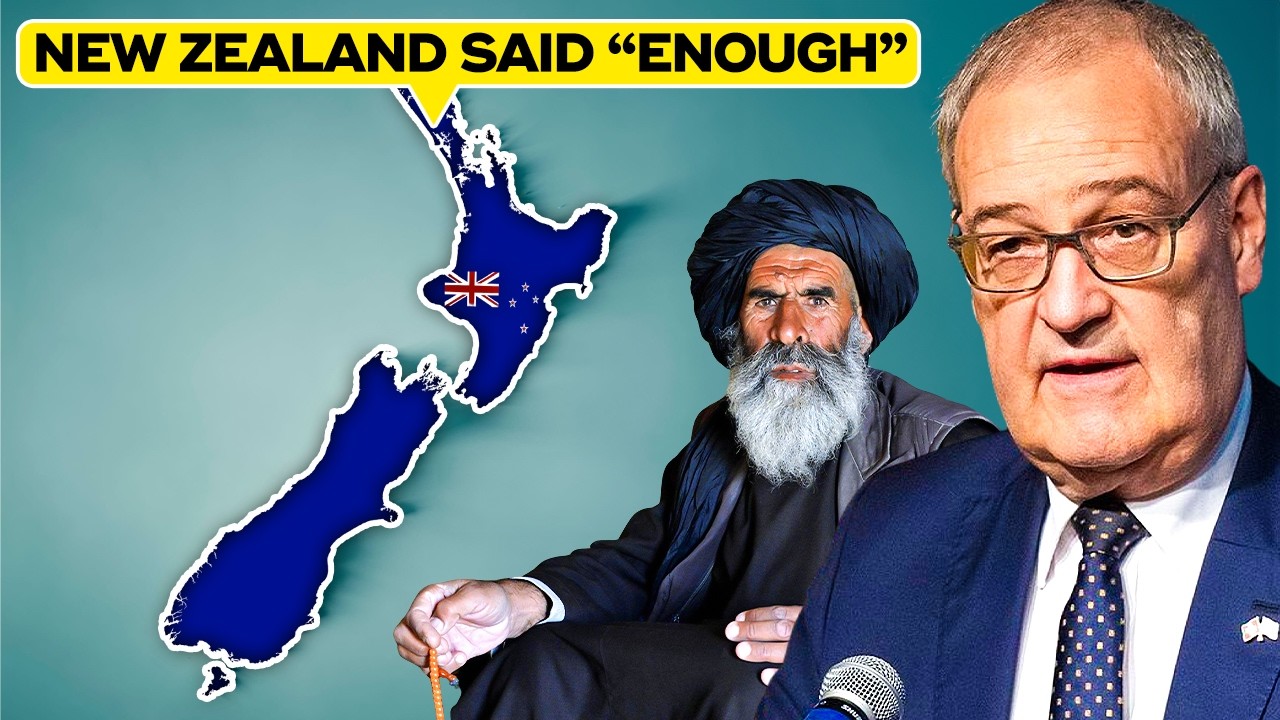
However, a closer examination revealed significant cracks beneath this polished facade. Auckland's housing market had become one of the most dysfunctional and rapidly deteriorating in the developed world. House prices had exploded, reaching 11.2 times the median income by 2021, a figure that meant a typical family would need to save every dollar of their earnings for more than a decade just to accumulate a deposit. Beyond housing, the country's infrastructure buckled under the strain: roads were perpetually gridlocked, schools were severely overcrowded, and hospitals struggled to cope with escalating demand. The rapid population increase was outstripping the nation's capacity to provide essential services, creating widespread public discontent.
Compounding these systemic issues was the rampant exploitation of migrant workers. Investigations by news outlets, such as One News, uncovered numerous instances of individuals working 60-hour weeks for wages far below the minimum, often under the constant threat of deportation if they dared to complain. Employers were found to be paying below the minimum wage and resorting to illegal labor practices, undermining the livelihoods of New Zealanders who found themselves unable to compete. Furthermore, a disturbing phenomenon of "education visa factories" had emerged, primarily targeting young people from India and China. These institutions sold the dream of New Zealand residency through dubious diplomas in fields like hospitality or business management. It became an open secret that these were not genuine educational institutions but rather thinly veiled immigration backdoors, exploiting aspirations for residency under the guise of academic pursuit.
The political landscape began to shift dramatically in response to these mounting pressures. By 2017, the political reckoning had arrived. Even Jacinda Ardern's Labour Party, traditionally a proponent of open immigration, campaigned on a platform of significantly reducing net migration by tens of thousands annually. Winston Peters, a populist political figure and kingmaker, galvanized public sentiment around the issue of mass migration, making it his central rallying cry. For the first time in decades, the concept of restricting immigration transcended partisan divides, becoming a bipartisan consensus. This pivotal moment set the stage for a fundamental rethinking of New Zealand's approach, moving beyond mere numerical cuts to a deeper re-evaluation of immigration's purpose and impact.
Fortress New Zealand: The Pandemic's Stark Experiment
March 2020 presented New Zealand with an unexpected, yet decisive, opportunity to redefine its immigration paradigm. As the COVID-19 pandemic swept across the globe, New Zealand took an almost unprecedented step among nations: it shut its borders completely. This closure was not merely for tourists, but for virtually everyone, with only citizens permitted entry. Overnight, the country transformed into "Fortress New Zealand," initiating one of the most intense migration reversals in modern history. The impact was immediate and profound, as New Zealand's net migration figures shifted dramatically from a gain of 91,000 individuals to a net loss of 17,700 by 2022. This marked a phenomenon the country had not experienced since the 1970s, with more people departing its shores than arriving.

This drastic action was not initially a deliberate policy choice concerning immigration, but rather an urgent public health response. However, its unforeseen consequence was the generation of invaluable real-world data on the effects of a sudden, complete halt to immigration. The economic repercussions were paradoxical yet deeply telling. Job vacancies across various sectors exploded. In the agricultural industry, fruit rotted in orchards due to a severe shortage of pickers. Hospitals found themselves scrambling for nurses, and construction sites were unable to find sufficient workers, clearly indicating the economy's reliance on migrant labor. The absence of this workforce created significant operational challenges for numerous industries, highlighting their vulnerability.
Yet, amidst these labor shortages, other societal effects emerged that many New Zealanders found surprisingly welcome. Rental prices, which had been spiraling upwards, stabilized and even experienced drops in some areas. The relentless pressure on schools began to ease, and the nation's strained infrastructure was afforded a brief, much-needed respite to catch up. For the first time in a long while, New Zealanders experienced their country without the constant pressure of relentless population growth, and a significant portion of the populace found this new reality not entirely undesirable. This period presented the government with a complex puzzle: how to responsibly reopen immigration without reintroducing the very problems that had precipitated the pre-pandemic crisis.
The country became Fortress New Zealand overnight. The most intense migration reversal in modern history.
Rebuilding from First Principles: The Immigration Rebalance
In mid-2022, as borders cautiously began to reopen, New Zealand unveiled what it termed the "immigration rebalance." This was not merely a set of policy reforms, but a comprehensive policy reconstruction, designed to overhaul the entire system from its foundational principles. The guiding philosophy was unequivocally clear: prioritize quality over quantity, emphasize skills over sheer numbers, and foster integration over unchecked growth. The aim was to move away from a reactive, incremental approach to a proactive, strategically designed one. The previous points-based system, once intended to attract skilled migrants, had devolved into a bureaucratic maze, leaving highly qualified professionals in perpetual limbo, waiting years for residency decisions as their applications disappeared into administrative black holes. This system was deemed unfit for purpose and required a radical transformation to meet the nation's evolving needs.
Precision Engineering: Targeted Skilled Migration
The core of New Zealand's rebalance strategy for skilled migration involved a decisive overhaul of its previous complex system. They introduced the "Green List gambit," a streamlined pathway for urgently needed professionals. This Green List comprised 85 specific occupations that New Zealand desperately required, including engineers, IT specialists, doctors, and construction project managers. Individuals hired for roles on this list were granted a direct route to permanent residency, characterized by minimal red tape and significantly reduced waiting times. The message conveyed was unambiguous: "We need you, and we're not playing games." This targeted approach aimed to attract top talent efficiently and effectively, ensuring that critical skill shortages across key sectors could be addressed without undue delay.

Crucially, this initiative was strategically coupled with stringent wage floors. Employers seeking to hire Green List migrants had to be pre-approved and commit to paying at least the median wage, which at the time was approximately $31.61 New Zealand dollars per hour. This dual mechanism achieved two vital objectives simultaneously. Firstly, it effectively curtailed the exploitation of skilled migrant workers, preventing the practice of bringing in professionals only to pay them poverty wages. Secondly, it ensured that only genuine skill shortages were being addressed, rather than simply providing a source of cheap labor for employers. For skilled workers not on the Green List, New Zealand established a significantly higher bar: they were required to earn double the median wage or demonstrate years of proven commitment and value to the country. This policy was designed to attract and retain individuals who would make substantial economic contributions, moving away from a volume-based approach to a value-based one.
New Zealand also confronted the persistent challenge of losing its domestically trained skilled workers to Australia, where higher wages often proved irresistible. To counteract this "brain drain," the revamped skilled migrant category introduced a crucial innovation: it explicitly rewarded individuals with New Zealand qualifications and work experience. The pathway was straightforward: graduate from a New Zealand university with a relevant degree, secure a job offer within the country, and a clear route to residency would be provided. This policy was based on a simple, reciprocal equation: "Invest in our education system, work in our economy, and we will invest in keeping you here." This strategic shift aimed to cease subsidizing Australia's workforce development and instead retain valuable talent within New Zealand, fostering a more self-sustaining skilled labor force.
The Unprecedented Amnesty: A City of New Residents
Perhaps the most audacious and unexpected move in New Zealand's immigration rebalance was the introduction of the 2021 One-Off Resident Visa. Understanding the context behind this decision illuminates the pragmatic and humane dimensions of New Zealand's approach. For years, tens of thousands of migrants had been living and working in New Zealand, often performing essential roles in sectors such as healthcare, education, technology, and agriculture. These individuals had established lives, raised families with children attending Kiwi schools, and consistently paid taxes. However, they remained stuck on temporary visas, their futures uncertain due to an endless queue of residency applications. The pandemic exacerbated this ethical dilemma, as these were the very people who had kept New Zealand functioning while its borders were closed and many citizens were unable to return.
The government confronted this situation with a direct question: "Why are we punishing the people who helped us through our darkest hour?" The answer led to a radical solution. New Zealand offered residency to approximately 165,000 people through a single, sweeping program. This initiative required no new applications or tests; if an individual was already in New Zealand on a work visa and had demonstrated commitment to the country, they qualified. By 2024, an astonishing figure of over 211,000 people, representing roughly 4 percent of New Zealand's entire population, had successfully gained residency through this singular initiative. This was akin to adding a city the size of Wellington, comprised entirely of new permanent residents, in a remarkably short period.
Surprisingly, this massive grant of residency triggered no significant political backlash. The reason was clear: these individuals were not strangers; they were already integral members of communities, serving as neighbors, co-workers, and friends. The program did not alter who was physically present in New Zealand, but rather changed their legal status to align with the reality that they were already residents in all but paperwork. This bold move effectively resolved a massive visa backlog crisis while simultaneously solidifying the nation's skilled workforce. It sent a powerful and unambiguous message: "If you stick with us, we stick with you," fostering loyalty and stability among its existing migrant population.
Tough Choices and Strategic Compassion
While New Zealand embraced a more welcoming stance for its existing temporary workers, it simultaneously adopted a tougher approach in other areas, particularly regarding family reunification. The parent visa category, which allowed residents to sponsor their elderly parents, had been frozen since 2016. The rationale behind this decision was largely practical: elderly migrants without a prior work history in New Zealand would immediately become net recipients of healthcare services, without having contributed to the tax base that funds those services. When the category was eventually reopened in 2022, it came with severe restrictions. Only a few hundred visas were to be issued per year, coupled with sky-high income requirements for sponsors, effectively limiting the option to the wealthy. The implicit message was clear: while family reunification was supported, extended family migration needed to be economically sustainable. The government's position was that its healthcare system had finite capacity, necessitating difficult choices, even if those choices meant saying no to emotionally compelling cases. This policy offers a distinct window into New Zealand's pragmatic immigration philosophy: sustainability is paramount.

A similar tightening of rules affected partners of temporary workers. Unless the primary worker earned above the median wage, their spouse could only enter the country as a visitor, not as a worker. The reasoning articulated was that if a primary worker was not earning enough to comfortably support themselves, they should not be bringing dependents who would potentially compete for jobs and require social services. This represents a more transactional view of immigration, a notable departure from New Zealand's historically more humanitarian image. These policies underscore a strategic shift towards prioritizing economic self-sufficiency and reducing potential burdens on public services, even at the cost of some humanitarian considerations.
However, New Zealand's approach was not uniformly restrictive; it displayed a nuanced understanding of its regional responsibilities. The "Pacific exception" highlights this distinction. New Zealand possesses deep historical and cultural ties with Pacific island nations, often viewing these communities as extended family. Consequently, while tightening skilled migration from other regions, New Zealand actually expanded its Pacific programs. The Recognized Seasonal Employer (RSE) scheme, which brings Pacific Islanders for temporary agricultural work like fruit picking and vineyard labor, saw significant growth. Established in 2007 with a cap of 5,000 workers, it expanded to approximately 12,000 pre-pandemic, and by 2024, the limit had increased to a record high of 20,750 workers. This expansion of temporary migration, in contrast to restrictions on permanent settlement, is driven by New Zealand's commitment to fulfilling a regional responsibility. These seasonal jobs provide crucial income for families back home, with remittances playing a vital role in Pacific island economies, creating a win-win scenario where New Zealand's crops are harvested and Pacific families receive essential financial support.
Yet, this model is not without its ethical tensions. RSE workers typically have no path to permanent settlement; they come, work, and then return, creating a rotating underclass of foreign labor. After reports of exploitation, including poor housing and wage theft, the government imposed new oversight measures in 2023. Nevertheless, the fundamental model persists, illustrating that temporary labor from the Pacific is deemed acceptable in ways that temporary labor from other regions is not. This selective application of policy based on strategic priorities and historical obligations reveals a complex, multi-faceted approach to immigration management. New Zealand's reset of its system is therefore not a monolithic policy but a series of differentiated strategies for different source countries and types of migration.
The student visa system also underwent a significant reckoning. International education had been a lucrative $5 billion New Zealand dollar export industry, but by the late 2010s, it had become corrupted by immigration incentives. The "scam" involved private colleges offering short-term certificates in fields like cooking, business, or hospitality. Students, often from India or China, would enroll not primarily for the education itself, but because graduation provided a pathway to a work visa. These visas were ostensibly meant for graduates to gain work experience in their field, but in practice, they became a backdoor to residency. Students would work unrelated, low-wage jobs, accumulating the years necessary to qualify for permanent status. This situation was an open secret: colleges operated as immigration services disguised as schools, students purchased time to remain in New Zealand rather than a quality education, and employers benefited from a readily available, captive workforce ripe for exploitation.
New Zealand's solution was to decisively sever the automatic link between studying and staying. Post-2022, only graduates from legitimate universities or polytechnics in genuinely skilled fields could obtain post-study work visas. Short-term certificates from private colleges no longer conferred automatic work rights. The result was predictable: private vocational college enrollments collapsed, leading to the closure of many such institutions. The international student population consequently shifted towards higher-quality university students who genuinely sought the education New Zealand offered. This was a deliberate trade-off, prioritizing quality over volume. While it meant fewer international students overall, those who remained were genuinely committed to their studies, rather than using education as an immigration loophole. The government demonstrated a willingness to sacrifice billions in education export revenue to restore integrity to both its education and immigration systems.
In stark contrast to the tightening of other categories, New Zealand maintained, and even slightly expanded, its refugee program. Under Ardern's government, the annual quota for refugees was increased from 1,000 to 1,500 individuals. Furthermore, New Zealand agreed to resettle 150 refugees per year from Australia's controversial offshore detention centers, providing a pathway for individuals who had been stranded on Pacific Islands for years due to Australia's refusal to grant them entry. This continued commitment to refugee resettlement, while economic migration was being restricted, reflects a widespread belief among New Zealanders across the political spectrum that it is a moral imperative, distinct from economic considerations. Public support for refugees remains notably high; a 2023 survey by Ipsos on World Refugee Day found that Kiwis exhibited the highest level of refugee support among 29 countries surveyed. This crucial distinction highlights how New Zealand's reset worked: humanitarian obligations were separated from economic immigration, allowing the nation to be tough on the latter while maintaining compassion for the former. Other countries considering New Zealand's model would be wise to note this, as public tolerance for restrictions often hinges on the belief that a nation continues to honor its humanitarian commitments.
New Zealand essentially added a city the size of Wellington, composed entirely of new permanent residents. And there was no political backlash. Why? Because these weren't strangers. They were already neighbors, co-workers, friends.
The Roller Coaster and the Reset: Outcomes and Lingering Challenges
The immediate aftermath of New Zealand's immigration rebalance presented a complex and, at times, surprising picture. The net migration figures, rather than simply stabilizing, embarked on a roller coaster ride. After dropping to a net loss of 17,700 in 2022, net migration rebounded dramatically to a record 126,000 in 2023. This surge, seemingly counterintuitive to a policy aimed at moderation, is explained by pent-up demand. Individuals who had been waiting for years to come or return finally had the opportunity. The one-off residency visa alone processed 211,000 applications, making 2023 a massive catch-up year. However, by late 2024 and into 2025, numbers are projected to moderate significantly, easing back to a far more sustainable level of around 12,000 annually. New Zealand effectively used the post-pandemic period to clear backlogs and establish a new, sustainable baseline. Interestingly, of the 2023 surge, 163,600 were non-citizens entering the country, while 73,400 Kiwi citizens departed, primarily for Australia. This indicates that New Zealand was, in essence, swapping out departing locals with incoming migrants, with immigration becoming the plug filling the hole of emigration.
Regarding housing, the issue that arguably ignited the entire crisis, there has been cautious but tangible progress. Property prices fell by 17 percent from their pandemic peak, bringing the median price-to-income ratio down from an unsustainable 11.2 to 7.7. While still relatively expensive, this represents a significant reduction in market insanity. This improvement was not solely attributable to immigration policy, as interest rates also played a role, but the slower population growth experienced between 2020 and 2022 undoubtedly eased demand pressure. Rental prices stabilized, and the frantic cycle of housing supply perpetually chasing immigration-driven population growth finally paused. Crucially, the national conversation shifted. Immigration policy is now explicitly linked to infrastructure planning, meaning politicians can no longer promise growth without also outlining where new residents will live, how they will commute, and where their children will attend school.
The wages factor also saw significant shifts. When the supply of migrant labor dried up in 2020, wages across various sectors began to rise. Fruit pickers received sign-on bonuses, chefs earned more, and aged care facilities found themselves competing for staff. The underlying premise was that fewer workers would compel employers to improve pay and working conditions. This largely proved true; unemployment dropped, and wages grew. Some businesses began investing in training local workers instead of relying on cheap labor. However, many jobs, particularly night shifts in elder care or fruit picking, remained difficult to fill despite higher pay. To address this, New Zealand allowed migration for genuine shortages but maintained wage floors to protect workers. Early indications suggest migrants now earn more, but balancing worker protection with labor needs remains an ongoing challenge. Perhaps most remarkably, New Zealand largely avoided the social fracturing that has plagued immigration debates in many other nations. There were no widespread incidents of gang violence tied to migrant communities, no terrorism incidents originating from within, and no formation of "no-go zones." Indeed, the most heinous act, the 2019 Christchurch mosque shootings, was perpetrated against immigrants by an Australian white supremacist, which instead prompted a powerful outpouring of solidarity with Muslim immigrants under the rallying cry, "They are us."
Public opinion surveys consistently show that New Zealanders remain broadly positive about immigration and diversity. By 2023, 52 percent of respondents indicated that immigration from Asia had a positive impact on the country's future. This is not rooted in blind optimism, but in evidence: immigrants in New Zealand generally exhibit low crime rates and high employment rates once they achieve residency. Several factors contributed to New Zealand avoiding the backlash seen elsewhere: its identity as a nation of immigrants, a strong indigenous Māori identity that complicates simplistic nativism, a consensus-driven political culture, and, crucially, the government's willingness to directly address the economic pressures, such as housing and infrastructure, that often fuel anti-immigrant sentiment, rather than allowing them to fester.
The Blueprint and Its Limits: Replicability and Future Horizons
No policy story is complete without unexpected turns, and New Zealand's journey is replete with them. The pandemic-induced border closure, for instance, created an accidental natural experiment, providing policymakers with unequivocal evidence of what transpires when immigration ceases: specific economic sectors experience slowdowns, but society itself does not collapse. Perhaps the most astonishing development was the one-off residency program, which granted permanent status to approximately 4 percent of New Zealand's population in under a year, all without triggering political chaos. This revealed a profound truth: when immigration is managed effectively and transparently, the public's concern is less about large numbers and more about disorder and a perceived loss of control.
Despite these achievements, challenges persist. New Zealand continues to struggle with its role as a stepping stone to Australia, where higher wages often lure migrants away. In 2024, 35 percent of New Zealanders moving across the Tasman Sea were foreign-born migrants who had initially settled in New Zealand before seeking better economic opportunities in Australia. Unlike governments that often implement restrictive policies discreetly, New Zealand's leaders openly framed their reforms as a "paradigm shift." Multiple political parties signed onto these reforms, a remarkable feat for a traditionally pro-immigration country, which implemented them transparently and without resorting to xenophobic rhetoric. This transparency, coupled with the ability to maintain public trust during a fundamental restructuring of immigration policy, stands as one of the most telling elements of the entire process.
Public response to these changes was generally supportive. Polls conducted between 2022 and 2023 consistently showed clear majorities backing the rebalance, indicating a public desire for order before resuming high levels of immigration. The one-off residency visa, in particular, was widely popular, given that these migrants had played a crucial role in keeping the country operational throughout the pandemic. Reactions varied by sector: the tech and healthcare industries lauded the faster pathways for skilled workers, while farming and hospitality sectors warned of labor catastrophes, prompting government adjustments that demonstrated the system's adaptive rather than rigid nature. Politically, the center-left Labour party spearheaded the tightening of policies, while the center-right National party, though critical of the pace, largely maintained the framework upon returning to power in late 2023. Notably, no major party now advocates for completely open borders or a total freeze; the debate has matured into one of calibration rather than extremes.
For migrant communities themselves, the experience was mixed. Those who gained residency through the amnesty experienced immense relief and joy, securing their futures in New Zealand. However, others felt squeezed by specific changes, such as new restrictions on partner work visas and reduced education pathways, serving as a poignant reminder that every systemic solution, however well-intentioned, carries human costs. What is clear is that other nations have been observing New Zealand's model closely, likely taking notes. While New Zealand's success offers several replicable principles, such as aligning immigration with genuine skill shortages, clamping down on exploitation through wage floors and employer accountability, adjusting numbers based on economic conditions, decisively clearing visa backlogs, and separating humanitarian commitments from economic migration, direct replication is not straightforward. New Zealand possesses unique advantages, including its geographic isolation which acts as a natural barrier against unauthorized entry, a relatively small population facilitating social cohesion, and the absence of large-scale unauthorized immigration. For countries facing genuine refugee influxes, extensive land borders, or deeply polarized politics, New Zealand's playbook cannot be simply copy-pasted. However, its core principles of thoughtful calibration, decisive action, and maintaining public trust through transparency are universally applicable. New Zealand has demonstrated that managing immigration does not equate to stopping it, but rather to making deliberate choices about how, why, and who. It transforms immigration from a force to be passively endured into a policy to be actively designed.
So, has New Zealand truly solved its immigration crisis? The honest answer is that it has traded one set of challenges for another. However, these new challenges are ones it has consciously chosen. The old problems of exploitation, uncontrolled growth, housing crises, and visa chaos have been largely addressed. The new challenges, such as retaining talent against Australia's higher wages, balancing labor needs with sustainable growth, and ethically managing temporary Pacific labor, are real but appear to be more manageable. New Zealand has proven that a developed democracy can restructure its immigration system without social fracturing, tighten its borders without abandoning humanitarian values, prioritize quality over quantity, and maintain transparency throughout the process. It has shown that granting large-scale amnesty can make sense, and that public support for immigration can be sustained even while restrictions are put in place. The key has been treating immigration as a policy to be actively managed, rather than a force of nature to be passively endured. By the numbers and the design, New Zealand moved from immigration chaos to immigration by design, shifting from a system on cruise control to one with conscious choices about speed, direction, and destination. While the system is not perfect and will require constant adjustment given evolving contexts like climate migration, geopolitical instability, and economic cycles, New Zealand has established a robust framework. This framework balances openness with control, economic needs with social sustainability, and humanitarian values with sensible limits. It demonstrates that the immigration crisis is not solved in the sense that it will never require attention again, but it is solved in the sense that New Zealand transformed it from an existential threat into a manageable challenge, and sometimes, that is the best any country can hope for in a world that is always stranger than school taught.