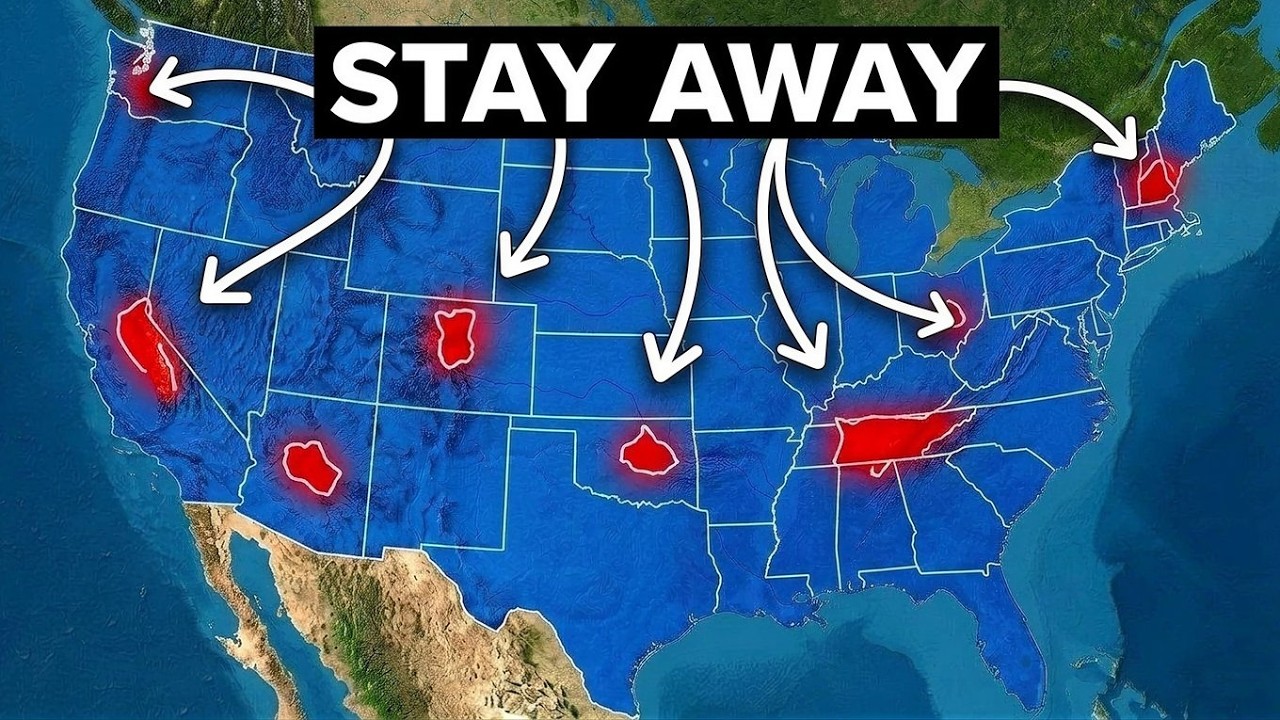
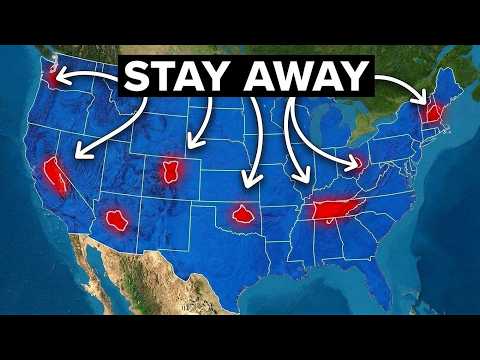
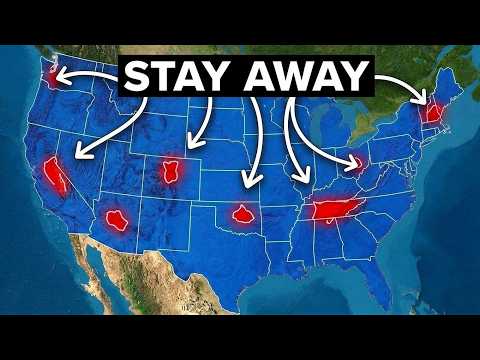
America, a land celebrated for its sweeping vistas and natural splendor, often masks a darker, more perilous geography. Beyond the postcard-perfect scenes lies a hidden tapestry of danger, where serene landscapes can transform into lethal traps in moments. From mountains that claim experienced climbers to rivers that swallow the unwary, and coastlines that lure with false calm, every state harbors a place where nature's raw power asserts itself with chilling finality. These are not mere accidents of terrain, but geographical plot twists, reminders that the world is far stranger and more formidable than any map suggests.
The Vertical Gauntlet: Peaks, Precipices, and Sudden Drops
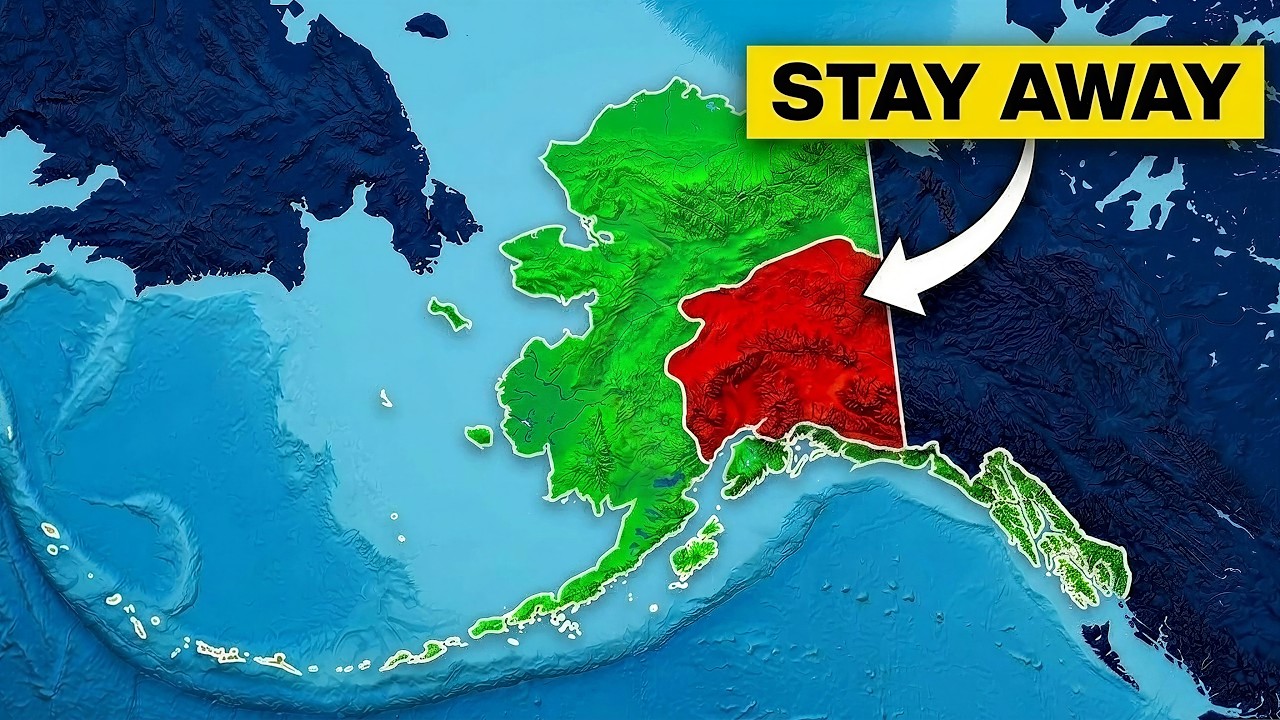
The allure of high places often conceals their profound dangers. Alaska's Denali, North America's highest peak at 20,310 feet, boasts a base to summit rise greater than Mount Everest itself. This colossal mass generates its own weather, with temperatures plummeting to -75 degrees Fahrenheit and winds reaching an astounding 150 miles per hour. The death zone, beginning above 19,000 feet, has claimed climbers who were healthy just hours before. Approximately half of all summit attempts fail, and bodies often remain on the mountain, frozen exactly where they fell. Since 1932, over 130 individuals have died here, a stark statistic revealing that one in every 200 people who attempt the climb never return.
California's Yosemite Valley, the third deadliest national park in America, presents a different kind of vertical hazard. Its iconic Half Dome cable route, ascended by 300 hikers daily, traverses a 45-degree granite slope flanked by 4,000-foot drops. When wet, the rock transforms into an uncontrollable slide. Below, the Mist Trail claimed 14 lives between 2003 and 2013, with swimmers swept over Vernal Falls facing a 317-foot drop onto solid granite. Search and rescue teams respond to over 250 incidents annually, often finding victims who died taking selfies or ignoring explicit warning signs placed precisely because previous fatalities occurred in those spots. In Utah, Zion National Park's Angel's Landing offers a half-mile spine with 1,000-foot drops on both sides, a route so treacherous that 18 people have fallen to their deaths as of 2026, necessitating a mandatory permit lottery to manage lethal overcrowding.
Colorado's Capitol Peak, a 14,000-foot exercise in survival, is renowned for its infamous Knife Edge, a 150-foot jagged spine only three feet wide, bordered by 2,000-foot vertical drops. Since 2017, the mountain has claimed at least eight lives, including five in a single six-week period. Many victims perish in the Death Gully, a deceptive shortcut ending in a 700-foot cliff. In 2021, rescuers abandoned a body recovery mission after rockfall nearly struck three teammates, leaving the fallen climber on the peak to this day. Similarly, Maine's Katahdin, the terminus of the Appalachian Trail, presents a mile-long ridge, three feet wide with 2,000-foot drop-offs. Without cables or guard rails, and no escape route in sudden weather, winds regularly exceed 60 miles per hour, and winter conditions glaze the ridge with ice. Since 1933, more than 60 people have died on Katahdin, its final mile proving its most unforgiving challenge.
Mount Washington in New Hampshire, though a modest 6,288 feet, has killed over 160 people. In 1934, it recorded a 231 mph wind speed, a world record that stood for 62 years. Wind chills routinely fall below -100 degrees Fahrenheit, and the summit's brutal consistency makes it a testing ground for military de-icing technology. Three major storm systems converge here, creating lethal conditions even in summer, famously leading to a hiker's death by hypothermia in July. Massachusetts' Mount Greylock, the state's highest point, is home to the Hopper, a massive glacial cirque with nearly 90-degree, 1,000-foot walls that funnel sudden, blinding fog. This cloud-shrouded peak is a notorious aviation graveyard, with at least four separate plane crashes scattering wreckage across its slopes, killing pilots who lost their bearings. Hikers too have vanished, only to be found days later by search teams.
Washington's Mount Rainier stands as one of America's deadliest mountains, with over 400 documented fatalities since 1897. Its summit, however, is just one aspect of a larger threat: Rainier holds more glacial ice than all other Cascade volcanoes combined. An eruption would trigger lahars, volcanic mudflows descending at 50 miles per hour and burying entire valleys. The massive Oyola flow occurred 5,600 years ago, but the Electron mudflow, just 500 years ago, proved that even non-eruptive collapses can devastate communities. Today, 80,000 people live directly on ancient debris flows, and over 2.5 million residents in the Puyallup Sound drainages sit in the path of this loaded weapon pointed at Seattle. In Georgia, Tallulah Gorge, a nearly 1,000-foot chasm, averages multiple deaths per decade from falls and drownings. Its 1,099 Death Stairs are so grueling they are frequently closed to prevent hiker heart failure. A single slip from the rim means a 1,000-foot fall with a zero percent survival rate.
Kentucky's Red River Gorge sees regular fatalities, often due to its deceptive terrain. The land, characterized by 200-foot natural arches, is built on Corbin sandstone, which is frequently hollowed from below. Hikers step onto thin, scenic shelves unaware they are standing on empty air. At Chimney Top Rock, the deadliest overlook, moss-slicked stone becomes as treacherous as ice after rain, making a 150-foot drop appear indistinguishable from the trail. West Virginia's New River Gorge, despite its name, is one of the world's oldest rivers, flowing for over 260 million years. Its 876-foot bridge, the third highest in the country, is a magnet for thrill-seekers, with up to 400 base jumpers leaping into the abyss on Bridge Day. In 2011, a wingsuit flyer survived an 876-foot belly flop, but was left paralyzed. The gorge also features Class 5 rapids in the Keeney stretches, accounting for 58 percent of all rafting injuries in the state, alongside crumbling coal vein cliffs and the infamous Jump Rock, a site of frequent spinal injuries. New York's Kaaterskill Falls, a stunning 180-foot and 80-foot two-tiered waterfall, is consistently lethal. Fatalities follow a predictable pattern: someone steps past the viewing platform for a better photo, the wet rock gives way, and they fall 260 feet. At least four recent deaths were directly selfie-related, despite new viewing platforms and constant warnings.
The Great Smoky Mountains, America's most visited national park with 11 to 13 million annual visitors, conceals hidden lethality. While car crashes are the primary cause of death, the park's water poses a deceptive threat. The Sinks on the Little River, a scenic swimming hole, hides a powerful recirculating current beneath its waterfall, trapping swimmers. Since the 1930s, over 60 people have drowned in these rivers. In 2016, the Chimney Tops wildfire, fueled by 87-mile-per-hour winds, killed 14 people and destroyed 2,500 structures in mere hours, demonstrating the extreme danger masked by the Smokies' beauty. Vermont's Smuggler's Notch, a geological bottleneck so narrow that Route 108 closes every winter, features steep granite cliffs that channel falling ice and rock directly onto the pavement, even in summer. The "GPS trap" phenomenon sees tractor-trailers following digital maps into the notch, wedging themselves between boulders and blocking emergency access for hours.
"America's geography looks beautiful from afar, but look a little closer and every single state is hiding something that can kill or ensnare you."
Currents of Calamity: Rivers, Dams, and Hydraulic Traps
Rivers, often perceived as tranquil, can harbor insidious dangers, especially when altered by human engineering or natural formations. Alabama's Little River Canyon, the state's deepest at over 600 feet, is a geographical anomaly carved atop Lookout Mountain, causing the river to flow along the plateau's edge rather than through a valley. This creates a hydrological nightmare: rain from a 200-square-mile watershed funnels into the canyon like a bathtub with no drain. Flash floods can strike without warning, transforming calm swimming holes into raging torrents in hours. The 600-foot smooth sandstone walls offer virtually no grip or escape. Forbes has ranked it among America's deadliest national parks, with 16 deaths since 2016 alone, and easily over 20 since the early 1990s. Similarly, Arkansas's Little Missouri River, specifically the Albert Pike Recreation Area, sits in a narrow V-shaped valley that funnels outrageous volumes of water during heavy storms. In June 2010, with zero cell service for warnings, the river rose from three feet to 23 feet in just four hours. A midnight wall of water claimed 20 lives, including six children, as they slept in their tents; the deadliest zones are now permanently closed.
The Mississippi River, a defining feature of the American landscape, presents unique hazards in various states. Along Illinois, its wide, lazy appearance belies a series of lethal low-head dams that create permanent recirculating hydraulic traps, pinning victims underwater. The most notorious stretch is the 8.4-mile Chain of Rocks near St. Louis, a jagged limestone ledge so treacherous that all commercial ships must use a bypass canal. In just the last two years, this border stretch has seen over 30 drownings due to invisible, stealth currents. In Louisiana, the Mississippi River at Baton Rouge is considered one of America's deadliest stretches of water. It is a brown, opaque engine of destruction where massive underwater boils and upflows of current drag swimmers into a void. Search expert Mark Misho, who has recovered bodies across Louisiana, has a 0 for 6 success rate in this particular river, as the current defies conventional rules, making recovery nearly impossible. Looming over this danger is the Old River Control Structure; if this dam fails, the entire Mississippi would violently reroute into the Atchafalaya, an infrastructure catastrophe that has almost occurred before.
Connecticut and Iowa share a common, hidden threat: low-head dams. Connecticut has 369 such dams, many without safety signs, creating what rescuers call "drowning machines." These structures generate recirculating currents that trap swimmers in a deadly hydraulic loop. From upstream, the water appears calm and flat, concealing the drop until it is too late. These dams are uniquely dangerous because the aerated water loses buoyancy, causing life jackets to fail and boats to sink, making escape nearly impossible. Iowa, with roughly 200 low-head dams, has more per capita than any other state. In downtown Des Moines alone, the Center Street and Scott Street dams have claimed at least 15 lives. Victims are not only fighting the water but are battered by trapped tree trunks and heavy debris caught in the same cycle. These invisible horizon lines kill more people in Iowa than tornadoes do. Virginia's Great Falls of the Potomac, a 76-foot cascade, is a labyrinth of hydraulic traps that has claimed over 200 lives. Its riverbed is riddled with underwater pockets that can hold a body for days. Downstream, the Little Falls Dam, nicknamed the "drowning machine," creates a lethal recirculating current. Despite fences and warnings, the gorge averages seven drownings a year, with deaths often notoriously avoidable.
Idaho's Hells Canyon, North America's deepest river gorge, plunges nearly 8,000 feet, 2,000 feet deeper than the Grand Canyon. At its base, the Snake River churns through Class 4 rapids like Granite and Wild Sheep. In spring, the 50-degree Fahrenheit water can trigger cold water shock, paralyzing muscles on contact. Suicide Point, a narrow ledge above an absurdly steep drop, makes rescue nearly impossible, with the nearest road often 20 meters of vertical climbing away. Texas' Big Bend, one of the most remote wildernesses in the lower 48 states, sees the Rio Grande add a hydraulic threat. In Santa Elena Canyon, water can rise 30 feet per minute with zero escape routes against the sheer walls. Indiana's Turkey Run State Park, while known for its beauty, also features Sugar Creek, which can flash flood in minutes, turning scenic slot canyons into watery tombs. The beautiful sandstone walls of the park are actively disintegrating, with multi-ton slabs ripping off without warning. The infamous Trail Three, labeled "very rugged," forces hikers up ladders through areas prone to falling rock and ice.
The Ocean's Treachery: Coastal, Great Lakes, and Tidal Fury
From expansive ocean fronts to the vast, inland seas of the Great Lakes, water's deceptive calm can hide powerful, life-threatening forces. Delaware's Indian River Inlet, a 500-foot gap, serves as the sole release valve for millions of gallons of water between the ocean and inland bays. During tide changes, the current can reach 9 miles per hour, transforming the inlet into a high-speed hydraulic pump that generates boiling standing waves. The rock jetties produce "sneaker waves," unexpected surges that sweep people off the shore without warning. Since 1980, the surrounding system has seen over 79 drownings, with the aerated and turbulent water causing even Olympic-caliber swimmers to lose buoyancy. On Maryland's Assateague Island, beyond the famous wild horses known for kicks and bites, the geography itself is a threat. The island is transgressive, literally rolling westward as storms erode its eastern face. During nor'easters, the entire barrier can be overtopped by the Atlantic, and its shores hide some of the East Coast's most violent rip currents, averaging 46 rescues annually. In July 2025, the island claimed 18-year-old Cresencio Velasquez, who drowned just 150 yards from safety.
Hawaii's Kalalau Trail, a scenic masterpiece, is also a literal graveyard. Two miles in, an ominous wooden sign records over 85 drownings at Hanakapi Beach. With no reef to break the waves, powerful sneaker currents drag swimmers toward vertical cliffs, where the nearest escape is six meters away. At least 15 victims have disappeared completely, their bodies never recovered. At mile seven, Crawler's Ledge features an 18-inch wide basalt path 300 feet above the surf, which tropical rain turns into a lethal slip and slide. North Carolina's Outer Banks, particularly Cape Hatteras, has been intercepting oceanic violence for centuries, earning it the title "Graveyard of the Atlantic" for sinking over 5,000 ships. The Diamond Shoals extend 14 miles offshore, where depths shift from 50 feet to three feet in seconds, grinding hulls to pieces. During World War II, this was Torpedo Alley, where German U-boats used lighthouse silhouettes to hunt merchant ships. In 2003, Hurricane Isabel physically split Hatteras Island in two, demonstrating the power of colliding Gulf Stream currents and lethal rip tides.
New Jersey's barrier beaches, like Sandy Hook, hide a deadly secret behind their boardwalk charm. These areas funnel tidal flows into offshore jets moving eight feet per second, faster than an Olympic swimmer, dragging adults 100 yards into the Atlantic in the blink of an eye. The cruelest aspect of rip currents is their creation of calm patches on the surface, luring swimmers directly into danger. In August 2025, a family was swept away at Seaside Heights, with one person lost despite six others being rescued. With over 60 drownings a year, the Jersey Shore proves the ocean needs only a step into the wrong calm spot to turn fatal. South Carolina's warm, inviting surf at Folly Beach is a geographic mask for some of the deadliest rip currents in the country. These invisible channels move at five miles per hour through water that appears perfectly still. In Horry County alone, at least 17 drownings have been recorded since 2010. The real tragedy is the bystander risk, as one in four rip current fatalities involve someone who entered the water to help, as exemplified by a 38-year-old former athlete who drowned at Pawleys Island in August 2025 after successfully saving others.
Oregon's coast is one of America's deadliest shorelines, primarily due to "sneaker waves," massive, unpredictable surges that roll up the beach without warning, dragging victims into 50-degree Fahrenheit water. In the surf, scenic driftwood logs become 2,000-pound battering rams. At Devil's Punch Bowl, sneaker waves carry outrageous amounts of sand and gravel, filling a victim's clothes and shoes, creating a concrete effect that makes swimming impossible as the waves recede. With five or more deaths annually, including a seven-year-old in 2023, this coastline is a beautiful, crushing machine. Arizona's Havasupai Falls, one of America's most photographed waterfalls, lies at the bottom of a 2,000-foot slot canyon that can become lethal in under 30 minutes. Flash floods manifest as towering walls of water, tearing through narrow sandstone corridors with no escape. In 2018, a 20-foot surge necessitated a Blackhawk helicopter evacuation of 200 tourists, and in August 2024, another flash flood claimed a hiker's life and trapped hundreds more. The walls are smooth and nearly 90 degrees, and by the time the roar of a distant storm is heard, it is often too late, with dozens lost over the decades.
The Great Lakes, vast and cold, present their own set of perils. Michigan's Sleeping Bear Dunes National Lakeshore, despite its idyllic appearance, harbors danger. The 450-foot sand climb in July heat has triggered heart attacks and heat stroke, and the bluffs drop over 400 feet to the water, with children having fallen. The true killer, however, is Lake Michigan itself, which drowns more swimmers annually than any other Great Lake, accounting for nearly half of the 1,350 drownings across the Great Lakes in the past 15 years. Even in summer, the water beneath the surface remains under 50 degrees Fahrenheit, causing cold water shock that can incapacitate a strong swimmer in under a minute, compounded by powerful, invisible rip currents. In Wisconsin, Porte des Morts, or Death's Door, is a maritime graveyard where Green Bay and Lake Michigan collide. This shallow, storm-lashed strait has swallowed hundreds of ships. Today, the danger has shifted to shore, with over 600 drownings recorded since 2010. The most terrifying local phenomenon is the seiche, a sudden atmospheric pressure shift that creates a slushing wave capable of sweeping entire piers of people into the deep in seconds.
Minnesota's Lake Superior, a cold inland ocean, defies typical lake rules. Averaging a bone-chilling 40 degrees Fahrenheit, its water acts like a refrigerator, famously never giving up its dead, holding bodies on the lakebed permanently. Danger strikes without warning: in August 2025, a rogue wave at Lutsen dragged a man from dry shore into a current so violent that rescue boats were forced to turn back. With over 350 major shipwrecks on its bottom, including the 700-foot Edmund Fitzgerald, Superior remains a graveyard where rugged cliffs hide a mere 10-minute survival window. In Mississippi, the Mississippi Sound, unlike deep coastlines, is a shallow stretch that causes hurricane surges to stack into vertical walls. In 1969, Hurricane Camille hit with a 24-foot surge that killed 343 people. Decades later, Katrina weaponized the same geography, pushing a 27.8-foot mountain of water, the highest storm surge ever recorded in America, through Waveland and Pass Christian, acting as a 30-meter-wide bulldozer that erased entire communities in minutes.
Beneath the Surface: Geological Instability and Hidden Hazards
Sometimes, the very ground beneath our feet conceals the deadliest threats, from subterranean fires to unstable earth and boiling thermal features. Pennsylvania's Centralia has been burning since 1962, a coal seam fire raging beneath the town with no end in sight; geologists estimate it could continue for another 250 years. The ground above reaches 900 degrees Fahrenheit just below the surface, with carbon monoxide and sulfur dioxide venting through cracks in roads and yards. In 1981, a 12-year-old boy fell into a sinkhole that opened under his feet, barely rescued before toxic gases filled the shaft. The town was condemned, its population plummeting from 1,000 to five, as the fire now covers 400 acres and continues to grow. Wyoming's Yellowstone National Park, a 2.2-million-acre supervolcano, features ground literally melting underfoot. With over 10,000 geothermal features, its beauty masks boiling, burning traps. In 2016, a man who stepped off a boardwalk into a Norris Basin spring was completely dissolved within 24 hours, the water 200 degrees Fahrenheit with a pH of two, as acidic as stomach acid. The danger also comes from "stealth crusts": in September 2024, a woman suffered third-degree burns after breaking through a surface that appeared solid near Old Faithful.
Montana's Glacier National Park is raw wilderness where grizzlies, black bears, and mountain lions roam. While the Going-to-the-Sun Road offers white-knuckle drives along thousand-foot cliffs, the greater danger lies in what retreating ice is exposing: terrain untouched for 10,000 years, now rotten, loose, and completely unpredictable. Since the park opened in 1910, 24 people have died from falls and 10 from grizzly bear attacks. In 2021, a camper was dragged from her tent and killed nearby, a stark reminder that visitors are part of the food chain in this unforgiving environment. Nebraska's Platte River, a mile wide and only an inch deep, hides genuine quicksand. Its shifting, braided channels create sandbars that can liquefy underfoot, trapping victims waist-deep in suction so strong that even adults cannot escape alone. Every spring, over 600,000 sandhill cranes gather, their collective roar loud enough to drown out incoming flash floods. Fed by snowmelt from the Rockies, a surge can transform this flat river into a buzzing torrent in minutes.
"The world isn't just a collection of places; it's a dynamic, often dangerous stage where nature writes its own dramatic script."
Ohio's Hocking Hills, home to Old Man's Cave, is the state's most visited natural area and also its deadliest. The sandstone cliffs are friable, meaning crumbly, wet, and deceptively unstable. Hikers fall to their deaths after mistaking moss-covered ledges for solid ground. Flash floods rip through narrow gorges like Old Man's Cave with almost no warning, turning scenic walks into survival situations. The most notorious trap is Devil's Bathtub, a seemingly calm swimming hole where a powerful recirculating vortex, an underwater washing machine, pins victims against the basin floor, making escape impossible. In Indiana, Turkey Run State Park's photogenic sandstone walls are actively disintegrating, with slabs weighing several tons ripping off without warning, a geological collapse happening in slow motion. The infamous Trail Three, labeled "very rugged," forces hikers up ladders through bare hollow and the Ice Box, a deep recess prone to falling rock and ice.
Where the Sky Comes Down: Tornadoes and Hurricane's Wrath
Some geographies are defined by the sheer violence of their skies, where atmospheric forces unleash devastation with terrifying regularity. Oklahoma's Moore Tornado Corridor is the most concentrated strike zone in recorded history. Since 1999, the city has been hit by five major tornadoes, including two EF5s. The 1999 Bridge Creek-Moore event produced the highest wind speed ever measured on Earth, a staggering 321 miles per hour, prompting the first-ever "tornado emergency" statement, a term invented on the spot because existing vocabulary was insufficient. In 2013, another EF5 flattened 1,150 structures and killed 24 people. Moore sits at a statistical epicenter where the atmosphere periodically decides to erase whatever stands, only for communities to rebuild, and the cycle to repeat. Kansas' Dodge City, situated in Tornado Alley, is part of one of the most violent storm tracks on the planet. Kansas averages 96 tornadoes a year, and the May 2007 Greensburg EF5 erased 95 percent of the town in minutes. The terrain itself, a featureless runway, offers no hiding places, no hills to break rotation, and no natural shelter, making it impossible to outrun what is coming.
Florida's Lake Okeechobee, a 730-square-mile inland sea, is held back by a 143-mile ring of earth and concrete, and it was the site of one of the deadliest natural disasters in US history. In 1928, a hurricane pushed the shallow lake out of its bed, collapsing the dikes and claiming the lives of around 2,500 people in a single night. Because the lake averages only nine feet deep, it reacts like a tilted bowl during high winds, with its entire surface sliding to one side. Despite a 1.5-billion-dollar reconstruction in 2023, a Category 5 hurricane strike could still dismantle the 30-foot walls, leaving thousands in the Florida heartland living in the shadow of a perched sea that has already demonstrated its destructive capability. Rhode Island's Narragansett Bay Storm Surge Zone faced a similar catastrophe in September 1938 when the Long Island Express hurricane hit with no warning, killing 262 people in the state alone and sweeping entire beach communities into the bay. The bay's geometry acts as a funnel, amplifying storm surges dramatically as it narrows toward Providence. A direct hurricane hit today would submerge downtown Providence under 15 feet of water, and while the 1966 hurricane barrier protects against a 100-year storm, it is not designed for a 500-year event.
North Dakota's Lake Sakakawea, a 180-foot deep reservoir, epitomizes cold and patient danger. Wind chills reach -60 degrees Fahrenheit, freezing exposed flesh in seconds. The true threat, however, lies underfoot: unstable ice that looks identical whether two inches thick or two feet. Every winter, this hidden gamble claims lives when the surface suddenly gives way. In spring, massive ice jams on the Missouri River create natural dams that can raise water levels by feet in minutes, flooding communities with almost no warning, often requiring the National Guard to use helicopters and explosives to break the jams. Vermont, despite its reputation for quiet safety, delivers a crushing reality when the weather turns. In 2011, Hurricane Irene caused over 750 million dollars in damage and washed away entire towns. From the only avalanche-prone terrain in the Green Mountains to debris-choked passes, the state's geography can be brutally unforgiving.
The Wilderness Equation: Remoteness, Heat, and Human Choices
In vast, unforgiving landscapes, the combination of extreme conditions and human decisions often proves fatal. Nevada's Lake Mead National Recreation Area is the deadliest unit in the entire national park system, averaging 20 deaths a year. The confluence of 120-degree Fahrenheit heat, high-speed boating, and alcohol creates a lethal cocktail that repeats every summer. As water levels hit historic lows in 2022, the retreating shoreline began to reveal secrets, including human remains stuffed in barrels, remnants of Las Vegas's mob history. Beneath the surface lies a B-29 Superfortress that crashed in 1948, its extreme depth making it a white whale for technical divers. Between the radioactive ghost of 900 nearby nuclear test sites and desert heat that kills within sight of a car, Nevada offers myriad ways to vanish. New Mexico's White Sands Missile Range, a 3,200-square-mile military range, contains over 80 years of unexploded ordnance buried in the sand. At its heart lies the Trinity Site, where the first nuclear detonation in history occurred in 1945, leaving the ground mildly radioactive to this day. The beauty of the gypsum dunes masks a lethal environment where lost motorists have died of dehydration within miles of safety. In January 2026, a 2.5-mile safety corridor was enforced on Dunes Drive, prohibiting anyone from exiting their vehicle during an Air Force crash recovery.
South Dakota's Badlands National Park, a place the Lakota called Makosika, or "land bad," experiences summer temperatures exceeding 116 degrees Fahrenheit on exposed rock. Flash floods in its narrow gulches can rise 10 feet in minutes on clay that absorbs virtually no water, sending every drop straight into the channels. Rattlesnakes are genuinely ubiquitous in the backcountry, where there is no shade, no water source, and no cell service across massive sections of the park. A wrong turn can leave visitors miles from any road with no landmarks for navigation. Texas' Big Bend is one of the most remote wildernesses in the lower 48 states, with summer temperatures routinely hitting 110 degrees Fahrenheit and the nearest hospital over 100 miles away. In June 2023, a 14-year-old fell victim to the heat, and his stepfather, frantically racing to help, died in a rollover crash. Rescue here can take six hours to arrive, often too late. While Florida has more lightning deaths, Texas leads the nation in total strikes, making every exposed ridge a conductor. In Missouri, the Lake of the Ozarks, with 33 deaths in lake accidents over just two decades, is often called America's deadliest lake. Known as the "Magic Dragon" for its serpentine shape, it is a chaotic collision of high-speed machinery and zero regulation. The lake is a regulation-free zone where 100-mile-per-hour cigarette boats share narrow channels with family pontoons. The wakes from these massive vessels slam into surrounding limestone bluffs and ricochet back, creating a "washing machine" effect of turbulent standing waves that can flip smaller boats in seconds. Adding to the danger, when the valley was flooded in 1931, it swallowed entire forests and towns whole, which remain submerged.
The world isn't just a collection of places; it's a dynamic, often dangerous stage where nature writes its own dramatic script. These geographic anomalies, from the highest peaks to the deepest canyons, the most tranquil rivers to the most turbulent coasts, remind us that beauty and peril often coexist. They are the plot twists of our planet, constantly challenging our assumptions and revealing a world far more complex and formidable than our schoolbooks ever taught. The lesson is clear: respect the landscape, for it holds the ultimate power.