While the global population has recently surged, expanding from just under 7 billion people in 2010 to over 8 billion by 2023, representing a 15.17 percent increase and an average growth rate of 1.04 percent, this growth narrative conceals a stark counter-trend. Across continents, a surprising number of nations are not just stagnant, but actively shrinking. These are not merely statistical anomalies, but countries grappling with profound challenges, from economic stagnation and political instability to demographic shifts and the encroaching specter of climate change. Their stories reveal a complex tapestry of human movement, societal pressures, and the relentless forces shaping our world, often in ways that defy conventional expectations.
A Global Paradox: Population Decline Amidst Growth
The prevailing narrative of exponential global population growth often overshadows a critical, yet less discussed, phenomenon: the accelerating decline of populations in numerous countries. While the world added over a billion people in just over a decade, some nations are experiencing significant demographic contraction, challenging assumptions about universal expansion. These declines are not uniform, nor are their causes singular, but rather a confluence of factors ranging from economic despair and political unrest to environmental vulnerability and shifting societal norms around family size. The data paints a clear picture: many places are losing their people, and at an increasing pace.
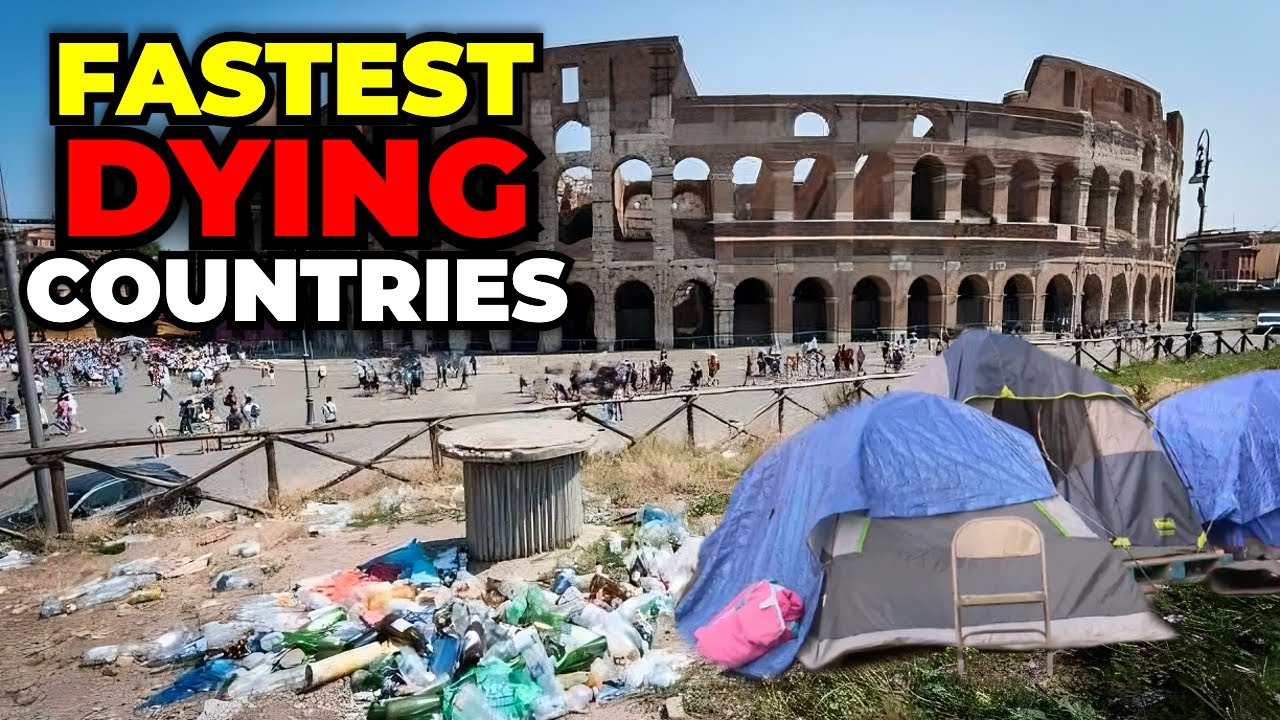
Consider the stark numbers. Between 2010 and 2020, Saint Vincent and the Grenadines saw an average population change of negative 0.44 percent, equating to a net loss of over 4,000 people from its modest population of around 104,000. This trend continued with declines of negative 0.37 percent in 2022 and negative 0.24 percent in 2023. Armenia, a landlocked nation with a rich history, experienced an average population change of negative 0.41 percent from 2010 to 2020, with declines persisting at negative 0.38 percent in 2022 and negative 0.09 percent in 2023. Greece, a cornerstone of Western civilization, watched its population fall from a little over 11 million in 2010 to 10.3 million today, a staggering loss of almost 700,000 people. Its decline accelerated from an average of negative 0.46 percent between 2010 and 2020 to negative 0.58 percent in 2022 and negative 0.42 percent in 2023. These figures underscore a demographic crisis unfolding in diverse corners of the globe.
The Shadow of Stagnation: Economic Pressures and Youth Flight
A dominant theme driving population decline is the relentless pressure of economic stagnation and the resultant exodus of young people seeking better prospects. In many of these countries, a lack of local opportunity creates a powerful incentive for emigration, often leaving behind an aging population with diminished prospects for renewal. This economic flight is not merely a trickle, but in some instances, a veritable flood, reshaping national identities and futures.
Saint Vincent and the Grenadines, despite its allure as a honeymoon destination, faces severe economic challenges. It stands as one of the poorest countries in the eastern Caribbean, plagued by high unemployment rates. In 2021, for instance, the unemployment rate soared to a remarkable 21.6 percent, a figure that makes the decision to emigrate understandable for many of its citizens. Similarly, Armenia's population decline is exacerbated by a lack of economic opportunities, alongside ongoing regional conflict. In 2021 alone, 73,000 more people holding Armenian passports departed the country than arrived, a stark indicator of the prevailing conditions.
Across Southeastern Europe, similar narratives unfold. Serbia, a nation steeped in history, has witnessed a declining population for several decades, with recent changes of negative 1.03 percent in 2022 and negative 1 percent in 2023. A primary driver is dissatisfaction with the economy and limited educational opportunities. For every 100 students who enroll in higher education in Serbia, only 13 will graduate and secure a job in their chosen industry, highlighting a significant disconnect between education and employment. Bosnia and Herzegovina, its official name often shortened to Bosnia, mirrors this trend. Nearly one out of every two, or 47 percent, of its young citizens aged 18 to 29 have contemplated moving abroad for work, representing approximately 269,000 individuals. This widespread desire to leave is fueled by a combination of limited work prospects, dissatisfaction with public services, and pervasive corruption within the country.
Even within the European Union, economic disparities drive significant population shifts. Bulgaria, despite its EU membership since 2007, struggles as the poorest country in the bloc. This economic reality has led to a substantial brain drain, with many university-educated professionals seeking work opportunities abroad. While there was a temporary uptick in population during the pandemic as some Bulgarians returned, this proved to be an isolated event. Italy, a global tourist magnet, also contends with an outflow of its youth. Young Italians are increasingly leaving to escape the high cost of living, the scarcity of affordable housing, and persistent high youth unemployment rates, seeking a better quality of life elsewhere. Croatia, famed for its scenic beauty and historical sites like Dubrovnik, faces a similar predicament. A recent survey revealed that one out of every 32 young people in Croatia has considered moving out of the country, primarily due to its struggling economy.
The prevailing narrative of exponential global population growth often overshadows a critical, yet less discussed, phenomenon: the accelerating decline of populations in numerous countries.
The Demographic Chasm: Low Birth Rates and Aging Populations
Beyond outward migration, a more insidious force contributes to the shrinking populations of many nations: a fundamental imbalance in natural population growth. When death rates consistently outpace birth rates, or when fertility falls far below replacement levels, a country's demographic future becomes inherently unsustainable. This internal dynamic creates a profound challenge, even for countries not experiencing significant emigration.

Greece provides a poignant example of this demographic shift. With an average of only 1.3 births per woman, its birth rate is significantly below the level needed to maintain its population. Coupled with an aging populace, this low fertility means that death rates frequently exceed birth rates, contributing to its overall decline. Armenia also exhibits this pattern; in the first quarter of 2022, the number of deaths surpassed the number of births for the first time since 1998, a critical turning point for the nation's demographic trajectory.
In the Balkans, Serbia's long-term population decline is directly linked to persistently low birth rates, alongside its emigration challenges. Similarly, Croatia's population loss is not solely due to people leaving; death rates are also outpacing birth rates, creating a dual pressure on its demographic figures. Further north, the Baltic states of Lithuania and Latvia face similar internal struggles. Lithuania, which saw an average population change of negative 1.1 percent between 2010 and 2020, and negative 1.31 percent in 2022, experiences death rates consistently outpacing birth rates. Latvia mirrors this, with its negative 1.03 percent average change from 2010 to 2020 driven significantly by more deaths than births. Bosnia and Herzegovina also contends with a declining natural growth rate, meaning that even without emigration, its population would struggle to sustain itself.
Archipelagic Vulnerabilities: Climate, Catastrophe, and the Call of the Mainland
Island nations and territories often face a unique set of vulnerabilities, where geographical isolation, limited resources, and the existential threat of natural disasters or climate change can accelerate population decline. For these communities, migration is not just an economic decision, but sometimes a matter of survival, often facilitated by historical ties or political affiliations with larger landmasses.
Puerto Rico, a United States territory, exemplifies this complex interplay of factors. While its beautiful beaches and natural splendor are undeniable, the island experienced an average population change of negative 1.17 percent from 2010 to 2020. A significant reason for this decline is the allure of better economic opportunities and higher-paying jobs on the mainland U.S. As American citizens, Puerto Ricans can freely live and work anywhere in the United States, and many choose to do so. In fact, today, more Puerto Ricans reside in the U.S. than on the island itself. This migration is further spurred by the frequent natural disasters, particularly hurricanes, which devastate the island. The loss of population has had severe repercussions, particularly for the education system, with the University of Puerto Rico facing significant funding cuts and a reduction in the number of public schools.
The Marshall Islands, a remote nation in the Central Pacific composed of five islands and 29 atolls, totaling 1,225 individual landforms, faces perhaps the most existential threat. With a current population of only about 42,000 people, it has experienced a dramatic decline, recording a negative 1.9 percent average change between 2010 and 2020. The most striking statistic is that a third of the entire nation left for the U.S. in 2018. This mass exodus is driven by a combination of high unemployment, poor public schools, inadequate healthcare, and, crucially, increasing threats from climate change. Rising sea levels lead to increased flooding, which not only displaces communities but also threatens the very habitability of the islands. One report warns that climate change may lead to polluted drinking water as salt water infiltrates and contaminates the area's aquifers, a grim prospect that makes long-term residency increasingly untenable.
The European Exodus: Brain Drain and the Pursuit of Prosperity
Within the fabric of Europe, particularly in its eastern and southern regions, a distinct pattern of population decline emerges: the "brain drain." This phenomenon involves the emigration of highly skilled, educated, and often young individuals who seek greater professional opportunities, higher wages, and an improved standard of living in more affluent Western European nations. The consequences for their home countries are profound, as they lose their most dynamic and productive citizens.
Bulgaria, as the poorest country in the European Union, is particularly susceptible to this outflow. Its consistently struggling economy compels many of its university graduates and working professionals to seek better employment opportunities abroad. This emigration of human capital deprives the nation of vital talent and entrepreneurial spirit, hindering its economic development and perpetuating a cycle of underperformance. Serbia, too, experiences this intellectual flight. The significant challenge for educated young people to find suitable employment within their own country contributes to a desire to leave, further impacting its long-term growth prospects.
Italy, despite its developed economy, grapples with a similar issue. Young people, often highly educated, are increasingly disillusioned by the high cost of living, a lack of affordable housing, and persistent youth unemployment. They frequently choose to pursue careers and establish lives in other European nations where economic conditions are more favorable and the quality of life is perceived as higher. Bosnia and Herzegovina faces an even more acute challenge, with nearly half of its young adult population, those aged 18 to 29, contemplating emigration. This reflects a deep-seated dissatisfaction not only with job prospects but also with public services and corruption, which collectively diminish hope for a prosperous future within the country.
The most striking statistic is that a third of the entire nation left for the U.S. in 2018.
The Baltic states of Lithuania and Latvia, while having achieved independence and joined the EU, still lag behind Western Europe in terms of wages and standard of living. This disparity acts as a powerful pull factor, drawing their citizens, particularly those in their productive years, to countries where their skills are better rewarded. Both nations have witnessed substantial population declines driven by this search for economic improvement, underscoring how even within a unified economic bloc, significant internal movements of people can occur in pursuit of greater prosperity.
Countercurrents and Prospects: Signs of Reversal and Policy Interventions
While the trends of population decline are concerning, some nations are beginning to implement policies or experience shifts that hint at potential reversals. These efforts, though often nascent, represent attempts to address the root causes of emigration and low birth rates, offering glimpses of hope for demographic stabilization.

Armenia's government, for instance, has recognized the severity of its population loss and is actively attempting to counteract it. They are offering financial incentives to families who have children, hoping to boost the birth rate. Additionally, efforts are being made to quell political and social tensions, which have historically contributed to emigration. However, the effectiveness of these measures remains uncertain, as the population continues to decline, albeit at a slower rate in 2023. Serbia has also proposed significant changes to its education, employment, and healthcare systems, aiming to improve conditions for its citizens and reduce the impetus for emigration, though the long-term impact of these reforms is yet to be seen.
Perhaps the most promising signs of potential reversal come from the Baltic states and Puerto Rico. Lithuania, after years of significant population decline, recorded a positive net migration in 2021, the first time in over 30 years. This shift, coupled with slowly increasing wages that are beginning to align more closely with those of the rest of Europe, suggests that the country might be on the cusp of reversing its population trend. Puerto Rico, too, shows signs of turning the tide. After substantial declines, the territory registered a 0.24 percent population increase in 2023, indicating that some of the factors driving its exodus may be abating or being counteracted by new developments, perhaps including a renewed focus on local opportunities or a stabilization after past natural disasters. These examples, though few, underscore that demographic fates are not immutable and can be influenced by policy, economic development, and unexpected shifts in migration patterns.
The stories of these countries serve as a stark reminder that geography is not merely about static maps and physical features, but a dynamic stage for human drama, economic upheaval, and environmental change. The world, as observed through the lens of population shifts, is far stranger and more complex than any textbook might suggest. From the Caribbean to the Pacific, and across the breadth of Europe, these nations are navigating profound challenges, revealing that the greatest plot twists are often found in the very real, unfolding sagas of global demography.