The Earth beneath our feet is a canvas of hidden wonders, a geographical tapestry far more intricate and extreme than the flat maps of our youth suggest. From subterranean rivers carving passages through ancient rock to industrial tunnels plunging miles into the planet's core, every state in the United States harbors a secret abyss. These deep holes, whether natural or man-made, reveal stories of geological epochs, human ambition, and ecosystems thriving in perpetual darkness, challenging our perceptions of what lies just below the surface. They are monuments to both nature's power and humanity's relentless quest to understand and exploit the deep.
In this journey into the depths, we uncover the extraordinary, the dangerous, and the utterly bizarre, state by state. The underground world is not merely a void, it is a living, breathing testament to millions of years of geological forces and human endeavor, often stranger than any fiction.
The Limestone Labyrinths: Nature's Sculpted Underground
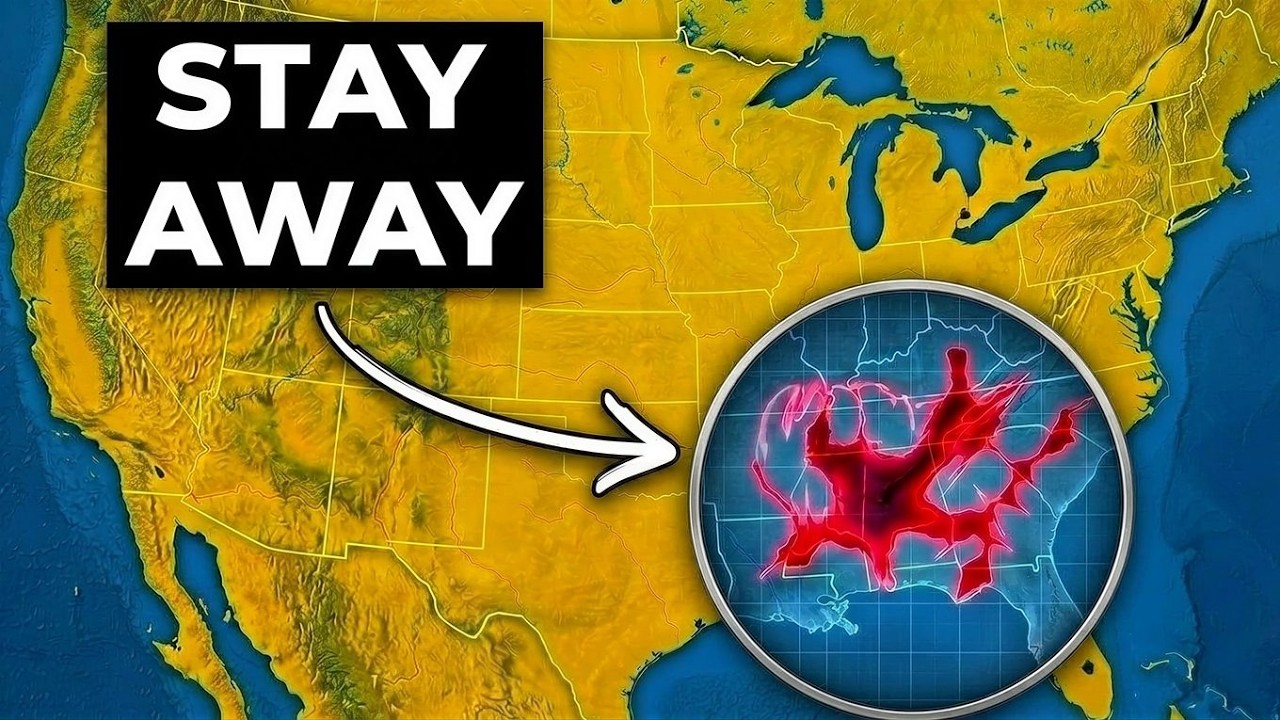
America's bedrock, particularly its vast limestone deposits, conceals an intricate network of solution caves, each a unique masterpiece carved by eons of water erosion. In Alabama, Jackson County appears as ordinary hill country, yet beneath its surface lies a geological "Swiss cheese" with over 3,500 charted caves, roughly one for every 15 residents. The deepest, Fern Cave, plunges 536 feet and stretches 15.6 miles through the rock. Its most dramatic feature, Surprise Pit, is a 437-foot freefall drop, deep enough to swallow a 40-story skyscraper. Such geological significance prompted the National Speleological Society to relocate its headquarters to the area.
Arkansas's Fitten Cave, nestled along the Buffalo National River, is the state's longest at 17.5 miles and reaches 313 feet deep. Its entrance room alone is the size of a football field, complete with a 50-foot waterfall. This subterranean island hosts 58 species, 11 of which are found nowhere else on Earth. Tragically, in 2020, vandals stole formations that took thousands of years to grow, now facing severe penalties.
High in Colorado's Sangre de Cristo Mountains, at 12,000 feet above sea level, lies Spanish Cave, or La Cueva del Oro (the cave of gold), the highest significant cave in the United States. Plunging 741 feet, it is Colorado's deepest natural hole, shrouded in legends of lost Spanish gold and vanished explorers. The cave hovers around freezing temperatures year-round, and its brutal vertical drops make it one of the most dangerous technical caves in the Rockies.
Kentucky boasts the undisputed titan of cave systems: Mammoth Cave. At 426 miles long, it is the longest cave system on Earth, with five stacked levels reaching almost 400 feet deep and still over 600 miles of unexplored passages. Its history is as deep as its chambers, from ancient gypsum miners to a failed 1840s tuberculosis sanatorium where a doctor's stone cottages still stand. The cave was so valuable it sparked the "Kentucky Cave Wars," a cutthroat competition for tourist dollars.
Missouri, with its 7,500 caves, recently saw a breakthrough in Roaring River Cave. For 40 years, a narrow squeeze at 230 feet stopped divers, until a team in 2021 broke through, descending to a record 472 feet and still not finding the bottom. Beyond the restriction, a chamber so massive it could house a 40-story building awaits. Nearby, Marvel Cave is so vast that hot air balloons have been flown inside its main room, turning bottomless legends into verified truths.
Montana's Tears of the Turtle Cave, concealed 20 miles into the wilderness, holds the record as the deepest limestone cave in the lower 48 states, plunging 2,477 feet. It is a grueling 3-foot wide vertical crack that requires 50 rope descents and offers no possibility of rescue in its 37-degree Fahrenheit silence. Explorers, sleeping on portal ledges 1,800 feet over the void, reached a new record depth in July 2024, with a mysterious side passage yet to be explored in 2026.
In New Mexico, Lechuguilla Cave, a 152-mile masterpiece of white gypsum, is the deepest limestone cave in the country at 1,589 feet. Discovered in 1986 when a 90-foot hole called Misery blew open, it is unique for being carved from the bottom up by rising sulfuric acid, not top-down water erosion. Its Chandelier Ballroom features 20-foot crystals, and NASA uses it to simulate life on Mars, while doctors study 4-million-year-old bacteria naturally resistant to modern antibiotics.
New York's McFail's Cave is named after Professor Thomas McFale, who tragically died in 1854 after fainting from July heat upon exiting a 110-foot shaft and plummeting back into the void. Today, this 7-mile maze demands 12-hour missions through 46-degree crawlways, requiring full wetsuits. The system, hydrologically linked to the famous Howes Caverns, is locked for half the year to protect massive bat colonies.
In Tennessee, Jewell 3 Cave descends 945 feet, a vertical marvel in a state with over 10,000 caves. The state's most famous hole, however, is the Lost Sea, the largest underground lake in the country. Discovered in 1905 by a 13-year-old boy, this 4.5-acre abyss is still partially unmapped. It has served as a Confederate gunpowder mine, a 1940s nightclub, and a lair for Ice Age jaguars whose 20,000-year-old paw prints are still visible.
Texas's Sorcerer's Cave, in the remote West Texas desert, plunges 567 feet through vertical shafts with evocative names like Demon Drop. At its bottom lies the Sirion River, named after Tolkien's Middle Earth, and it holds the deepest human remains in North America, ancient bones washed down from a 700 AD tribal shelter. In 2016, a researcher was struck by a falling rock at 470 feet, requiring 60 rescuers and 12 hours to haul her up the 50-story vertical climb.
Virginia's Omega Cave System, hidden under Powell Mountain, is the deepest hole east of the Mississippi, dropping 1,263 feet. This 29-mile vertical fortress is not a tourist stop, demanding week-long underground camping trips to reach its furthest passages. Discovered via a "blowing pit," it harbors a 6-mile underground river and vertical drops like Gollum's Abyss, a 285-foot plunge into total darkness.
Volcanic Voids and Glacial Gaps: Extreme Formations
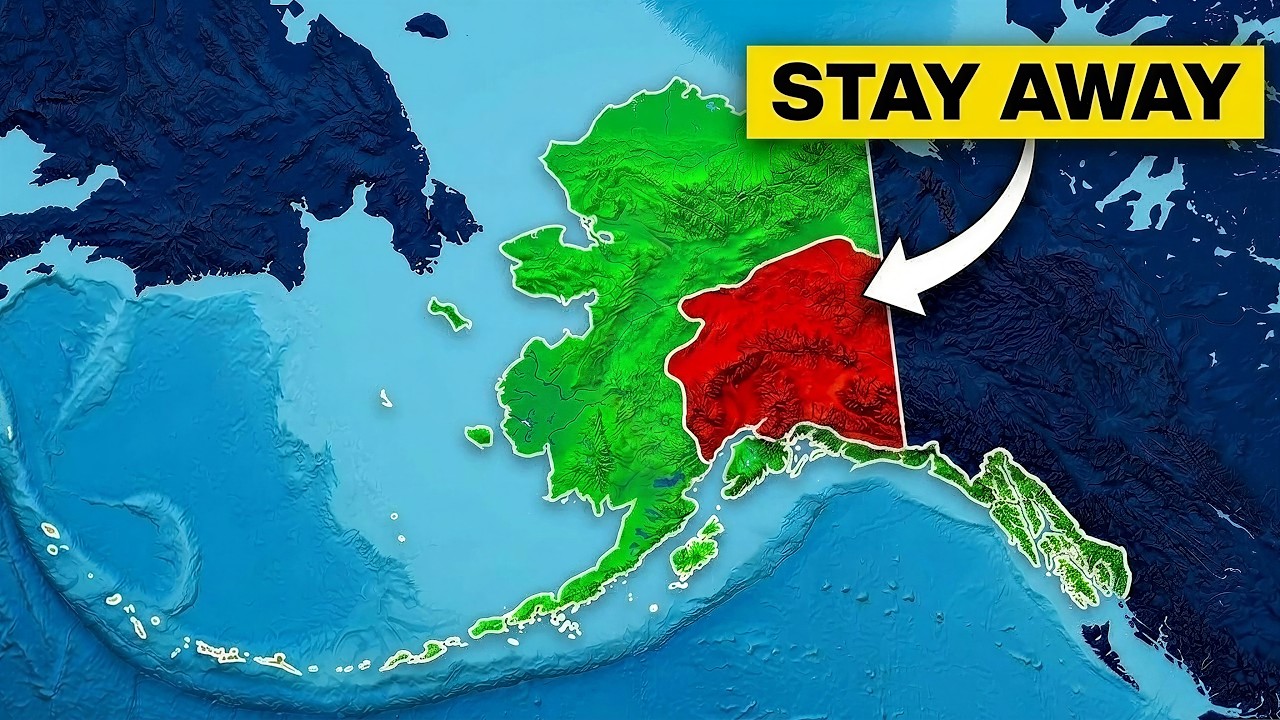
Not all deep holes are carved by water in limestone. Some are born of fire, ice, or rare geological processes. Alaska's Snowhole Cave, deep within Tongass National Forest, plunges over 800 feet into a wilderness of 600+ caves. The nearby Elcapitan Pit features a 598-foot vertical shaft, deep enough to swallow the Washington Monument with 40 feet to spare. These caves are true time capsules, yielding 9,000-year-old human remains and massive Ice Age grizzly bear fossils.
Arizona's Double Bopper Cave, near the Grand Canyon, is a 618-foot deep subterranean giant stretching over 42 miles. This cave literally breathes, whistling as outside air pressure shifts and the cave works to equalize with the surface. Its bone-dry, stable air has turned it into a natural mummy vault, preserving thousands of bats and small mammals for centuries within its 400-million-year-old limestone. This cave has been exhaling longer than humans have been walking upright.
Hawaii's deepest cave, Kazumura Cave on Kilauea, is a lava tube, not a solution cave. Formed by 2,165-degree Fahrenheit molten rock flowing inside hardened volcanic crust, it is the deepest lava tube on the planet at 3,614 feet, running 40.7 miles with passages 69 feet wide. It features internal lava falls, served as a nuclear fallout shelter in 1966, and Native Hawaiians used other entrances as sacred royal burial chambers. A full through trip takes two days and 17 rope drops.
Maine's geology, built for cold rather than depth, offers Alagash Ice Cave. Dropping just 70 feet, it is a jagged pile of glacial debris that acts as nature's walk-in freezer, with ice surviving through July. Nearby, Moose Cave marks a 45-foot granite gorge, and Anemone Cave hides tidal pools. These rugged spaces host endangered bats and goblin's gold, a luminous moss that glows in the dark.
New Hampshire's granite bedrock is too solid for limestone caves, so glaciers left behind talus caves like Polar Caves. These massive jumbled boulders form frozen mazes, trapping winter air so effectively that ice persists through summer heat waves. The state's grim survival story involves Thomas Boise, who, during an 1800s blizzard, slaughtered his horse for warmth, with rescuers needing axes to chop the frozen hide from his body.
Oregon's deepest secret is Valhalla, a 700-foot vertical tear in the earth hidden in the Mount Jefferson wilderness. Undiscovered until 2010, it was a geographical blank spot just a short flight from Oregon's largest city. Carved by a waterfall that vanishes into a pitch-black abyss, it is a high-stakes descent through freezing water and falling rock, not a tourist stop.
Pennsylvania's Laurel Caverns, reaching 452 feet underground (the equivalent of dropping 50 stories), is unusual as it was formed by wind erosion in sandstone, not water dissolving limestone. Its 4 miles of passages feel like a subterranean canyon of smooth, alien curves, devoid of stalactites. A proposal to make it the first underground state park in 2025, with a grand opening in 2026, highlights its unique beauty. It also serves as the Northeast's largest bat hibernation spot, sealed every winter to protect thousands of endangered bats.
Washington's underground features two extremes: Ape Cave, a 2.5-mile volcanic artery and the longest lava tube in the lower 48, famous for The Meatball, a massive boulder suspended mid-tube for centuries. The state's true vertical monster, however, is Newton Cave, dropping 800 feet into the Cascades, carved through solid marble with walls polished by water to an icy slipperiness.
Echoes of Industry: Humanity's Deepest Scars
Humanity's quest for resources has carved some of the deepest holes on Earth, leaving behind vast, often dangerous, subterranean legacies. In Connecticut, beneath a quiet neighborhood, lies the Cheshire Barite Mines, where 200 miners spent decades hand-carving shafts over 600 feet deep. The Jinny Hill Mine, North America's first barite mine, was discovered in 1840 by Jenny, who found ore in her yard. Today, the town is slowly sinking, with sinkholes swallowing basketball courts and appearing next to swimming pools, a ticking time bomb of radon gas and collapsing ground due to lost maps and abandoned workings.
Idaho's Silver Valley holds the Star Morning Mine, which plunges 7,900 feet, nearly 1.5 miles straight down. Miners endured a 30-minute elevator ride into 100-degree Fahrenheit rock, wearing high-powered cooling jackets. While the nearby Sunshine Mine extracted 360 million ounces of silver, the Star Morning, a major producer of zinc, lead, and silver, sits eerily idle since its 1991 shutdown, a mile and a half of darkness with no one left inside.
Illinois sits on a mountain of fuel, 200 billion tons of coal near West Frankfurt. Old Ben Mine Number 25 dropped 600 feet straight down, so deep that when President Jimmy Carter visited in 1980, Secret Service radio reach was limited. Now a water-filled tomb, it mirrors the state's dark underground history, including Cave Rock, a massive limestone cavern river pirates used to ambush pioneers on the Ohio River.
In 1887, workers in Greensburg, Kansas, carved The Big Well, the world's largest hand-dug well. It reaches 109 feet deep and 32 feet wide, built by constructing stone walls at the top and letting them sink. It miraculously survived an EF5 tornado that leveled the entire town in 2007. Buried in the rubble was the Space Wanderer, a 1,000-pound pallasite meteorite, one of the largest in the world.
Michigan's Quincy Mine Number 2 on the Keweenaw Peninsula plunges a monstrous 6,200 feet, over a mile into the earth. To facilitate this, engineers built a Georgian-style palace for the world's largest steam hoist, an 880-ton beast. But long before European prospectors, Native Americans mined pure copper here, with 1840s arrivals finding ancient pits with 400-year-old trees growing inside them, proving Michigan's deepest hole was someone else's first.
Minnesota's deepest hole is the Soudan Underground Mine, a 2,341-foot portal where the rock is so thick it acts as a massive lead shield, filtering out cosmic radiation by a factor of 100,000. Scientists now use this "cosmic silence" to hunt for dark matter and neutrinos. Before physics labs, the mine produced pure Sudan blue iron ore, used to forge some of the finest steel. Visitors still ride a 1924 electric hoist half a mile down, where 15,000 bats once wintered.
In 1884, Nevada's Comstock Lode reached around 3,300 feet, making it the second deepest mine on the planet. Geothermal heat hit 130 degrees Fahrenheit at these depths, forcing miners to work 30-minute shifts before retreating to underground ice rooms. The silver extracted funded the Civil War and literally bought Nevada its statehood in 1864.
New Jersey's deepest hole glows: Sterling Hill Mine descends 2,675 feet, almost as deep as the Burj Khalifa is tall. Known as the fluorescent mineral capital of the world, its walls erupt in neon greens and reds under UV light, home to 10 percent of all mineral species known to science. During World War II, armed guards protected its vital zinc. After hauling out 11 million tons of ore, it found a bizarre second act as a coal mine film set in Zoolander.
Rhode Island's coal was so tough to burn that 19th-century geologists called it a "trap for feeble-minded speculators." Yet, miners in Cranston dug a 100-foot deep honeycomb of tunnels. Today, this "fireproof" abyss sits directly under the Garden City Center shopping mall. In 2001, a 60-foot deep sinkhole ripped open in the parking lot, nearly swallowing heavy machinery, a stark reminder of the industrial tomb beneath the food court.
South Carolina's Stumphouse Tunnel, a 1,617-foot tunnel to nowhere, was a million-dollar railroad shortcut attempt in the 1850s that hit impenetrable blue granite. This failure found a bizarre second life: its constant 50-degree Fahrenheit temperature and dripping humidity were perfect for aging cheese. Clemson University used it to produce the South's first blue cheese until the 1970s, transforming a railroad disaster into a cheese cave.
South Dakota holds the crown for North America's deepest man-made hole: the Homestake Mine, which dips 8,000 feet into the Black Hills. Over its lifetime, it produced 41 million ounces of gold, worth nearly $180 billion today. The real treasure now is scientific: the Sanford Research Facility, at the 4,850-foot level, uses the crushing depth to block cosmic radiation, hunting for dark matter and serving as a target for the DUNE Experiment, which shoots neutrinos 800 miles through the Earth from Illinois.
Utah's Bingham Canyon Mine is the largest man-made excavation in history, a 2.5-mile wide crater plunging nearly 4,000 feet deep. You could stack two Empire State Buildings inside, and they still wouldn't reach the rim. This colossal open-pit mine dwarfs the state's natural deep holes.
Vermont's deepest hole is not a cave, but a 600-foot chasm cut straight into granite bedrock: the Rock of Ages Quarry. This 50-acre canyon of stone, half-filled with eerie emerald water, is the source of some of the hardest stone on the planet, including a single block weighing 32,000 tons. The quarry's legendary craftsmanship includes a full-size 1982 Mercedes limousine carved from a 36-ton granite block for a teenager's gravestone. Nearby, the Danby Quarry stretches 1.5 miles underground, a white marble cathedral that supplied the stone for the U.S. Supreme Court.
Wisconsin's connection to the underground is so deep it's in its nickname: 1820s lead miners burrowed into hillsides like animals to survive winters, branding the state's people as "badgers." Deep under the north woods lies its vertical masterpiece, the Montreal Mine. Descending a wild 4,518 feet, it was once the deepest iron mine on the planet. The company even built a "city beautiful" on the surface for 700 families. Though silent since 1962, the legacy of these subterranean pioneers lives on in the state flag.
The Earth beneath our feet is a canvas of hidden wonders, a geographical tapestry far more intricate and extreme than the flat maps of our youth suggest.
Probing the Planet: Scientific Drilling and Unseen Layers
When natural caves or mines are absent, humanity's drive to understand the Earth leads to scientific drilling, revealing geological secrets far beyond the reach of traditional exploration. Delaware, with its highest point at just 448 feet, lacks deep caves or mines. Its deepest holes are scientific boreholes drilled over 1,000 feet down to study the massive geological layer cake beneath. These holes reveal 100 million years of stacked sediments, forming a wedge nearly 2 miles thick at the coast, with ancient Cretaceous sand sitting on bedrock older than dinosaurs. This sandy geology, however, makes Delaware the most vulnerable state to sea level rise.
Nebraska's deep holes are almost exclusively man-made. For decades, explorers chased a $15,000 state bounty, punching thousands of dry holes across the plains before finally striking oil at 4,429 feet in 1940. Today, drillers must pass through the Ogallala Aquifer, a subterranean ocean of fresh water sustaining billion-dollar farms above, making every deep hole a high-stakes gamble between billion-year-old bedrock and a lucky strike.
North Dakota, without natural caves, pushes the boundaries of engineering. In the Bakken Formation, modern wells dive 10,000 feet straight down, then turn 90 degrees and tunnel horizontally for another 4 miles. This creates over 31,000 feet of pipe, a single straw long enough to reach the cruising altitude of a Boeing 747. These wells punch into a 360-million-year-old hydrocarbon kitchen so deep that rock cuttings take hours to float back to the surface.
Oklahoma is home to the Bertha Rogers Borehole, drilled in 1974. This narrow shaft plunges an astounding 31,441 feet, nearly 6 miles, deep enough to swallow Mount Everest whole. Conditions at the bottom were extreme: 25,000 psi of pressure and 475-degree Fahrenheit temperatures. The project ended when the drill hit molten sulfur, which solidified around the bit and snapped the steel pipe. It cost $7 million and found nothing valuable, a testament to human ambition pushing beyond natural limits, as the state's deepest natural cave is a mere 50 feet.
Water's Dark Embrace: Submerged Depths and Sudden Disasters
Water, the great sculptor of the underground, also creates some of its most mysterious and dangerous abysses. Millions of tourists on Interstate 4 in Florida pass within a half-mile of the state's deadliest secret without knowing it. Hidden behind a suburban fence is Mystery Sink, a water-filled abyss plunging over 500 feet straight down. Once a glass-bottom boat attraction in the 1930s, it turned fatal in 1970 when two divers disappeared, their bodies never recovered. One survivor required a NASA decompression chamber to stay alive, a chilling reminder of Florida's ultimate waterlogged grave.
In 1980, a mathematical error caused the most violent man-made whirlpool in history in Louisiana. A Texaco oil rig on Lake Peigneur accidentally punched through the roof of the Diamond Crystal Salt Mine 1,300 feet below. A 14-inch hole rapidly dissolved the salt pillars, and the lake became a giant drain. In just three hours, 3.5 billion gallons of water disappeared, swallowing the drilling platform, barges, a tugboat, and 65 acres of surrounding forest. The suction reversed the flow of the Delcambre Canal, creating a 164-foot waterfall that hadn't existed minutes earlier. Miraculously, 55 miners escaped just before the mine was sealed forever.
North Carolina's deepest natural secret was found by a fisherman watching trout swim into a solid rock face. Inside Linville Caverns, evolution has gone blind: resident rainbow trout have lost their eyesight from living in total darkness. The real mystery here is the bottomless pool, where a 250-foot weighted line once failed to touch the floor, leaving a silent liquid enigma as the state's deepest unexplored hole.
Ohio's Seneca Caverns drops 110 feet to the Old Mystery River, a crystal-clear underground flow with a source nobody has been able to trace. This subterranean river adds to the state's dazzling underground, which also includes Crystal Cave, holding a world record as the largest geode on the planet, lined with 18-inch celestite crystals.
Guardians of the Deep: Ancient Life and Hidden Sanctuaries
The Earth's depths are not just geological marvels, but also crucial sanctuaries for ancient life, unique ecosystems, and endangered species. In Alaska's Snowhole Cave, explorers have pulled out 9,000-year-old human remains and fossils of massive grizzly bears that haven't lived on these islands since the Ice Age. Arizona's Double Bopper Cave, a natural mummy vault, perfectly preserves thousands of bats and small mammals for centuries due to its bone-dry, stable air.
Arkansas's Fitten Cave is a biological island, home to 58 species, 11 of which exist nowhere else on Earth. Indiana's karst region is a subterranean time capsule, with Binkley Cave hiding Big Bone Mountain, a site packed with 38,000-year-old fossils. Iowa's Cold Water Cave, discovered in 1967 by students scuba diving, reveals 450-million-year-old sea lily fossils and thundering underground waterfalls. Researchers now use it to test technology for future missions to Saturn's moons.
Kentucky's Mammoth Cave, beyond its vastness, holds the ruins of a failed 1840s tuberculosis sanatorium, where the damp darkness killed patients. It also preserves the legacy of ancient gypsum miners and the 20,000-year-old paw prints of Ice Age jaguars. Michigan's Quincy Mine Number 2 stands on ground where Native Americans mined pure copper thousands of years before European prospectors arrived, finding ancient pits with 400-year-old trees growing inside them.
Nevada's most insane deep point isn't man-made. Devil's Hole falls over 500 feet into an uncharted flooded gorge. It is the only home of the Devil's Hole pupfish, the rarest fish on Earth, living in the smallest habitat of any vertebrate species, an entire species clinging to life in a single crack in the desert.
New Mexico's Lechuguilla Cave is not only a geological wonder but also a scientific goldmine. Its extreme environment is used by NASA to simulate life on Mars, and doctors study 4-million-year-old bacteria that are naturally resistant to modern antibiotics. Pennsylvania's Laurel Caverns doubles as the Northeast's largest bat hibernation spot, sealed every winter to protect thousands of endangered bats in total silence.
Tennessee's Lost Sea, the largest underground lake, harbors 20,000-year-old paw prints of Ice Age jaguars on its cave floor. Texas's Sorcerer's Cave holds the deepest human remains in North America, ancient bones washed down from a 700 AD tribal shelter. These subterranean realms are living museums, preserving secrets of the past.
West Virginia is home to Hellhole, an underground sanctuary so vital its location is guarded like a state secret. Plunging 154 feet, this frozen fortress shelters nearly half the world's population of Virginia big-eared bats. It was nearly swallowed by a limestone quarry, but a frantic race against drill bits saved it, transforming it into a 42-mile maze, 737 feet deep. Today, it is strictly off-limits, a silent, high-stakes stronghold against white-nose syndrome, shielding 9,000 endangered survivors in its jagged prehistoric heart. It is called the "cradle of modern caving," and now nobody is allowed inside.
The Earth's depths are not just geological marvels, but also crucial sanctuaries for ancient life, unique ecosystems, and endangered species.
The Vertical Frontier: Unforgiving Drops and Explorers' Trials
For the intrepid, some of the deepest holes present the ultimate challenge, demanding extraordinary skill, resilience, and a profound respect for the Earth's unforgiving nature. In Alabama's Fern Cave, the 437-foot freefall of Surprise Pit is not merely a depth measurement, but a testament to the verticality of the state's extensive cave systems.
Georgia's Ellison's Cave is home to Fantastic Pit, the deepest unobstructed freefall drop in the lower 48 states at 586 feet straight down. Drop a rock and count to eight before it hits bottom. This unforgiving cave has claimed three cavers' lives since 2009, all from hypothermia in freezing waterfall conditions. In 2013, a medic performed one of the only blood transfusions ever carried out inside a cave, lying flat in a low crawlway stream. This place does not forgive mistakes.
In Montana, Tears of the Turtle Cave, at 2,477 feet deep, is a grueling 3-foot wide vertical crack. Explorers undertake 50 rope descents, sleeping on portal ledges hanging 1,800 feet over the void. In the 37-degree Fahrenheit silence, rescue is considered impossible: "You get yourself out or you don't."
Wyoming's deepest secrets are guarded by ice, altitude, and spite. Columbine Crawl, hidden 9,000 feet up in the Tetons, drops around 1,600 feet through rotten rock and freezing waterfalls. It is so technical that fewer than a dozen people have ever reached the true bottom. The ultimate challenge is Great Expectations, a cave where the exit is worse than the descent. Explorers must endure the Grim Crawl of Death, a 1,500-foot squeeze through a freezing stream with barely enough room to breathe. Sports Illustrated called it the "iigger of American caving," a clear message that Wyoming's underground does not want visitors.
The world truly is stranger than school ever taught, a realm of geographical plot twists and hidden depths that defy expectation. From ancient geological formations to the audacious feats of human engineering, these subterranean wonders offer glimpses into processes spanning millions of years and struggles for survival in the most extreme conditions. The stories within these deep holes remind us that beneath the familiar surface of our world lies an entirely different dimension, waiting to be explored, understood, and sometimes, simply respected from a distance.