Texas, a land often synonymous with boundless opportunity and expansive horizons, has experienced an extraordinary surge in population and economic activity in recent years. By 2022, it proudly stood as the second most populous state in the nation, surpassing the 30 million mark, with only California boasting a larger populace. This remarkable growth saw the state gain over nine million people between 2000 and 2022, with more than a dozen of its 254 counties doubling in size. In 2022 alone, the population swelled by over 470,000 individuals, driven by the magnetic pull of thriving metropolises such as Austin, San Antonio, and El Paso. Yet, beneath this veneer of prosperity and rapid expansion, there exist pockets where the promise of the Lone Star State remains elusive, challenging the very notion of what makes a place desirable to live.
The Unseen Shadows of Texas's Boom
While much of Texas basks in the glow of demographic and economic expansion, certain regions grapple with profound systemic challenges. The national poverty rate, hovering at 11.6 percent, pales in comparison to the stark realities faced in places like Hidalgo County. Here, a staggering 28.8 percent of residents live below the poverty line, meaning nearly one in three individuals endure persistent economic hardship. This statistic is particularly grim given the disproportionate number of children affected, painting a sobering picture of generational struggle. Beyond the immediate financial strain, the educational infrastructure in such areas often falters, compounding the difficulties. The Monte Alto School District, for instance, a part of Hidalgo County, has been identified by USA Today as one of the worst school districts in the entire country. As of 2020, the district could only allocate approximately $11,000 annually per student, a figure that starkly illustrates the resource deficits impacting the futures of its young residents.
This economic disparity extends beyond the southern border regions. Prairie View, a town with a population just under 7,000, presents an even more acute example of concentrated poverty. Over half of its inhabitants, specifically 53.5 percent, live in poverty. The median household income in Prairie View stands at a mere $17,000, with the per capita income barely exceeding $7,000. Despite being home to a major educational institution, Prairie View A&M University, and situated within commuting distance of the bustling metropolis of Houston, the town has struggled significantly with unemployment. Recent data indicates an unemployment rate as high as 12.1 percent, far exceeding both state and national averages. Such figures underscore a complex interplay of factors, where proximity to opportunity does not automatically translate into shared prosperity, leaving many communities behind in the state's otherwise celebrated growth narrative.
Where Affordability Comes at a Perilous Price
Sometimes, the very factors that make a city seem appealing, such as affordability, are overshadowed by more insidious concerns. Lubbock, a city previously noted for its low cost of living, serves as a stark reminder of this paradox. Its affordability is severely undercut by an alarmingly high crime rate. The violent crime rate in Lubbock is reported at 2.23 per 1,000 people, rendering it 121 percent more dangerous than the United States average. The trend is equally troubling, with the city's crime rate increasing by 10 percent between 2021 and 2022. Even more concerning, data from Property Club reveals a shocking 182 percent increase in homicides between 2019 and 2020. Residents face a daunting 1 in 16 chance of becoming a victim of either violent or property crime, a statistic that profoundly impacts daily life and perceptions of safety.
Beyond the immediate threat of crime, Lubbock's geographical location at the edge of the Great Plains exposes it to extreme weather phenomena, including frequent dust storms, tornadoes, and torrential rains, adding another layer of environmental unpredictability. This combination of high crime and challenging weather has contributed to Lubbock being ranked as one of the worst cities in the country for retirement by WalletHub, and perhaps less critically but still notably, it has been dubbed the most boring city in America. These factors cumulatively diminish the allure of its otherwise attractive cost of living, illustrating that true quality of life encompasses more than just economic accessibility.
The median household income in Prairie View stands at a mere $17,000, with the per capita income barely exceeding $7,000.
Similarly, Beaumont, situated approximately 90 miles east of Houston and 30 miles from the Gulf of Mexico, boasts what might appear to be a strategically advantageous location. However, this geographic benefit is severely outweighed by its reputation as one of the most dangerous cities in Texas. As of 2022, Beaumont's violent crime rate was 2.5 per 1,000 people, making it 93 percent higher than the national average. This troubling trend is not static; Property Club data indicates a 12 percent increase in violent crime in Beaumont between 2019 and 2022 alone. Such statistics cast a long shadow over any potential advantages of its location, transforming it into an undesirable place to live for those prioritizing personal safety and community well-being.
The Stagnant Market and the Lingering Listing
The housing market across much of the United States has been characterized by low inventory and high demand, creating a challenging environment for buyers but generally a favorable one for sellers. A March report from Realtor, for example, highlighted a national shortage of 6.5 million homes between single-family home construction and household formations from 2012 to 2022. While this dynamic has largely benefited homeowners by ensuring relatively swift sales, certain markets defy this trend, presenting significant obstacles for those looking to move on. Brownsville, Texas, stands out as a prime example of such a market anomaly, earning it a spot on Go Banking Rates' list of the hardest places to sell a home in the entire country.
Brownsville's housing market is considered one of the worst due to a profound disconnect between listing prices and actual sale prices. In 2022, the median list price in the city hovered around $263,000. Yet, the median sale price was significantly lower, at just $223,000. This disparity meant that homeowners were, on average, facing a $40,000 loss on their properties, a substantial hit to any equity built. Further compounding the difficulty for sellers, a notable 12.57 percent of listings in Brownsville experienced price cuts. This high percentage of reductions underscores a market where demand struggles to meet seller expectations, creating a stagnant environment where properties linger, and significant concessions are often required to finalize a sale. For many, the inability to easily divest from a property represents a major impediment to mobility and financial flexibility, trapping residents in an undesirable situation.
A Lifestyle Lost: The Cities That Fail to Thrive
Beyond economic indicators and safety concerns, the overall quality of life, including opportunities for social engagement, family raising, and active living, plays a crucial role in a city's desirability. Laredo, Texas, consistently appears on lists of undesirable places to live for a multitude of lifestyle-related reasons. In 2022, it was ranked among the worst cities in the country for singles, suggesting a lack of social infrastructure or opportunities for connection. The challenges extend to family life as well, with Laredo being listed in 2019 as one of the worst cities to raise a family. Furthermore, for those seeking an active lifestyle, the city presented significant drawbacks, deemed one of the worst places for such pursuits in 2017. More recently, the shift towards remote work has highlighted another deficiency, with Laredo ranked among the worst cities nationally for remote workers, and unequivocally the worst in Texas for this growing demographic. These consistent rankings across various lifestyle metrics paint a picture of a city struggling to cater to the diverse needs and aspirations of its residents.
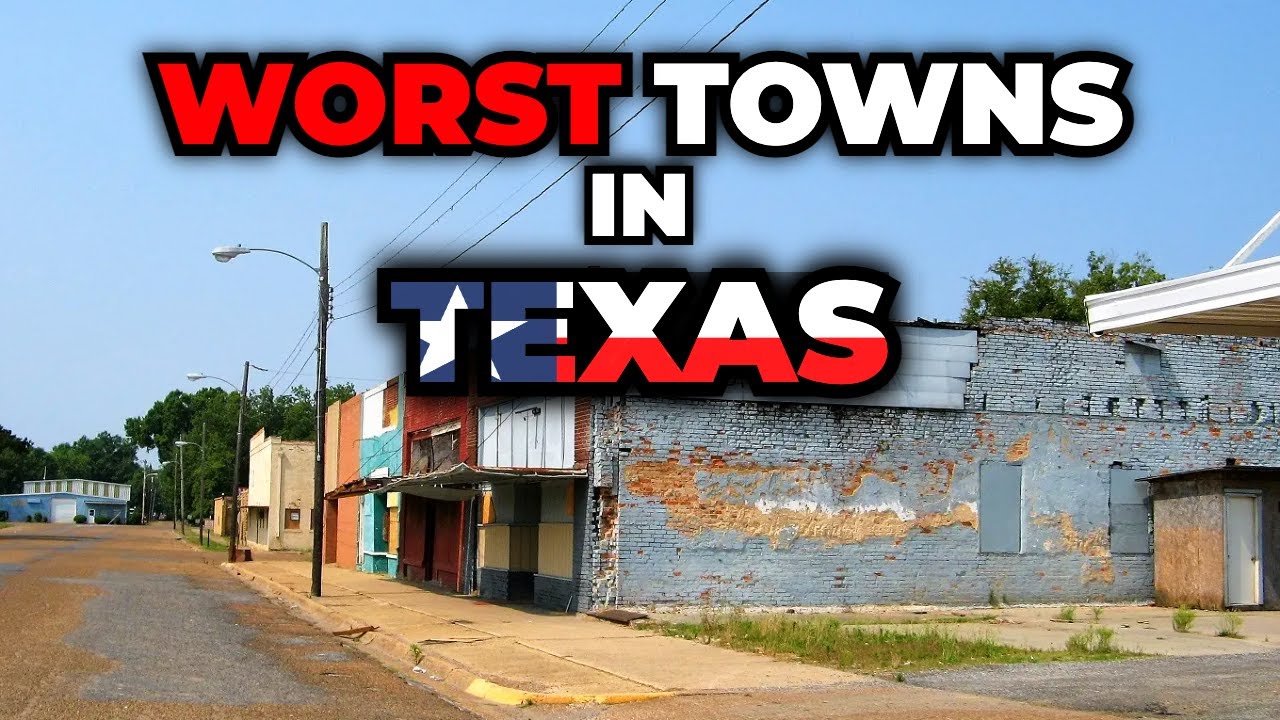
Arlington, Texas, a city often associated with major league sports and entertainment, also faces significant challenges regarding its quality of life, particularly for specific demographics. In 2021, WalletHub identified Arlington as one of the worst cities in the U.S. for retirement. The study, which assessed cities based on metrics such as affordability, activities, quality of life, and healthcare, placed Arlington in the bottom half, specifically ranking it 166th out of 182 cities. The city performed particularly poorly in the "activities" category, suggesting a dearth of engaging options for retirees seeking an active and fulfilling post-career life. However, the issues in Arlington are not confined to retirees. According to Move.org, the city was also recently named one of the worst cities in the entire country for minimum wage earners, indicating a struggle with economic accessibility and opportunity for a significant portion of its workforce. This combination of factors suggests that while Arlington may offer certain attractions, it falls short in providing a high quality of life for a broad spectrum of its population.
As of 2022, Beaumont's violent crime rate was 2.5 per 1,000 people, making it 93 percent higher than the national average.
The Scorching Sun and the Costly City
Environmental factors, particularly weather patterns, can profoundly influence a city's livability, especially for those who prioritize temperate climates or distinct seasonal changes. Del Rio, Texas, presents a stark example of how extreme weather can detract from a location's appeal. The city is widely considered to have some of the worst weather in America, particularly during the summer months. The average high temperature in Del Rio during the summer soars to 97.1 degrees Fahrenheit. This extreme heat is so pervasive that only three other cities in the entire United States experience hotter average summer temperatures. For individuals who appreciate mild weather, crave the distinct experience of four seasons, or simply struggle with prolonged periods of intense heat, Del Rio proves to be an exceptionally challenging place to reside, making its climate a significant deterrent to potential residents.
While some cities struggle with environmental extremes, others face the challenge of economic extremes, particularly a high cost of living that can make daily existence a financial strain. The Dallas-Fort Worth area, despite its reputation as a vibrant economic hub, makes this list not for lack of opportunity but for its prohibitive expense. Dallas, in particular, is recognized as one of the most expensive places to live in all of Texas. While its cost of living index, at 99.35, is just barely below the national average of 100, this figure is deceptive when viewed within the broader context of Texas. The state as a whole boasts a significantly lower cost of living than the national average. Therefore, Dallas's near-average cost of living renders it extremely expensive by Texas standards, making it an inaccessible option for many seeking the affordability often associated with the Lone Star State. For those relocating with an eye on managing their budget, the economic reality of Dallas-Fort Worth can be a significant plot twist.
The Elusive Promise of Employment
A robust job market is a cornerstone of a desirable place to live, offering economic stability and opportunities for advancement. However, across Texas, and particularly in certain cities, the promise of gainful employment remains elusive for many. A study by Oxfam America recently highlighted the broader challenges faced by workers in the state, ranking Texas as 48th out of 50 states for employees. This abysmal ranking was consistent across all three categories assessed by the organization: worker protections, wages, and organizing rights. While these systemic issues affect the entire state, their impact is acutely felt in specific urban centers, where the local job market struggles to provide adequate opportunities.
McAllen, Texas, exemplifies these employment challenges. Money Geek recently identified it as one of the worst places in the country to look for a job, primarily due to its persistently high unemployment rate. In 2021, the city's unemployment rate stood at an alarming 12.6 percent. While this figure has seen some reduction since then, it remains notably higher than the national average, indicating a sustained struggle for job seekers. Further reinforcing this assessment, U.S. News ranked McAllen among the worst places for individuals seeking employment, assigning its job market a score of 3.7 out of 10, with 10 representing the best possible conditions. This confluence of low worker protections, stagnant wages, and a difficult job market creates a formidable barrier to economic well-being, making McAllen a difficult place for those trying to build a career.
The narrative of Texas is often one of grand scales and unbounded potential, yet a closer look reveals a landscape far more nuanced and complex than popular perception suggests. The geographical tapestry of the world, as we at Across The Globe consistently uncover, is replete with these unexpected turns, where booming populations coexist with entrenched poverty, and affordable living can be overshadowed by perilous crime rates or unforgiving climates. These examples from Texas serve as a powerful reminder that the true character of a place is found not just in its successes, but also in its challenges, offering a geography lesson far stranger and more compelling than any textbook might convey.