Beneath the veneer of familiar maps and classroom lessons, the United States unfurls a landscape of geological oddities, meteorological extremes, and cartographical curiosities that defy easy categorization. From rivers that flow backward to deserts made of gypsum, from subterranean waterways to mountains older than fish, America's geography is less a static backdrop and more a dynamic, unpredictable character in its own unfolding story. It is a land where ancient forces collide with human ingenuity, where surveying errors carve out bizarre enclaves, and where nature consistently proves itself stranger, more powerful, and far more imaginative than any textbook could ever convey. Prepare to see the familiar map of the United States dissolve into a mosaic of geographical plot twists.
America's Vertical Extremes: From Subterranean Chasms to Sky-High Sands
The continental United States holds a surprising range of vertical drama, challenging preconceived notions of its topographical uniformity. In Georgia, for instance, tucked beneath the state's verdant hills, lies the terrifying beauty of the Fantastic Pit. Part of Ellison's Cave in Walker County, this geological marvel features a 586-foot freefall, the tallest uninterrupted cave drop in the continental United States. To put that into perspective, it is nearly 60 stories straight down, or the equivalent height of Seattle's Space Needle, all hidden deep within the Earth, pitch black and utterly silent.
While Georgia plunges downward, Idaho soars to even greater depths, albeit in a different context. Many envision the Grand Canyon as America's deepest gorge, but Idaho's Hells Canyon eclipses it dramatically. While the Grand Canyon maxes out at approximately 6,000 feet, Hells Canyon plunges nearly 8,000 feet from rim to river, securing its title as the deepest river gorge in North America. This raw, remote, and wildly underappreciated chasm lacks the tourist infrastructure of its more famous counterpart, demanding a hike, raft, or aerial view to truly grasp its scale. It is the Grand Canyon's grittier, less advertised cousin, offering elevation drama without the crowds.
California, a state synonymous with extremes, perfectly encapsulates this vertical dichotomy within its contiguous borders. It holds both the highest and lowest elevations in the contiguous United States, separated by a mere 88 miles. Mount Whitney, a formidable peak, rises to a monstrous 14,505 feet. Just a short drive away, Death Valley's Badwater Basin plummets to 282 feet below sea level, a basin so intensely hot it can melt shoes and break thermometers. This geological whiplash allows one to experience the rooftop and the basement of the lower 48 in a single day's journey, a feat unmatched by any other state.
Colorado offers its own peculiar vertical paradox: a desert where it snows. The Great Sand Dunes National Park, a landscape that evokes the Sahara, sits incongruously at 8,000 feet within the Rocky Mountains. These are not modest hills; some dunes rise over 750 feet, making them the tallest in North America. Behind them, the 14,000-foot Sangre de Cristo Mountains are often cloaked in snow. This unique juxtaposition allows for the surreal experience of sandboarding down a dune while simultaneously observing a snowstorm hitting alpine peaks in the background. It is a wind-carved desert plopped into a high-altitude environment, a geographical anomaly that feels like two continents colliding.
In stark contrast to these dramatic landscapes, Florida presents a topographical anomaly of its own. It is America's flattest state, so flat that a study once found its topography to be flatter than an actual pancake. Its highest point, Britton Hill, clocks in at a meager 345 feet above sea level. For context, New York City's Empire State Building would tower over it with significant height to spare. This extreme flatness influences everything from its architecture to its susceptibility to flooding. Even Kansas, often the punchline for flat landscapes, is surprisingly hillier than the Sunshine State. Florida is a tabletop state, where the horizon seems to stretch on forever, a testament to its design as a truly topographically challenged region.
Water's Whims: Rivers That Run Backward, Vanish, and Define a Coast
Water, in its many forms, has sculpted some of America's most bizarre and defining geographical features, often defying conventional expectations. Consider Alabama, a state rich in rivers, rain, swamps, and reservoirs, yet almost entirely devoid of natural lakes. Apart from Lake Jackson, which barely qualifies near the Florida border, nearly every other significant body of water, such as Guntersville, Martin, Wheeler, and Logan, is a man-made reservoir, built by damming rivers. While oxbow lakes and coastal lagoons dot the landscape, the state lacks the large, glacially carved lake basins common in northern regions. When one floats on a lake in Alabama, they are often floating over what was once a river valley, transformed by engineering rather than natural processes.
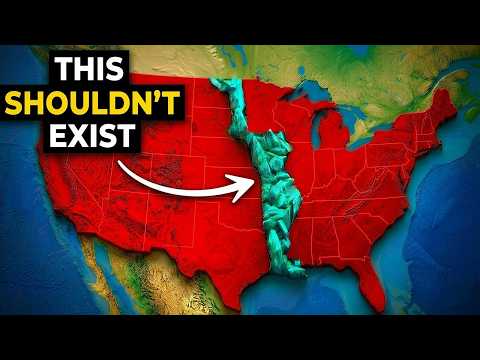
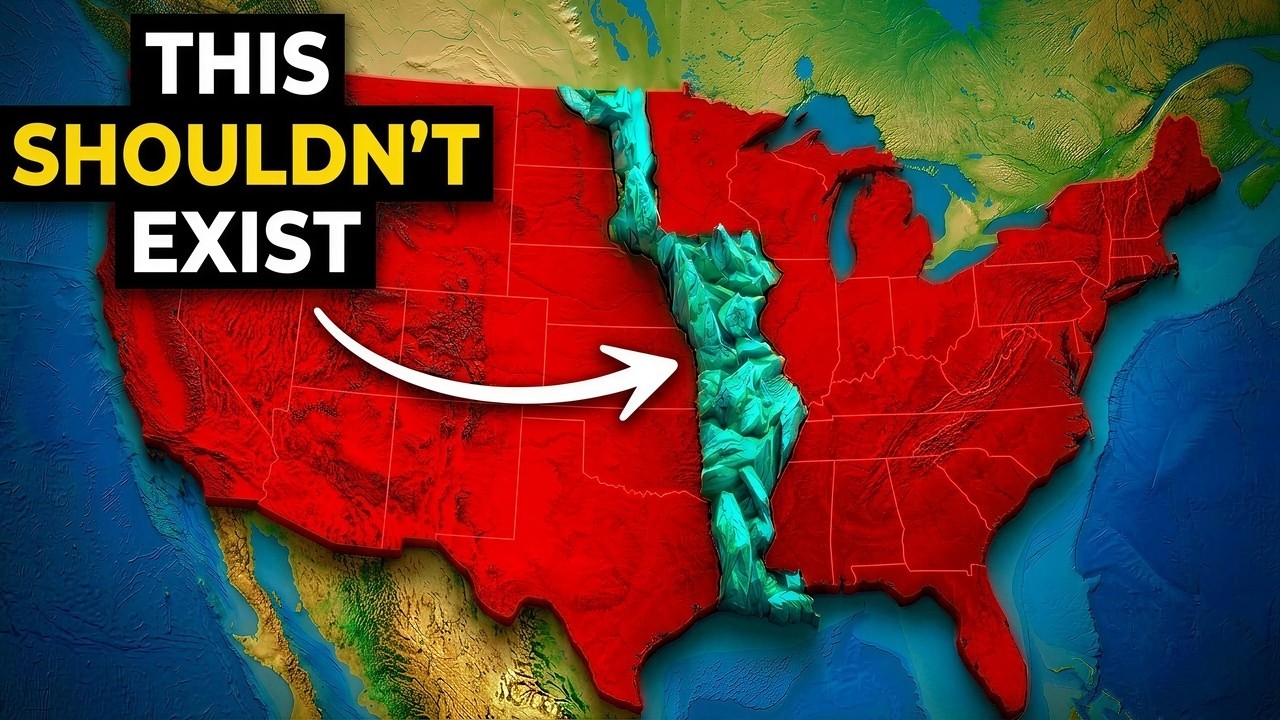
The Mississippi River, a titan of American waterways, has a history of dramatic and unpredictable behavior. In 1811, a series of monstrous earthquakes along the New Madrid fault caused the river to do the impossible: it flowed backward for hours. The tremors were so powerful they rang church bells in Boston, cracked sidewalks in Washington D.C., and reshaped the land across the entire Midwest. Huge fissures opened, new lakes formed overnight, and the normally slow-moving Mississippi surged upstream in a chaotic display of nature's raw power. This geological sucker punch serves as a stark reminder that rivers can, and sometimes do, turn around without asking permission.
Texas boasts its own vanishing river, the Frio River. Near the town of Concan, the Frio performs a literal disappearing act, draining straight into the Edwards Aquifer as if a giant plug has been pulled. For several miles, the riverbed can be entirely dry, only for the water to miraculously reemerge downstream. This is not a seasonal quirk or a drought-induced phenomenon; it happens daily. The Frio is one of the only rivers in America that literally falls into the Earth, feeds a major water supply, and then returns to the surface, completing its hydrological magic trick.
Indiana also hides a remarkable aquatic secret beneath its cornfields. Deep under the surface, near Bedford, lies Blue Spring Caverns, home to the longest navigable underground river in the United States. This subterranean waterway snakes for 3 miles through ancient limestone caves, a pitch-black world accessible by flat-bottom boat. Blind cavefish swim past, jagged stalactites hang overhead, and the air feels otherworldly. The entire system is fed by more than 50 hidden streams, revealing Indiana's secret underworld, where the most exciting terrain is not found above ground, but beneath it.
Missouri, in its own understated way, hosts a hydrological phenomenon of immense power. Its Big Spring explodes from the base of a cliff in the Ozarks, pumping out nearly 290 million gallons of water daily. This is not a mere pond or creek; it is a full-blown river erupting straight from underground, its sheer pressure vibrating the ground, churning foam, and carrying 70 tons of dissolved rock with it every day. Powered by a massive aquifer system beneath Missouri's limestone terrain, it is one of the world's largest freshwater flows, a quiet testament to the state's subterranean might.
West Virginia's New River is a geological enigma. It is ancient, possibly over 300 million years old, making it one of the oldest rivers on Earth. Unusually, it flows north, defying the typical eastward flow of other eastern US rivers. Most remarkably, it predates the Appalachian Mountains themselves. As the land rose and crumpled into peaks, the New River, stubborn and unyielding, did not detour; it sliced straight through. This is why it carves out dramatic gorges, like the New River Gorge, now a national park, rather than gently winding around hills. It is a testament to a river so resolute it refused to be rerouted by entire mountain ranges, a true case of going against the flow.
Louisiana's very foundation is a testament to the power of water and sediment. The state is essentially a floating landmass, built on layers of mud, silt, and sediment deposited by the Mississippi River over millions of years. Digging for solid rock here means drilling thousands of feet down. This geological mushiness, while creating fertile land for farming, also renders the state incredibly fragile. The coastline is not merely eroding; it is melting, with entire towns vanishing into the Gulf. Roads buckle, buildings sink, and the land literally disappears, making Louisiana the geological equivalent of building a house on a sponge during hurricane season.
Michigan, aptly named the Great Lakes State, practically owns these colossal bodies of freshwater. It touches four of the five Great Lakes, with the exception of Lake Ontario, and boasts more freshwater coastline than any other state in the country. When its over 11,000 inland lakes are added to the count, it becomes clear that one is never more than 6 miles from a lake or 85 miles from a Great Lake. Michigan's culture, economy, and daily life are intrinsically linked to its abundant waters, featuring endless beaches, dunes, islands, and lighthouses. It is a state where water defines existence.
Maine, despite its relatively small size, outmaneuvers California in terms of coastline length, thanks to a geographical trick known as tidal complexity. By including every intricate inlet, cove, bay, estuary, and its more than 4,000 islands, Maine's tidal shoreline clocks in at a staggering 3,478 miles, surpassing California's 3,427 miles. California's coast is largely linear, while Maine's resembles a map subjected to a buzzsaw, folding in on itself like an accordion made of granite and saltwater. Every twist and turn contributes to the official tally, making Maine the undisputed heavyweight champion of coastal measurement.
Wisconsin has its own watery menace, the deceptively peaceful-sounding Death's Door Strait. Located between the tip of Door County and Washington Island, this passage earned its ominous name, Porte des Morts, from the French, who witnessed countless ships succumb to its treacherous conditions. Notorious for shallow shores, fierce winds, and sudden storms, it has claimed an untold number of vessels over centuries, from canoes to schooners to steamers. The lakebed serves as a maritime graveyard, cluttered with wrecks that dared to challenge the passage. Door County itself owes its name to this watery peril, Wisconsin's own Bermuda Triangle, devoid of aliens, but rich in cold, hard history.
Ohio's Cuyahoga River holds a notorious distinction: a river that repeatedly caught fire. So heavily polluted with oil and chemicals in the 20th century, it ignited at least 13 times, with the most infamous fire in 1969 finally embarrassing the nation enough to spur the passage of the Clean Water Act and the creation of the Environmental Protection Agency. At its worst, the river harbored no visible fish or plant life, an open sewer set to flammable. While today it has been rehabilitated and hosts kayaking tours, for a period, Ohio was home to the only river in America that required a fire department.
Texas doesn't just bend rivers, it makes them disappear.
Borders Drawn, Redrawn, and Reshaped by Earth and Error
The lines we draw on maps often contend with the Earth's dynamic nature and the occasional human error, resulting in some truly unusual state boundaries. Arkansas, for example, shares a border with Tennessee that was literally redrawn by the Mississippi River. In 1876, the river shifted its course, leaving towns like Rey, which legally belong to Tennessee, physically stranded on the Arkansas side. Arkansas now provides essential services like school buses and electricity to these Tennessee enclaves. This is not a singular event; the Mississippi's restless nature frequently reconfigures the map, leaving laws and logistics scrambling to keep pace.
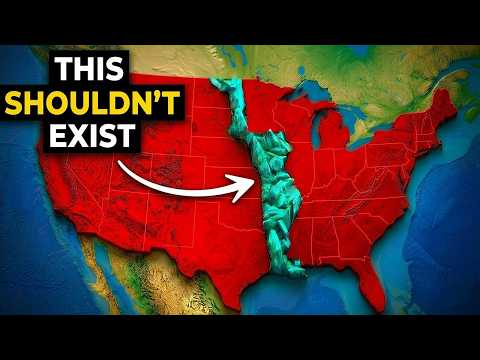
Similarly, Illinois grapples with its own border predicament thanks to the Mississippi. Near the historic town of Kaskaskia, the river performed a fast maneuver in the 1800s, shifting its path and marooning a piece of Illinois land on the Missouri side. This odd chunk of terrain, called Kaskaskia Island, remains part of Illinois, even though one must drive through Missouri to access it. It is the only place where Illinoisans wake up west of the Mississippi, and the town even receives its mail from Missouri. It is a real-life glitch in the mapping matrix, proving Mother Nature's disregard for state lines.
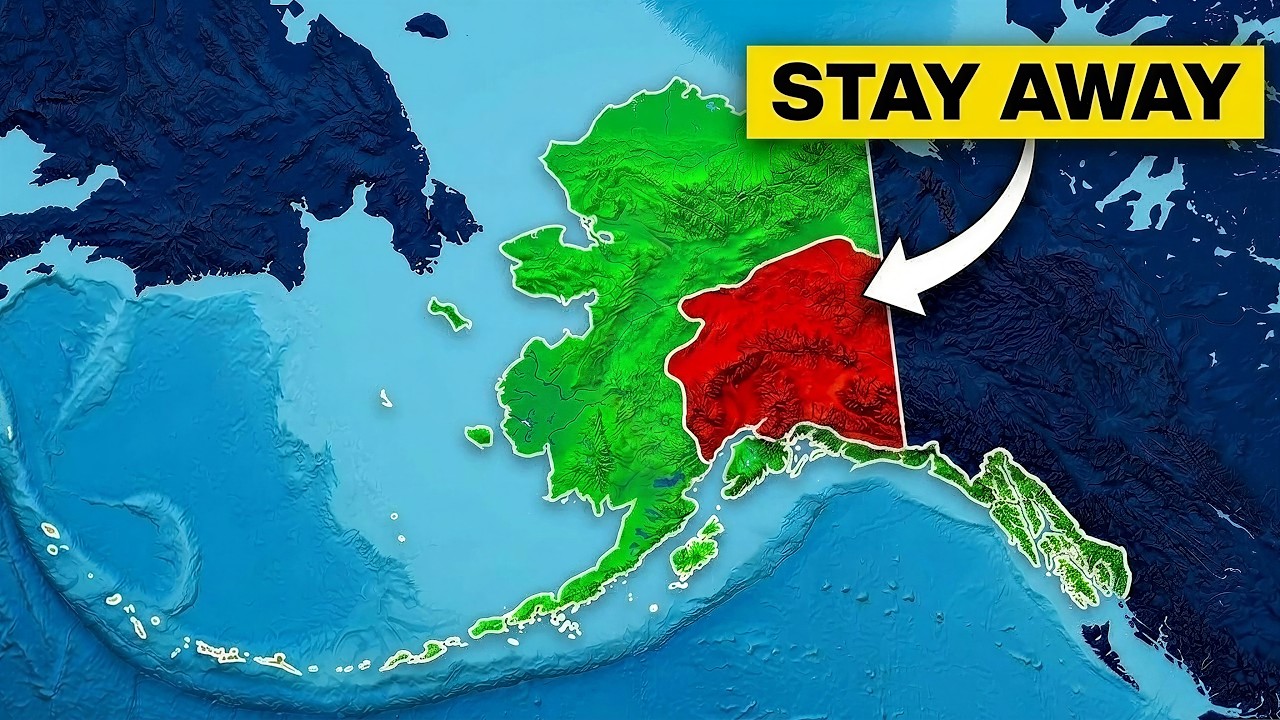
Alaska, the United States' largest state, is a geographical anomaly that stretches the very definition of direction. We recognize it as the northernmost and westernmost state, but due to the curvature of the Earth, its Aleutian Islands extend so far west that they cross the 180th meridian, poking into the Eastern Hemisphere. This means some of Alaska's land is technically farther east than anything in Maine. Consequently, Alaska spans three cardinal directions at once, making it the only state where one can be in the Far East, the Far West, and the Far North without ever leaving the same zip code. It is less a state and more a geographical trick of the light.
Delaware, in a bold move of geometrical precision, opted for a circular northern boundary. This mathematically perfect 12-mile radius, centered on New Castle, represents the only true circular state border in America. While most states feature jagged lines shaped by rivers, wars, or negotiations, Delaware chose geometry. This unique curve has led to a peculiar situation where the 12-mile circle extends across the Delaware River to the New Jersey shoreline, meaning Delaware technically owns a portion of New Jersey's riverfront. This historical quirk has been a source of legal disputes, odd maps, and state pride ever since its inception.
Maryland's western panhandle tapers to an almost absurd narrowness. Near the town of Hancock, the state constricts to just 1.8 miles wide, the thinnest waistline of any state in America. One could jog across it in under an hour or, humorously, hurl a football from Pennsylvania to West Virginia across the entire state. This peculiar constriction is a legacy of colonial-era border disputes, where surveyors carved up land with oddly angled lines. Today, it is a cartographer's nightmare and a trivia goldmine, allowing one to stand in a single spot and see three states simultaneously without even turning their head.
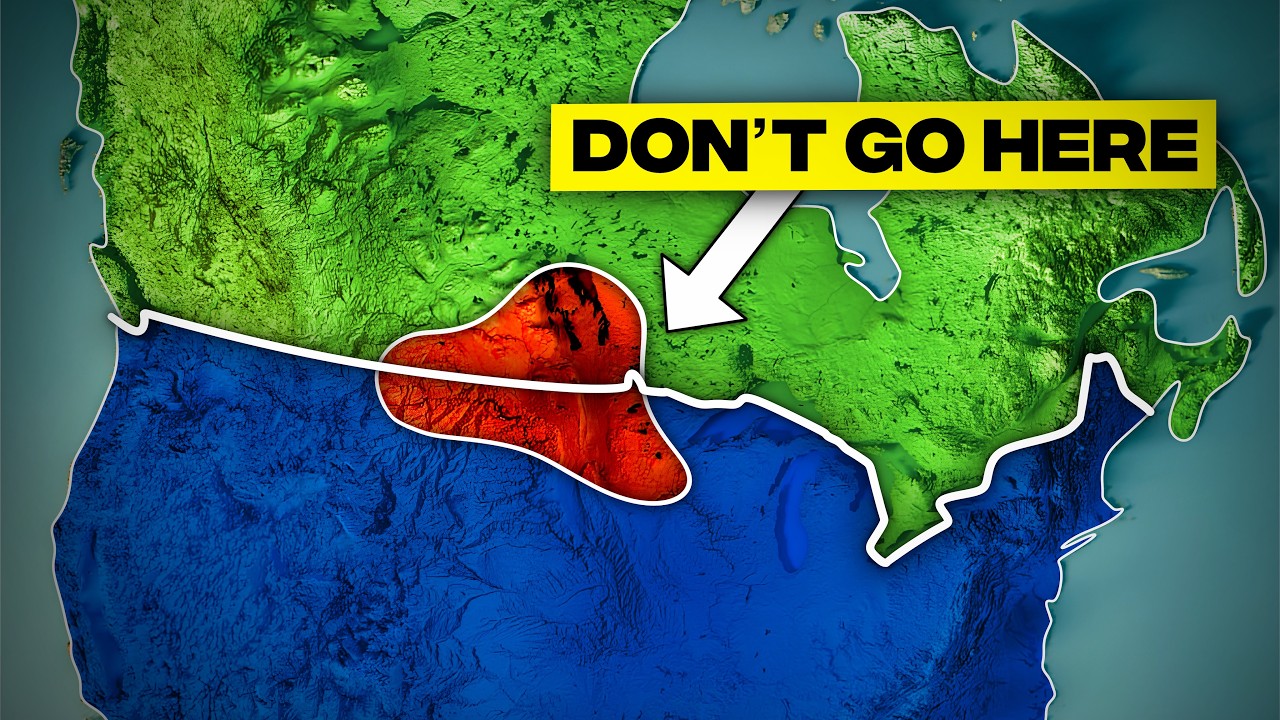
Minnesota hosts a geographical oddity known as the Northwest Angle, the only part of the Lower 48 that lies above the 49th parallel. This peculiar exclave exists because 18th-century mapmakers, drafting the Treaty of Paris, mistakenly misplaced Lake of the Woods and drew the border incorrectly. The result is a tiny piece of Minnesota landlocked by Canada. To reach it by car, American citizens must drive into Manitoba, clear Canadian customs, and then clear US customs again. Fewer than 150 people reside there, making them perhaps the only Americans who routinely carry passports for grocery runs.
Tennessee, in a temporal twist, is one of only 15 US states that observes multiple time zones. If it is noon in Nashville, which is in the Central time zone, it is already 1:00 p.m. in Knoxville, in the Eastern time zone. This means one can lose an hour without even leaving the state. In cities like Bristol, where the state line once ran down Main Street, locals used to celebrate New Year's Eve twice by simply walking across the road. While the line has been redrawn for convenience, Tennessee remains a temporal tug-of-war, where one's punctuality depends entirely on their location.
Virginia's geography is literally split in two by the Atlantic. While most of the state encompasses classic East Coast sprawl, a long strip of land, the Eastern Shore, dangles precariously below Maryland, yet remains part of Virginia. To reach it from the rest of Virginia without leaving the state, one must traverse the 17.6-mile Chesapeake Bay Bridge-Tunnel. This engineering marvel, part bridge and part tunnel, plunges underwater twice to allow Navy ships to pass overhead. The Eastern Shore, technically part of the Delmarva Peninsula, is often more easily accessible by car from Delaware than from Richmond, Virginia's capital. It is a shortcut that requires a significant journey, often subject to weather closures.
North Dakota proudly claims the geographic center of North America, located in the town of Rugby. A 21-foot stone monument marks this spot, adorned with flags representing the US, Canada, and Mexico. While surveyors made the initial call in 1931, and geographers continue to debate the precise point, the monument stands, and no one has bothered to move it. It is a quirky claim to fame, yet backed by surprisingly solid mathematics. Standing in Rugby theoretically places one equidistant from the Gulf of Mexico, the Pacific Ocean, the Atlantic Ocean, and the Arctic Ocean. It is a town that found renown for being, quite literally, in the middle of nowhere.
Beyond the Expected: Deserts of Green, Forests of Pine, and Hills of Dust
The American landscape is a tapestry woven with unexpected biomes and geological formations that challenge conventional regional descriptors. Hawaii, for instance, boasts a rarity found in only three other places on the planet: a green sand beach. At Papakolea Beach on the Big Island, the sand gleams with an olive hue, a geological accident 49,000 years in the making. This unique coloration stems from the eroded remains of a volcanic cinder cone rich in olivine, a semi-precious green crystal formed deep within the Earth's mantle. Because olivine is denser than regular sand, waves wash away lighter particles, leaving behind a shoreline that glitters like crushed gemstones.
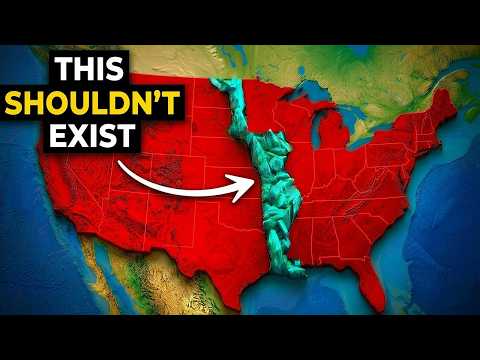
Arizona, often imagined as an endless expanse of sand and cactus, harbors a colossal secret in its northern reaches. Beyond the iconic red rocks and arid desert, one of the largest pine forests on the planet flourishes. The Coconino National Forest and surrounding areas encompass approximately 2.4 million acres of uninterrupted Ponderosa pine. This is not a typo; millions of acres are covered in dense woodland, with over 25 percent of Arizona being forested. Alpine towns like Flagstaff, buried under snow in winter, are surrounded by thick woods and mountain peaks. It is a dramatic biome shift from the saguaros and sandstorms of the southern half, a pine-cloaked plot twist in America's driest script.
Iowa, often perceived as flat farmland, hides terrain that seems almost alien to the American heartland. In the western part of the state, the Loess Hills rise like a dirt mirage, sharp and intense ridges composed entirely of fine, windblown silt. These formations are not rock or sand, but ancient glacier dust, ground down during the Ice Age and piled into massive formations by prehistoric winds. Over time, this compacted silt formed hills reaching over 200 feet high. These Loess Hills are unique to Iowa and Shanxi, China, the only two places in the world where nature adopted this particular geological process. It is a geological accident with global twinship, adding a vertical edge to Iowa rarely credited.
Kansas, the Sunflower State, was once beachfront property for a prehistoric sea. Seventy million years ago, the state lay submerged beneath the Western Interior Seaway, a vast inland ocean teeming with monstrous marine life. Today, evidence of this watery past emerges from the prairie in the form of Monument Rocks, towering chalk-white formations that appear almost extraterrestrial. These are not traditional stone structures; they are composed of compressed shells and skeletons of billions of ancient sea creatures. Fossilized sharks, 20-foot-long fish, and giant turtles have all been unearthed from Kansas farmland, transforming the prairie into an ancient reef where cows now graze.
Massachusetts, a state typically associated with lush forests and rocky coastlines, harbors a surprising anomaly: a desert. The Marrow Desert, a 615-acre stretch of exposed sand, looks like a New England glitch. While it is not the Sahara, it is significantly drier and scrubbier than the surrounding woodlands. Its origins trace back to the last Ice Age, which deposited sandy sediment, followed by colonial farmers who clear-cut the trees. Without roots to anchor the soil, erosion transformed the land into a semi-arid zone that still bakes under the summer sun. It is a patch of land that feels like an unfinished terraforming project.
Nebraska, often characterized by its endless grasslands, undertook an ambitious project in 1902: it decided to create a forest from scratch. Today, the Nebraska National Forest spans over 20,000 acres, a testament to this remarkable endeavor. It is the largest hand-planted forest in the Western Hemisphere, established in the Sand Hills, a vast expanse of rolling prairie once considered untamable. Millions of seedlings later, an actual woodland now thrives where none was supposed to exist, a powerful demonstration that nature can indeed be built by hand.
New Mexico dazzles with a desert that defies expectations. White Sands National Park encompasses 275 square miles of blinding white dunes. Crucially, this is not typical sand, but gypsum, a mineral that usually dissolves in water. Its presence here is a geological fluke: the basin has no outlet, so rain and snowmelt trap the gypsum, which then dries and crystallizes into pure white grains. The sand remains cool even in triple-digit heat, and under moonlight, the landscape glows like a fluorescent snowfield. Astronauts even use it as a landmark from orbit. It feels surreal, like stepping into a CGI render of Antarctica placed in a desert, allowing one to sunburn while feeling cold sand underfoot.
New Jersey, the most densely populated state in the country, paradoxically hosts one of its largest wilderness areas: the Pine Barrens. Sprawling over 1.1 million acres, nearly a quarter of the state, this quietly eerie landscape is a maze of pitch pines, cranberry bogs, and ghost towns. The soil is so acidic that even weeds struggle to thrive. Just 30 minutes from Philadelphia, it swallows cell signals whole. Early settlers believed it was cursed, and modern visitors still get lost on its sandy roads. It is also the legendary birthplace of the Jersey Devil, a wild, forested exception that steadfastly refuses to be paved over.
It is less a state and more a prank on your high school geography teacher.
The Earth's Hidden Realms and Restless Heart: Caves, Fire, and Calderas
Beneath the surface of the United States lie vast hidden worlds and geological forces that hint at the planet's immense power and ancient past. Kentucky, for instance, houses what many consider Earth's basement: Mammoth Cave. This is not merely a large cavern; it is the longest cave system on the planet, with over 420 miles of mapped passages and more being discovered every year. Within its labyrinthine depths are rooms vast enough to contain skyscrapers, rivers so dark they appear bottomless, and creatures that have evolved without eyes, having never known light. Early explorers aptly described it as grand, gloomy, and peculiar, and scientists believe they have only scratched the surface of its true extent.
Pennsylvania holds a unique and chilling distinction: Centralia, a town that has been burning for over 60 years. In 1962, workers accidentally ignited an open coal seam beneath the town's landfill, and the fire spread into the intricate network of underground mine tunnels, where it has raged ever since. For decades, the ground cracked open with smoke, basements filled with carbon monoxide, and sinkholes swallowed backyards. Temperatures in some spots reached a scorching 900 degrees Fahrenheit. Eventually, the government condemned the town and relocated almost everyone, though a few holdouts remain. Today, Centralia is a modern ghost town, with steam still rising from its fractured streets, and experts predict it could continue to burn for another 250 years, an accidental, slow-motion volcano.
Wyoming's Yellowstone National Park, famed for its geysers and wildlife, sits atop a geological monster: a supervolcano. Beneath its picturesque forests and bison herds lies a caldera a staggering 45 miles wide. If it were to erupt again, it could potentially bury half the United States in ash. The last mega-eruption occurred 640,000 years ago, and geologists confirm that the magma chamber remains hot and active. This subterranean heat source powers the park's 10,000 geothermal features, including geysers, boiling springs, and sulfur vents that emit a distinct rotten egg odor. While an imminent eruption is unlikely, the sheer potential of this geological behemoth makes Yellowstone one of the most intense spots on the planet, America's beautiful, unpredictable pressure cooker.
South Carolina conceals a haunting secret beneath the glassy surface of Lake Jocassee: an underwater ghost town. In 1973, the valley was intentionally flooded to create a hydroelectric reservoir, submerging everything in its path, including bridges, homes, and the historic Attakulla Lodge. Unlike many other drowned ruins, Jocassee's structures are preserved in near-pristine condition, resting 300 feet deep in cold, clear water that significantly slows decay. Technical divers can explore entire chimneys, walkways, and stone foundations, acting as underwater archaeologists in scuba gear. It is South Carolina's real-life Atlantis, a lost town frozen mid-evacuation, its windows now facing schools of fish instead of Appalachian sunsets.
Where the Wild Weather Roams: From Arctic Blasts to Record-Breaking Winds
The United States is home to some of the most extreme and unpredictable weather on Earth, challenging both human endurance and scientific instrumentation. Montana, for instance, holds the record for the coldest temperature ever recorded in the Lower 48. On January 20, 1954, Rogers Pass plummeted to an astonishing -70 degrees Fahrenheit, a temperature colder than the average surface temperature on Mars. At such extremes, breath freezes mid-air, car batteries fail, and frostbite becomes an inevitability rather than a risk. What makes Montana's climate even more remarkable is its immense temperature swing; the same state can experience scorching summers reaching 117 degrees Fahrenheit, resulting in a staggering 187-degree difference within the same geographical area. It is a place where one must pack both sunscreen and thermal underwear, as the weather adheres to no conventional planetary rules.
New Hampshire's Mount Washington is renowned for possessing some of the world's most ferocious weather. In 1934, its summit recorded a wind speed of 231 miles per hour, the fastest non-tornado wind ever measured at ground level, a global record it held for 62 years. This is not an isolated incident; Mount Washington specializes in weather that breaks equipment and spirits. Winter wind chills routinely plunge below -100 degrees Fahrenheit, and thick fog can render even short hikes dangerously disorienting. Locals and experts alike refer to it as the home of the world's worst weather, a consequence of its position at the intersection of three major storm tracks, transforming it into a natural wind tunnel of hell. Despite its modest elevation of 6,288 feet, it delivers the meteorological punch of an Everest-class peak.
Utah, typically associated with red rock deserts and dry heat, surprisingly harbors one of the coldest places in the Lower 48. Peter Sinks, a natural bowl-shaped depression near Logan, recorded an astonishing -69 degrees Fahrenheit in February 1985, making it colder than Antarctica on the very same day. This extreme cold occurs because dense, frigid air sinks into the basin at night and becomes trapped, while warmer air floats just 100 feet above. It is a meteorological phenomenon akin to the atmosphere hitting a pause button. Uninhabitable by humans, the site is continuously monitored for its Siberia-rivaling temperatures. Utah thus contains both scorched salt flats and one of Earth's deepest natural freezers, showcasing the nation's most underrated temperature swings.
A Question of Scale: Tiny States, Grand Parks, and Glacial Empires
The United States presents a fascinating study in geographical scale, from the microscopically small to the overwhelmingly vast, often with unexpected twists. Rhode Island, for instance, is famously America's tiniest state. At just 1,214 square miles, it could fit inside Los Angeles County nearly four times over. One can drive across it diagonally in under an hour, and a 20-minute commute often feels like a statewide expedition. It is smaller than several national parks and even loses a size battle to Texas's King Ranch, a single private ranch that covers more land than all of Rhode Island. It is the only state where running errands might involve accidentally crossing state lines, yet its outsized colonial history and coastal charm prove that size does not always dictate significance.
In stark contrast, New York State, often synonymous with urban skyscrapers, protects a vast wilderness that dwarfs many national parks. The Adirondack Park spans an astonishing 6 million acres of legally protected land, making it larger than Yellowstone, Glacier, Everglades, and Grand Canyon National Parks combined. It is the size of Vermont, laced with 2,000 miles of trails, 3,000 lakes, and peaks that climb over 4,000 feet. Remarkably, this is not a national park; it is protected by the New York Constitution as "forever wild." Just a three-hour drive north of Manhattan, one can find themselves in country so remote they might not encounter another person or gas station for hours. It is a wilderness juggernaut that most people do not even realize exists, proving the Empire State offers far more than just Broadway.
Washington state reigns as the glacier kingdom of the Lower 48. It boasts over 3,000 glaciers, a number exceeding all other 47 contiguous states combined. Mount Rainier alone cradles 25 named glaciers, as if preparing for a glacial arms race. Further north, the Cascades are so heavily laden with ice that they are affectionately nicknamed the American Alps. These are not merely frozen snowfields; they are slow-moving rivers of ice that relentlessly grind valleys, sculpt landscapes, and continuously feed entire watersheds. Washington's vibrant greenery owes its existence to these glaciers, which melt throughout the summer, sustaining rivers even during dry spells. While climate change is causing their rapid retreat, Washington still unequivocally holds the glacier crown for icy dominance outside of Alaska.
Connecticut's highest point suffers from an identity crisis. It is not situated atop a grand mountain, nor is it truly its own. The state's highest elevation is a rather unassuming spot on the southern slope of Mount Frissell, a mountain whose summit actually lies within Massachusetts. Connecticut's peak is, in essence, borrowed. One will find no summit sign, no sweeping panoramic views, and certainly no mountaineering pride; just a surveyor's mark awkwardly hugging the border. For a state steeped in colonial history and pride, this geographical quirk stings slightly, akin to celebrating a race because one's foot crossed someone else's finish line.
Oklahoma, faced with a scarcity of natural water bodies, took matters into its own hands, becoming a pioneer in manufacturing lakes. The state is home to more than 200 man-made reservoirs, more than any other state in the country. Almost every major body of water, including Lake Eufaula, Texoma, and Tenkiller, was created by damming rivers and flooding valleys. The only natural lakes one might encounter are tiny oxbows or seasonal playas that vanish under the intense sun. Oklahoma essentially re-engineered its geography to ensure hydration, a blueprint for rewriting nature's script with bulldozers, concrete, and an abundance of stubbornness. If one is boating in Oklahoma, chances are they are floating over what once was dry land.
North Carolina undertook one of the most audacious engineering feats in American history in 1999: it moved an entire lighthouse. The Cape Hatteras Lighthouse, a colossal 4,800-ton, 200-foot-tall brick structure, stood precariously close to the eroding shoreline. Engineers meticulously jacked it up, slid it 2,900 feet inland on hydraulic tracks, and managed the monumental task without cracking a single brick. This extraordinary effort was a direct response to the mobile nature of the Outer Banks, which constantly shift, reshape, and migrate with every major storm. The $12 million project was a bold gamble against coastal erosion, and it succeeded, leaving the lighthouse solid and standing, guarding a coastline that refuses to stay still.
South Dakota, after Alaska and Hawaii joined the Union in 1959, inherited a new distinction: the geographic center of the expanded USA. This new heart of the nation shifted from Kansas to a cow pasture near Belle Fourche, South Dakota. The precise spot is marked by a modest survey disc in the middle of an open prairie, devoid of visitor centers or snack bars, just grass and grazing livestock. Nevertheless, the nearby town of Belle Fourche embraced its newfound title, erecting a large concrete compass rose downtown. To stand in the exact heart of modern America, one must make peace with barbed wire and the unmistakable aroma of livestock, for it is, quite literally, the middle of nowhere.
Vermont, in a moment of audacious geographical maneuvering, pulled off the ultimate power play in 1998. For 18 glorious days, it declared Lake Champlain the "sixth Great Lake." This designation was cleverly tucked into a federal funding bill, allowing Vermont to qualify for research money typically reserved for the official Great Lakes. The backlash was immediate and fierce: Michigan expressed outrage, Ohio and Wisconsin openly mocked the attempt, and news outlets roasted Vermont for its bid to join the "cool kids' table" with a lake barely half the size of Lake Ontario. Congress swiftly repealed the designation less than three weeks later. Yet, for those brief 18 days, Vermont technically had a Great Lake, marking one of the most humorous geographical flexes in US history, and prompting locals to still refer to it as the "greatest almost Great Lake."
The United States, often presented as a neat collection of 50 states, is in fact a dynamic canvas of geological drama, human ingenuity, and cartographical quirks. From rivers that defy gravity to mountains that predate entire ranges, from towns that burn for decades to borders that shift with the tides, the geography of this nation proves to be a series of plot twists far wilder than any school lesson could convey. It is a constant reminder that the world is stranger, more intricate, and endlessly more fascinating than we often imagine, waiting for us to look a little closer and see the extraordinary in the familiar.