The United States, a vast and diverse tapestry of landscapes and communities, grapples with a geographical phenomenon that touches every corner of its expanse: the presence of unauthorized immigrants. Far from being confined to border regions, the patterns of settlement and the associated societal impacts reveal a complex nationwide mosaic, shaped by economic opportunity, historical ties, and varied state-level policy responses. From the sparsely populated plains to bustling urban centers, the estimated 11 million individuals living without authorization across the nation present a dynamic geography of human movement, challenging conventional perceptions and reshaping local realities.
The Unseen Bill: National Scope and Economic Strain
The sheer scale of unauthorized immigration in the United States carries a significant and often debated economic footprint. As of early 2023, the net cost attributed to illegal immigration for the country was estimated to be at least $150.7 billion. This figure encompasses a wide array of expenditures and lost revenues, touching upon public services, infrastructure, and various economic sectors. The southern border, in particular, remains a focal point of entry and enforcement. In December 2023 alone, U.S. Border Patrol agents reported taking into custody more than 225,000 migrants who had crossed the southern border, highlighting the continuous flow and the immense operational challenges faced by federal agencies. These national statistics underscore the pervasive nature of the issue, which, while concentrated in certain areas, radiates its effects across the entire continental United States and beyond.

Whispers in the Wilderness: States with Sparse Populations
Even in the nation's most sparsely populated regions, the presence of unauthorized immigrants is a documented reality, albeit on a smaller scale compared to more populous states. West Virginia and North Dakota, for instance, each host an estimated 6,000 unauthorized immigrants. These populations have led to approximately 3,000 children born within these states to unauthorized parents, subsequently adding over 2,000 students to their respective school systems. Similarly, Wyoming and Montana each report around 8,000 unauthorized immigrants. In Wyoming, this translates to an additional 2,628 students, while Montana's school system sees an increase of 2,794 students. South Dakota, despite its relatively small size, contends with an estimated 9,000 unauthorized immigrants, with roughly 3,000 children born into these households, contributing 3,875 students to local schools.
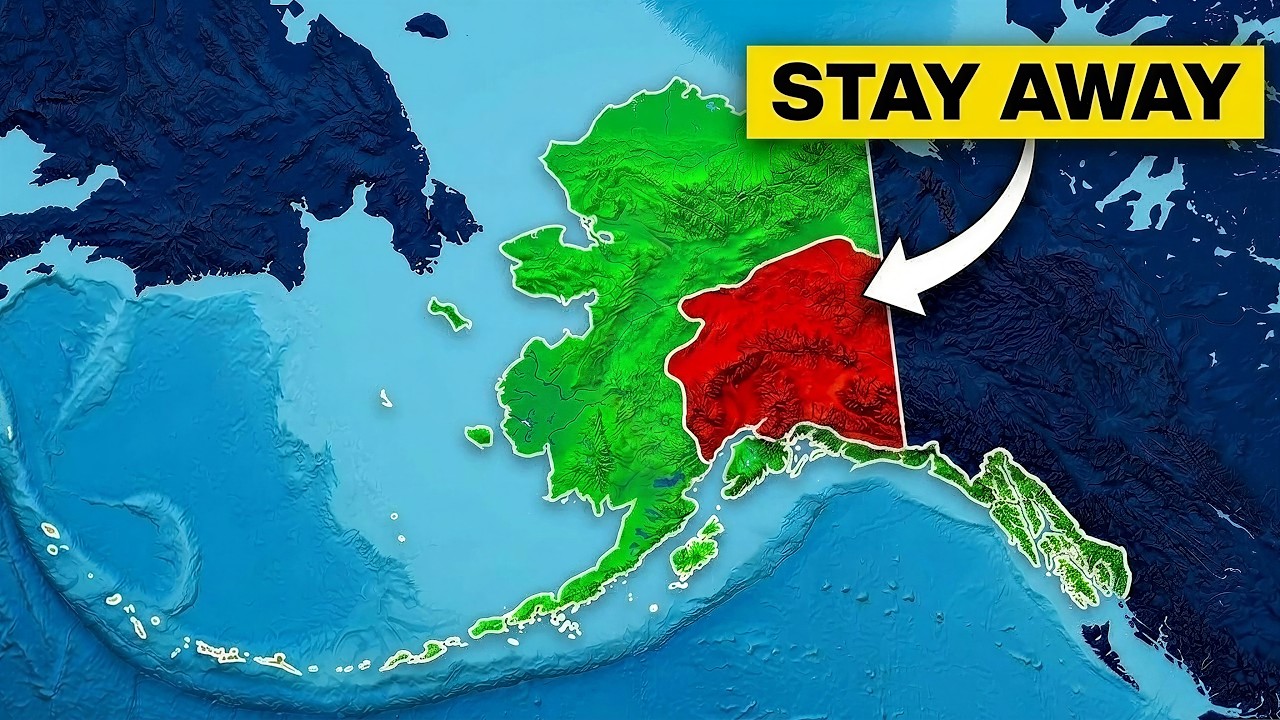
Moving eastward, Vermont, with an estimated 10,000 unauthorized immigrants, presents a unique economic dynamic: its agriculture industry relies on immigrants for 10 percent of its employees. Maine, known for its scenic coastlines, has an estimated 12,000 unauthorized immigrants. About 4,000 children are born into these households, adding over 5,000 students to local schools. Maine's proximity to the Canadian border and its sparsely populated areas are cited as factors attracting those seeking undetected entry. New Hampshire, also bordering Canada, reports 14,000 unauthorized immigrants. These households account for 5,000 children born in the state and 4,896 students in its schools. Alaska, the Last Frontier, is home to an estimated 15,000 unauthorized immigrants, demonstrating that geographical isolation does not preclude this demographic presence.
From Plains to Coasts: Emerging Concentrations
As we move into states with slightly larger populations and more diverse economies, the numbers of unauthorized immigrants begin to climb more steeply. Mississippi, for example, sees an estimated 34,000 unauthorized immigrants, with 11,000 children born into these households and 7,578 students added to its schools. Delaware mirrors this trend, housing 35,000 unauthorized immigrants and 12,000 U.S.-born children, resulting in over 15,000 additional students. Rhode Island, the nation's smallest state, is home to an estimated 42,000 unauthorized immigrants, with approximately 15,000 children born into these families. Its strong job market and proximity to major urban centers like Boston and New York City make it an attractive destination.
Hawaii, with its unique island geography and booming tourism and agricultural sectors, hosts an estimated 51,000 unauthorized immigrants, adding over 17,000 students to its educational system. In the heartland, Iowa has an estimated 55,000 unauthorized immigrants, contributing nearly 22,000 students to schools. Notably, nearly 28,000 U.S. citizens in Iowa live with at least one undocumented family member. Neighboring Nebraska, with its vast agricultural lands, is home to around 56,000 unauthorized immigrants, adding over 22,000 students. Idaho, the Gem State, predominantly attracts unauthorized immigrants to its agriculture and construction industries, housing roughly 62,000 individuals. Kentucky's unauthorized immigrant population has risen to around 69,000, up from 35,000 in 2016, when they comprised 22 percent of the immigrant population and 1 percent of the total state population. Missouri, the Show-Me State, with its agricultural and manufacturing jobs, has an estimated 77,000 unauthorized immigrants, adding over 29,000 students to local schools. These figures illustrate the broad economic drivers that attract unauthorized populations across varied state economies.
Policy Frontlines: Varied State Responses
States have responded to the challenges of unauthorized immigration with a diverse range of legislative and enforcement strategies, often reflecting differing political philosophies and local impacts. Alabama, for example, made national headlines in 2011 with the passage of HB 56, a controversial law widely considered one of the harshest in America. Despite such efforts, the state still struggles with an estimated 91,000 unauthorized immigrants. Arkansas and Louisiana each report around 97,000 unauthorized immigrants, with both states seeing approximately 34,000 children born into these households, placing a significant strain on their school systems. Kansas, the Sunflower State, hosts an estimated 104,000 unauthorized immigrants, with these families adding over 42,000 students to local schools.
"The sheer scale of unauthorized immigration in the United States carries a significant and often debated economic footprint."
Wisconsin, with an estimated 111,000 unauthorized immigrants, sees over 41,000 students added to its school system, and nearly 56,000 U.S. citizens live with an undocumented family member. South Carolina has established an illegal immigration enforcement unit to address its estimated 117,000 unauthorized immigrants. Oklahoma has turned to the E-verify system, requiring all employers to use the online tool to verify employee eligibility, yet still faces major issues with an estimated 136,000 unauthorized immigrants. Indiana has adopted a stricter approach compared to more liberal states, mandating E-verify for government agencies and contractors, but still estimates 154,000 unauthorized immigrants. Tennessee has also implemented harsh immigration laws and crackdowns, contending with an estimated 162,000 unauthorized immigrants and about 54,000 additional students. In stark contrast, Oregon has faced controversy for its lenient stance, including providing expanded free health insurance to low-income residents regardless of immigration status, which critics argue has incentivized more unauthorized immigrants to enter the state, now estimated at 181,000.
Urban Pull and Borderland Realities
Many states experience the influx of unauthorized immigrants due to a combination of factors, including proximity to the U.S.-Mexico border, vibrant urban job markets, and existing community networks. New Mexico, owing to its direct border with Mexico, has long grappled with unauthorized immigration, with an estimated 119,000 individuals residing there. This influx has strained resources such as healthcare and education. Ohio, the Buckeye State, is estimated to house around 132,000 unauthorized immigrants, with 46,000 children born into these families, adding approximately 44,000 students to local schools. Utah, often referred to as the Beehive State, is home to an estimated 137,000 unauthorized immigrants, with 48,000 children born into these households, adding over 54,000 students to its school system. Minnesota, known as the Land of 10,000 Lakes, has attracted an estimated 140,000 unauthorized immigrants, whose households have added over 57,000 students to local schools.
Connecticut, with an estimated 167,000 unauthorized immigrants, reports roughly 58,000 children born into these households, adding over 41,000 students to its school system. Michigan, the Great Lake State, is estimated to be home to around 185,000 unauthorized immigrants, with these households adding over 83,000 students to the school system; in 2021, undocumented immigrants accounted for 1.2 percent of Michigan's population. Pennsylvania has an estimated 251,000 unauthorized immigrants, with around 87,000 children born into these families and close to 72,000 students added to local schools. Nearly 85,000 U.S. citizens in Pennsylvania live with an undocumented family member. Colorado, with approximately 278,000 unauthorized immigrants, sees 96,000 children born into these households, adding 87,500 students. Close to 142,000 U.S. citizens in Colorado live with an undocumented family member. Massachusetts, with an estimated 292,000 unauthorized immigrants, has seen rapid growth, gaining an estimated 120,000 undocumented residents between 2010 and 2021. Nevada, due to its proximity to the U.S.-Mexico border and a booming economy reliant on immigrant labor in agriculture and construction, is home to around 293,000 unauthorized immigrants, adding about 70,000 students to its schools. Washington state is estimated to be home to around 346,000 unauthorized immigrants; in 2021, about 220,000 undocumented immigrants were in the labor force, representing 5.6 percent of the state's total labor force.
"Florida took a drastic step by issuing a new law that criminalized the act of knowingly transporting undocumented individuals into the state, elevating the offense to felony human smuggling."
Maryland, with an estimated 350,000 unauthorized immigrants, has seen this number increase from 275,000 in 2016, when they comprised 29 percent of the immigrant population. These households have added around 117,000 students to the school system. Virginia, known as The Old Dominion state, contends with an estimated 419,000 unauthorized immigrants, adding over 123,000 students to local schools, influenced by its proximity to Washington D.C. and a growing immigrant population. Arizona, a primary border state, is currently home to around 453,000 unauthorized immigrants, with over 250,000 U.S. citizens living with at least one undocumented family member. North Carolina has an estimated 488,000 unauthorized immigrants, with roughly 169,000 children born into these households, adding over 122,000 students to local schools; about 5 percent of North Carolina residents are non-citizens.
The Megastates: Epicenters of Immigration
Certain states stand out as major hubs for unauthorized immigrant populations, often due to a confluence of geographical, economic, and historical factors, leading to immense demographic and policy challenges. Georgia, for instance, has an estimated 504,000 unauthorized immigrants. The state has previously implemented a task force modeled after Arizona's approach, granting law enforcement officers authority to interrogate individuals suspected of being undocumented. These households have added over 150,000 students to local schools. Illinois, a state rich in history and a hub of political activity, has a large immigrant population, with many migrants from Central and South America seeking opportunities. It is home to an estimated 628,000 unauthorized immigrants, adding over 228,000 students to local schools.
New Jersey hosts an estimated 697,000 unauthorized immigrants, with these households adding over 138,000 students to the school system. More than a quarter-million U.S. citizens in New Jersey live with at least one undocumented family member, and the state is home to thousands of Deferred Action for Childhood Arrivals (DACA) recipients. New York, perceived as a land of opportunity with New York City as its epicenter, attracts a significant unauthorized population, estimated at 1,181,000 individuals. This burdens the school system with over 277,000 added students. Florida, while a popular tourist destination, has taken a strong stance against unauthorized immigration. In July 2023, the state issued a new law criminalizing the knowing transportation of undocumented individuals, elevating it to felony human smuggling, punishable by up to 15 years in prison. Despite these measures, Florida has an estimated 1,185,000 unauthorized immigrants, with these households adding over 312,000 students to local schools.
Texas, widely acknowledged as one of the states most impacted by unauthorized immigration, is estimated to have 2,226,000 unauthorized immigrants. In December 2023, Governor Greg Abbott signed a bill making illegal immigration a state crime, allowing law enforcement to arrest individuals suspected of crossing the Rio Grande outside designated ports of entry. This massive population adds an astounding 868,369 students to Texas schools. California, often compared to New York as a beacon of success and opportunity, has the largest population of undocumented immigrants in America. With its close proximity to Mexico, it has long been a hotbed for border crossings. Fair estimates a staggering 3,226,000 unauthorized immigrants residing in California, a number roughly equivalent to the entire population of Iowa. This population contributes an immense 1,149,559 students to California's school systems, illustrating the unparalleled scale of impact in this Pacific Coast state.
The intricate geography of unauthorized immigration across the United States reveals a landscape far more nuanced than simple border statistics might suggest. Each state, with its unique economic drivers, geographical features, and policy decisions, becomes a distinct chapter in this ongoing narrative, challenging preconceived notions and demanding a deeper understanding of human movement and its far-reaching consequences. The world, as ever, proves stranger and more complex than any textbook could convey, constantly offering up new plot twists in the unfolding human story.